Single Girder Crane Selection for Safer Lifting
Single girder crane selection for safer, compliant lifting: assess capacity, span, duty, headroom and maintenance before specifying your crane system.
CraneCert · 19 October 2026
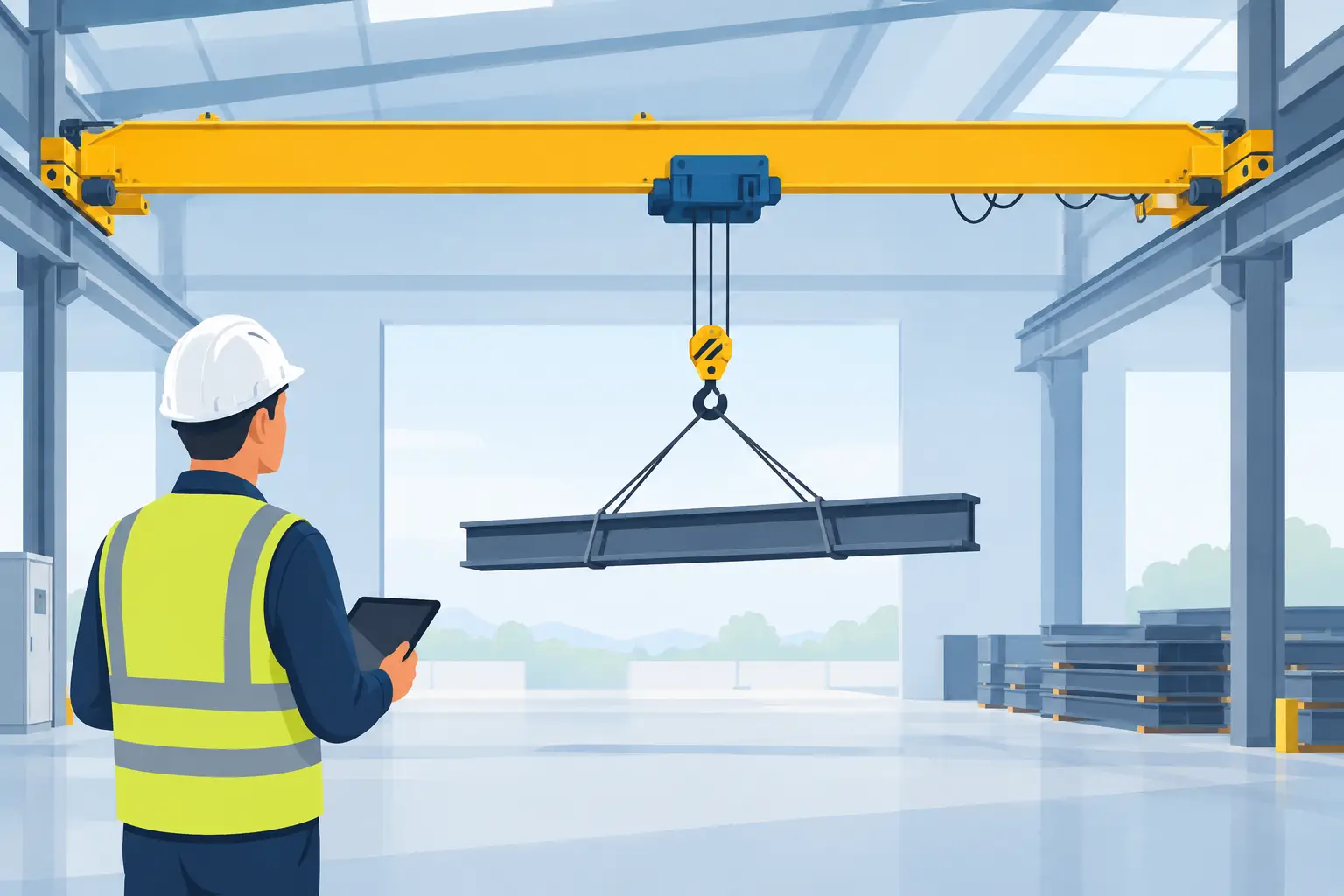
A crane that can lift the rated load is not automatically the right crane for the job. Poor single girder crane selection can leave a factory with restricted hook travel, an undersized hoist, difficult maintenance access or a system that slows production every shift. The cost is felt long after installation, in handling delays, avoidable repairs and operational risk.
A single girder overhead crane is often an efficient, practical answer for workshops, production bays and warehouses. It can provide dependable coverage at a lower installed weight and cost than a double girder design. But that benefit depends on matching the crane to the building, the load and the way your team actually works.
Start with the lifting task, not the crane price
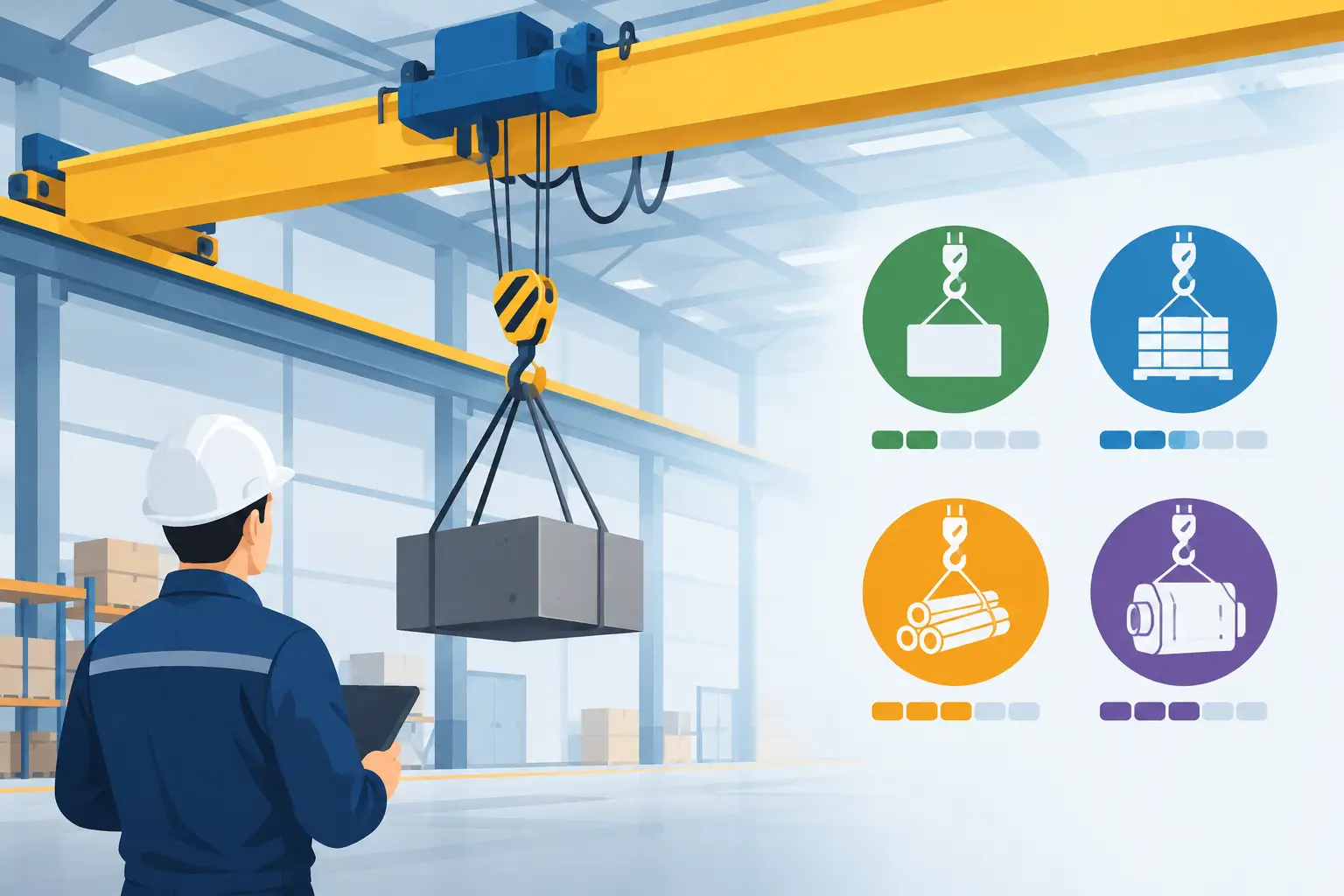
The first question is not, “What capacity crane do we need?” It is, “What must this crane do every day?” The answer should cover the heaviest load, the usual load, the shape of the load, where it is collected and where it must be placed.
A maintenance team lifting motors occasionally has very different requirements from a fabrication bay moving steel assemblies throughout a shift. Both may need a 5-tonne safe working load, but the second application is likely to demand a higher duty hoist, better control, more reliable positioning and a maintenance plan built around production hours.
Avoid specifying capacity solely from a nominal product weight. Include the lifting beam, grabs, slings, lifting frames and any other below-hook equipment. The total suspended load must remain within the crane and hoist safe working load. Allowing a sensible margin can protect against foreseeable changes, but oversizing without need increases capital cost, wheel loads and ongoing maintenance requirements.
Before asking for a quotation, gather five operational facts:
- maximum lifted load, including lifting accessories;
- required runway length and crane span;
- lift height, lowest required hook position and available headroom;
- number of lifts and travel movements per shift; and
- the load-handling environment, including heat, dust, outdoor exposure or corrosive processes.
These details give a crane designer a workable brief. They also expose constraints early, when they are cheaper to solve.
Single girder crane selection: capacity is only one variable
A single girder crane normally runs a hoist beneath the main bridge girder. This arrangement is compact and cost-effective, but the hoist position and girder depth affect the available lift height. Where headroom is tight, the difference between crane arrangements can decide whether the hook reaches the required working level.
Span, runway and building suitability
Span is the distance between the crane runway rails, not simply the width of the building. It must be measured accurately and considered alongside runway condition, rail alignment, column positions and end clearances. An existing runway may be suitable for a replacement crane, but this should be verified rather than assumed.
The building structure also needs assessment. Crane loads are not limited to the weight of the lifted item. They include the crane self-weight, hoist and trolley weight, dynamic effects during lifting and travel, plus horizontal forces from acceleration and braking. A structural review may be needed before installing or increasing crane capacity.
Where no suitable building steelwork exists, a freestanding runway or gantry arrangement may be the better route. This can add cost, but it avoids transferring loads into a structure that was never designed to carry them.
Headroom and hook approach
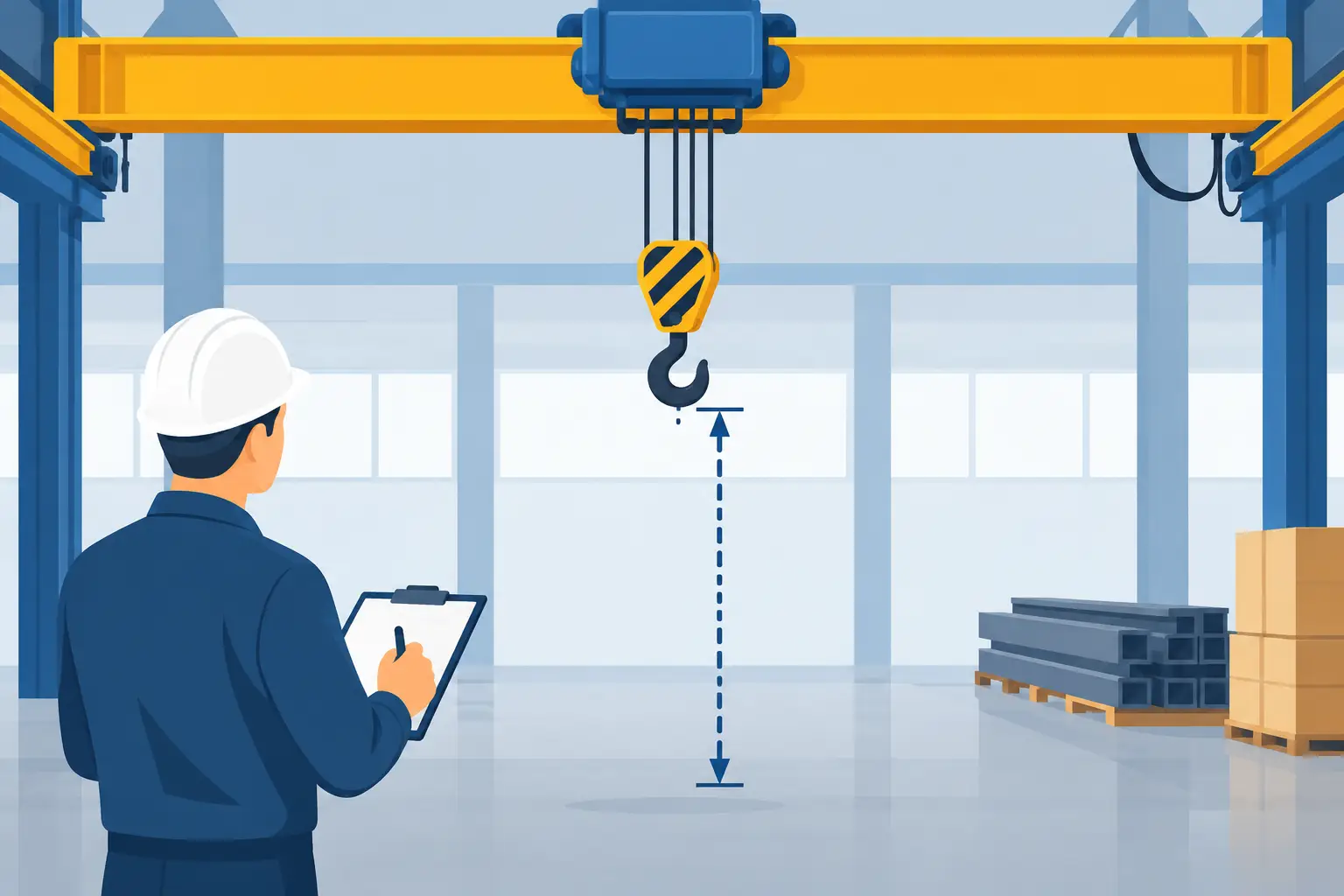
Headroom is a regular source of expensive disappointment. Measure from the rail level to the highest obstruction, then work down through the bridge, trolley, hoist and hook dimensions. The result determines the maximum available lift.
Also consider hook approach, how close the hook can travel to each side of the bay and to the building ends. A crane may cover the full length and width on paper while still leaving critical machine areas out of reach. This matters when loading lorries, serving machine tools, placing dies or handling stock from racking.
If access to the edge of the working area is essential, a tailored hoist arrangement, altered runway position or a different crane type may be justified. The right answer depends on the actual pick-and-place points, not an idealised drawing.
Duty cycle and hoist classification
A crane used for occasional maintenance lifting does not need the same equipment classification as one supporting continuous production. Frequency of use, lift duration, average load, travel distance and speed all influence duty requirements.
Under-specifying duty can lead to early wear in hoist brakes, ropes, gearboxes, wheels and electrical components. Over-specifying can add unnecessary capital expenditure. A competent supplier should discuss the working pattern in plain terms and select the appropriate crane and hoist classification from that evidence.
Be honest about future demand. If a planned production change will double lifting frequency within two years, it should shape the specification now. Retrofitting a more suitable hoist later can be more disruptive and costly than selecting correctly at the outset.
Controls should support safe, accurate handling
Pendant controls are appropriate for many single girder cranes and keep the operator close enough to observe the load. Radio control can improve positioning and give the operator more freedom to stand clear of suspended-load hazards, provided sight lines and site rules support its use.
Variable speed control is often worthwhile where delicate assemblies, expensive tooling or close positioning are involved. It reduces shock loading and can improve operator control. For straightforward, repetitive handling, fixed-speed motions may be entirely suitable and more economical.
Safety features should reflect the risk assessment. These can include overload protection, travel limit switches, anti-collision measures where multiple cranes share a runway, warning devices and restricted operating zones. No device removes the need for trained operators, suitable lifting accessories and a clear lifting plan for non-routine or complex lifts.
Plan maintenance and statutory compliance before installation
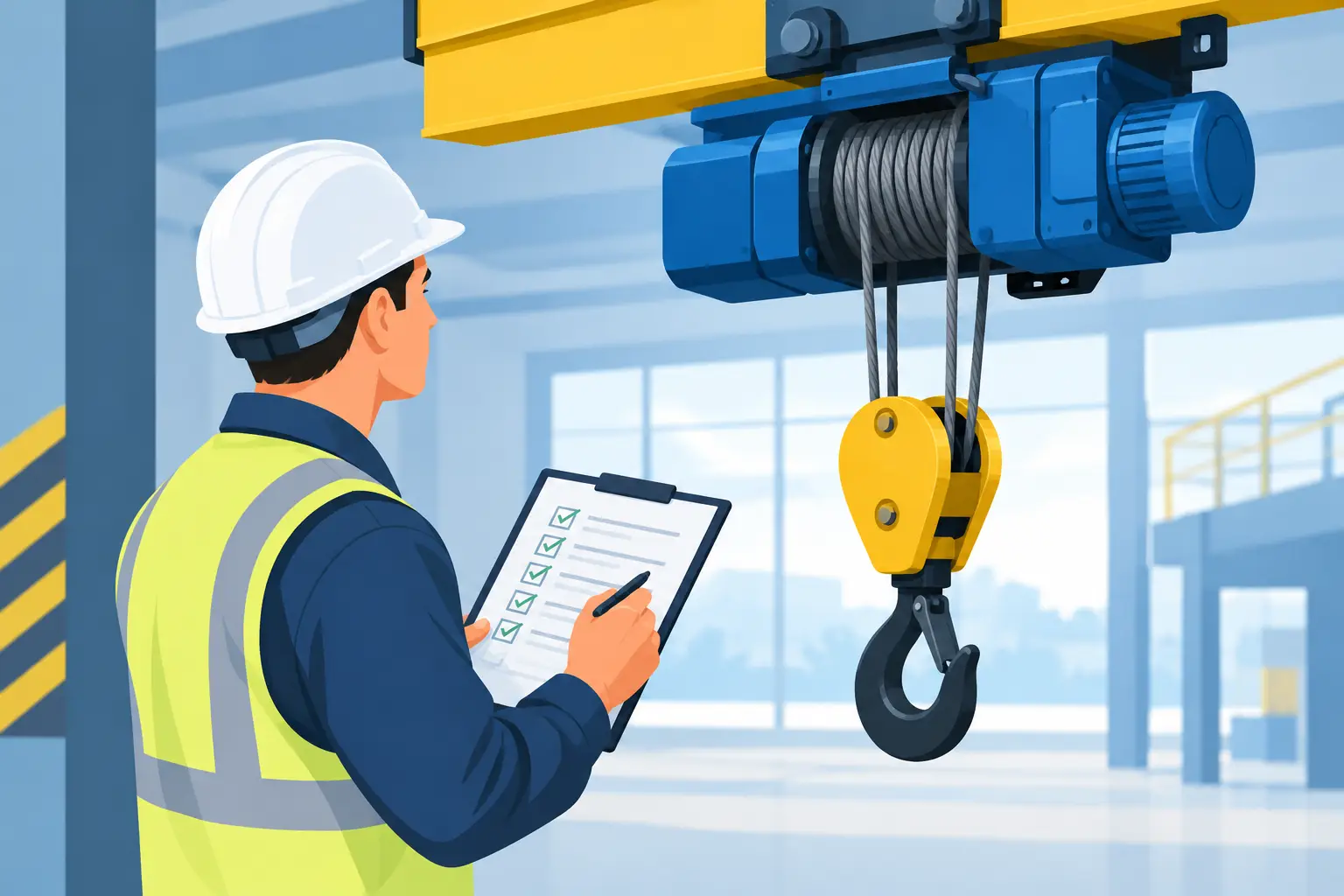
A new crane is a long-term lifting asset, not a fit-and-forget purchase. Access for inspection and repair should be considered during design. If the hoist is difficult to reach safely, planned servicing becomes slower, more expensive and more likely to interrupt production.
LOLER requires lifting equipment to be thoroughly examined at suitable intervals by a competent person. For equipment used to lift goods, this is normally every 12 months, unless an examination scheme specifies otherwise. PUWER also requires work equipment to be suitable, maintained and used by trained people. These duties continue throughout the crane's working life.
Documentation matters just as much when an auditor asks for it. Ensure the installation is handed over with clear technical records, safe working load marking, test information, operating instructions and a defined schedule for servicing and thorough examination. Cloud-managed certification can make it far easier to demonstrate control, particularly across multiple sites or lifting assets.
A supplier that also maintains and examines cranes can identify practical issues before they become specification gaps. CraneCert, for example, can support the process from site survey and design through installation, planned maintenance and audit-ready LOLER documentation.
Know when a single girder is not the best answer
Single girder cranes are an excellent choice for many applications, but not every application. A double girder crane may be more appropriate where capacities are high, spans are long, duty is demanding or lift height must be maximised. It can also offer better provision for walkways, platforms and specialised lifting attachments.
A jib crane may better serve a fixed workstation, while a gantry crane can suit yards, areas without runway steelwork or operations needing flexible coverage. The goal is not to force every lifting problem into one format. It is to install equipment that handles the work safely without creating a new operational constraint.
A site survey turns assumptions into a specification
A proper survey should verify dimensions, structural details, power supply, access for installation, runway condition, working environment and lifting routes. It should also account for what happens during installation. A shutdown, temporary exclusion zone or mobile crane access may be required, and these needs should be planned around production rather than discovered on the day.
Bring operators and maintenance staff into the conversation. They know where loads snag, where visibility is poor and which jobs create delays. Their input can reveal whether a small change to control location, hook height or runway coverage will make the crane safer and more productive.
The most useful specification is not the one with the longest equipment list. It is the one that gives your team the required lift, travel, control and compliance with a realistic whole-life cost. Get the lifting task and site facts right first, and the crane selection becomes a sound operational decision rather than a costly compromise.