Overhead Crane Duty Classification Explained
Understand overhead crane duty classification to specify safely, plan maintenance accurately and protect uptime, compliance and crane life in busy sites.
CraneCert · 17 October 2026
A 5-tonne crane can be entirely unsuitable for a 5-tonne lift. If it is expected to make repeated lifts throughout every shift, operate at high speed, or handle near-capacity loads day after day, its working demands may exceed the equipment specification. That is why overhead crane duty classification matters. It defines how hard a crane is expected to work over its service life, not simply how much it can lift once.
For a production manager, getting duty wrong often appears first as avoidable downtime: brake wear, rope deterioration, gearbox issues, overheating motors or a crane that becomes increasingly difficult to keep available. For the business, it can mean repair costs, disrupted output and difficult questions after an incident or audit.
What overhead crane duty classification measures
Duty classification brings together the factors that determine cumulative wear on a crane and hoist. The main considerations are how often it operates, the loads it handles, the distance travelled and the expected design life. A crane used occasionally for maintenance lifting has a very different operating profile from one feeding a fabrication line every few minutes.
Capacity is only one part of the decision. A 10-tonne crane lifting 1 tonne frequently may need a different duty rating from a 10-tonne crane used twice a month at close to full capacity. Equally, a crane that travels long distances under load can place more demand on travel drives and wheels than a stationary lifting application.
Manufacturers and engineers may express duty using standards such as ISO 4301 to 1, FEM classifications or CMAA service classes. These systems use different labels, but they all assess the same practical question: how much work will the crane and its components perform during their intended life?
Why the classification affects safety and cost
A duty classification is not an administrative label to add to a quotation. It influences the selection of hoist, motors, brakes, gearboxes, wire rope, controls, wheels, runway arrangement and electrical equipment. It also helps determine the inspection and maintenance attention the crane will need to remain safe and reliable.
Under-specification creates a false economy. The initial purchase price may look attractive, but components can reach their design limits sooner when the crane is subjected to a heavier working pattern than intended. Repeated breakdowns then become a production problem rather than a maintenance problem.
Over-specification has a cost too. There is little value in paying for a high-duty crane where lifting is genuinely occasional and light. The right answer depends on real operating data, future plans and the consequences if the crane is unavailable.
A suitable duty classification also supports compliance management. LOLER requires lifting equipment to be strong and stable enough for its proposed use, while PUWER requires work equipment to be suitable and maintained in an efficient state, in efficient working order and in good repair. A current thorough examination certificate does not make an incorrectly specified crane suitable for a more demanding application. The intended use still has to match the equipment.
The information needed to classify a crane properly
The best classification starts on the shop floor, not with an assumed number of lifts. Engineers need to understand how the crane is actually used across a normal shift and during peak periods. Where usage is changing, planned production growth must be included rather than treated as an afterthought.
Four areas usually shape the outcome:
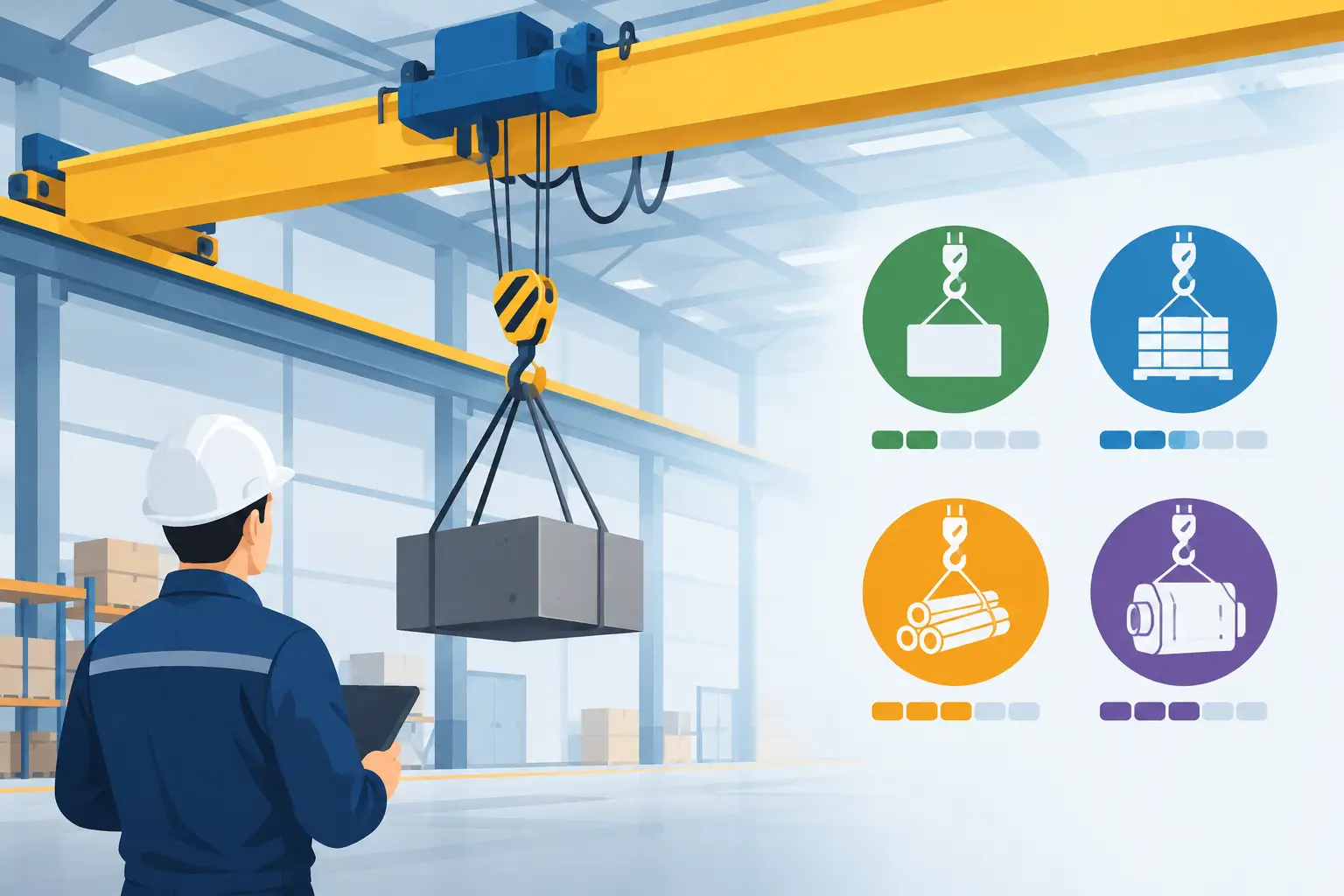
- Load spectrum: the proportion of lifts made at light, medium and near-rated capacity.
- Operating frequency: lifts per hour, hours per shift, shifts per day and working days per year.
- Travel duty: how far the hoist, trolley and crane travel, especially while carrying a load.
- Operating conditions: speed, control method, ambient environment, operator behaviour and the required service life.
Load spectrum is regularly misunderstood. A crane that occasionally lifts its full rated load is not automatically high duty. The overall pattern matters. Conversely, thousands of light lifts can create a demanding duty cycle, particularly where hoisting, cross travel and long travel are repeated continuously.
The type of load also matters. Handling expensive assemblies, molten material, awkward fabrications or loads close to people may require additional controls and safety measures beyond the core duty rating. Duty classification does not replace a proper risk assessment or lift planning process.
Typical duty patterns in industrial workplaces
An infrequently used maintenance crane in a warehouse or plant room may fall into a lighter duty category. It may be used to remove a motor, change a tool or support planned shutdown work. Even then, the crane must be correctly installed, inspected and maintained, but its component life requirements will differ from a process crane.
A general workshop crane is often medium duty. It may serve several workstations, unload materials and support fabrication or assembly across a full working day. The load profile can vary widely, so an assessment should account for normal operation rather than only the heaviest lift.
A production or fabrication crane can require heavier duty equipment. Examples include cranes feeding presses, moving steel stock, supporting machining cells or transferring parts through repeated process stages. If an operator is waiting for the crane before the next operation can begin, availability has direct commercial value.
Very high-duty applications include continuous handling environments, automated operations and specialist processes. These installations may need enhanced hoists, controls, monitoring and planned maintenance arrangements designed around limited access windows. Selecting a standard workshop crane for this work is rarely defensible once the operating pattern is understood.
Do not confuse duty class with safe working load
Safe working load, often marked as SWL, states the maximum load the crane may lift under specified conditions. Duty class describes the intensity and duration of use. Both are essential, but they answer different questions.
A crane must never be overloaded, even if it has a high duty classification. Equally, a crane with sufficient SWL should not be assumed suitable for continuous service. The hoist may lift the required weight, but its motor thermal capacity, brake design or mechanism classification may not suit the number of cycles required.
This distinction is particularly relevant when a business changes what it manufactures. A crane originally bought for occasional lifting may later become central to the workflow. More shifts, faster turnaround, greater travel distances or a new product mix can all alter its duty profile. The original duty selection should then be reviewed before wear becomes a safety or availability issue.
How duty classification should shape maintenance
Planned maintenance must reflect usage, condition and manufacturer requirements, not simply a fixed calendar date. A heavily used crane needs closer attention to high-wear items such as brakes, ropes or chains, hooks, limit switches, wheels, bearings and electrical contactors. Usage records and operator reports help identify trends before they become failures.
LOLER thorough examinations are a statutory safety check at the required intervals and after exceptional circumstances where applicable. They are not a substitute for routine servicing. A thorough examination may identify a defect, but maintenance is what keeps the crane in serviceable condition between examinations.
For sites with several cranes, clear asset records are useful. They should show the crane's SWL, duty information where available, service history, defects, repairs, examinations and any operational restrictions. Cloud-managed certification can make this information available quickly when an auditor, insurer or internal safety team asks for evidence.
Questions to ask before buying, upgrading or repurposing
Before specifying a new crane or upgrading an existing one, establish the heaviest regular load, not just the maximum possible load. Confirm the number of lifting cycles in a typical hour and identify the busiest shift. Measure travel distances and consider whether lifting and travelling happen together.
Also consider what will change over the next five to ten years. A new line, extra shift or altered handling route can make a previously suitable crane under-rated. If production continuity depends on the crane, consider redundancy, remote monitoring, spare-parts strategy and the time available for planned maintenance.
An on-site assessment is often the quickest way to resolve uncertainty. It allows the crane structure, runway, electrics, hook approach, headroom and current condition to be assessed alongside real working practices. For ageing equipment, the answer may be targeted refurbishment rather than replacement. For a crane fundamentally unsuited to the task, upgrading the hoist or control system alone may not address the full risk.
CraneCert assesses duty alongside capacity, span, operating environment and compliance requirements, helping sites select equipment and maintenance plans that support both safe lifting and dependable production.
The practical test is simple: if your crane has become essential to the pace of work, its duty classification deserves the same attention as its lifting capacity. Check it before the next breakdown decides the issue for you.