Runway Beam Repair When Safety Cannot Wait
Runway beam repair protects people, crane reliability and output. Learn what causes damage, how repairs are planned and when urgent action is needed now.
CraneCert · 7 November 2026

A crane may still travel while the structure beneath it is deteriorating. That does not make it safe to use. Runway beam repair is often needed after a visible impact, but many serious defects develop more quietly through repeated wheel loading, poor alignment, corrosion or movement within the supporting building steelwork. Left unmanaged, the result can be restricted crane use, a failed examination, unplanned production stoppage or, in the worst case, a dangerous loss of support.
For facilities and engineering managers, the priority is not simply getting a crane back into motion. It is establishing whether the runway remains fit for its intended duty, controlling the immediate risk and completing a repair that can be properly evidenced. A cosmetic weld or a quick pack beneath a rail may appear to solve the immediate problem, but it can transfer stresses elsewhere and create a bigger issue at the next inspection.
When does runway beam repair become urgent?
Runway beams carry the crane rail and transfer crane loads into the building structure. They are part of the lifting system, even though they are not always considered during day-to-day crane servicing. A defect in the beam, rail fixings, support brackets or columns can affect crane travel, wheel loading and the safe alignment of the whole installation.
Urgent investigation is appropriate when operators report a new bang, graunching noise or uneven travel. Other warning signs include a crane that drifts, stalls at the same position, runs out of square, shows unusual wheel wear or repeatedly damages rail clips. Visible cracking around beam connections, distorted flanges, loose bolts, dropped packing, corrosion loss or signs of an impact from a fork-lift should also trigger action.
The decision to stop the crane depends on the nature and extent of the defect. A competent engineer may be able to impose a temporary safe working load reduction or restrict travel to an unaffected section. In other cases, isolation is the only responsible option. Continuing to lift because an order is waiting is not a commercial solution if it risks injury, further structural damage and a longer outage.
The causes behind runway beam damage
Runway damage is rarely random. Finding the cause matters because a repair that addresses only the visible crack or loose fixing may fail again under the same operating conditions.
Misalignment is a common cause. If rails are out of line, incorrectly spaced or uneven in level, crane wheels can side-load the rails and beam. This accelerates wear and introduces forces the system was not designed to tolerate. Misalignment can arise from installation issues, settlement, previous alterations, failed fixings or movement in the building itself.
Repeated high-duty operation can expose an original design limitation. A crane that has been uprated, fitted with a heavier hoist or used more frequently than intended can impose greater wheel loads and fatigue stresses. The same applies where loads are regularly pulled sideways, lifted off-centre or handled with poor control. The crane may be rated for the load, but the runway and supporting steelwork must also be verified for the actual duty.
Impact damage is more obvious but should not be underestimated. A collision with a lorry, mobile plant, tall load or another crane can bend a beam, displace a rail or crack a connection. Corrosion is another frequent concern, particularly in external yards, washdown areas and facilities with damp, chemical or abrasive processes. Surface corrosion may conceal more significant section loss beneath rail seats, brackets and connection plates.
A safe approach to runway beam repair
The right repair begins with a site assessment, not a welding set. The engineer needs to understand the crane configuration, safe working load, span, travel length, duty cycle, wheel arrangement and any changes made since the original installation. The assessment should also consider the building steelwork, column bases, runway brackets, rail condition and the location of adjacent services or production equipment.
Measurements are then taken to establish rail gauge, level, straightness and beam deflection where relevant. Visual checks alone are not enough for suspected fatigue cracking or hidden corrosion. Depending on the defect, the investigation may require non-destructive testing, thickness checks, bolt assessment or input from a structural engineer. This is particularly important where a crack is close to a connection, where deformation affects the beam profile, or where there is uncertainty about the original design capacity.
A repair plan should define the defect, the cause, the proposed method, any operational restrictions and the inspection requirements before the crane returns to service. That may involve replacing damaged rail sections or clips, re-levelling the rail, renewing corroded steelwork, strengthening a beam or connection, or replacing a section of runway altogether. Welding on lifting-supporting steelwork must be designed, controlled and inspected appropriately. Unauthorised site welding can alter the steel's behaviour, introduce residual stress and make future certification difficult.
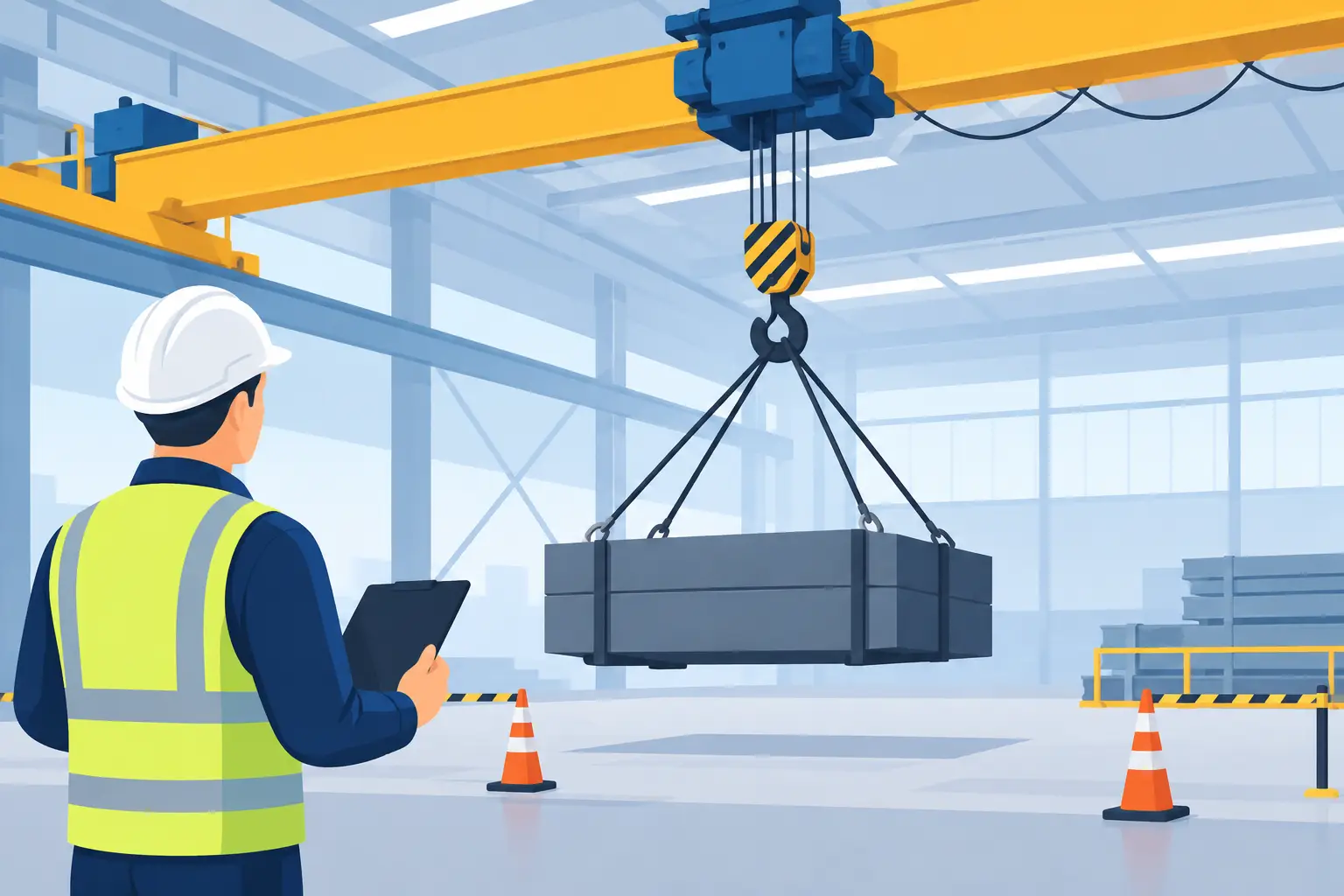
The crane normally needs to be isolated before work begins. Where access requires working at height, the method must account for safe access, exclusion zones and the risk of dropped objects. If the repair affects the crane rail, the work sequence should prevent uncontrolled movement of the crane. A planned outage is often less disruptive than an emergency shutdown after a defect worsens.
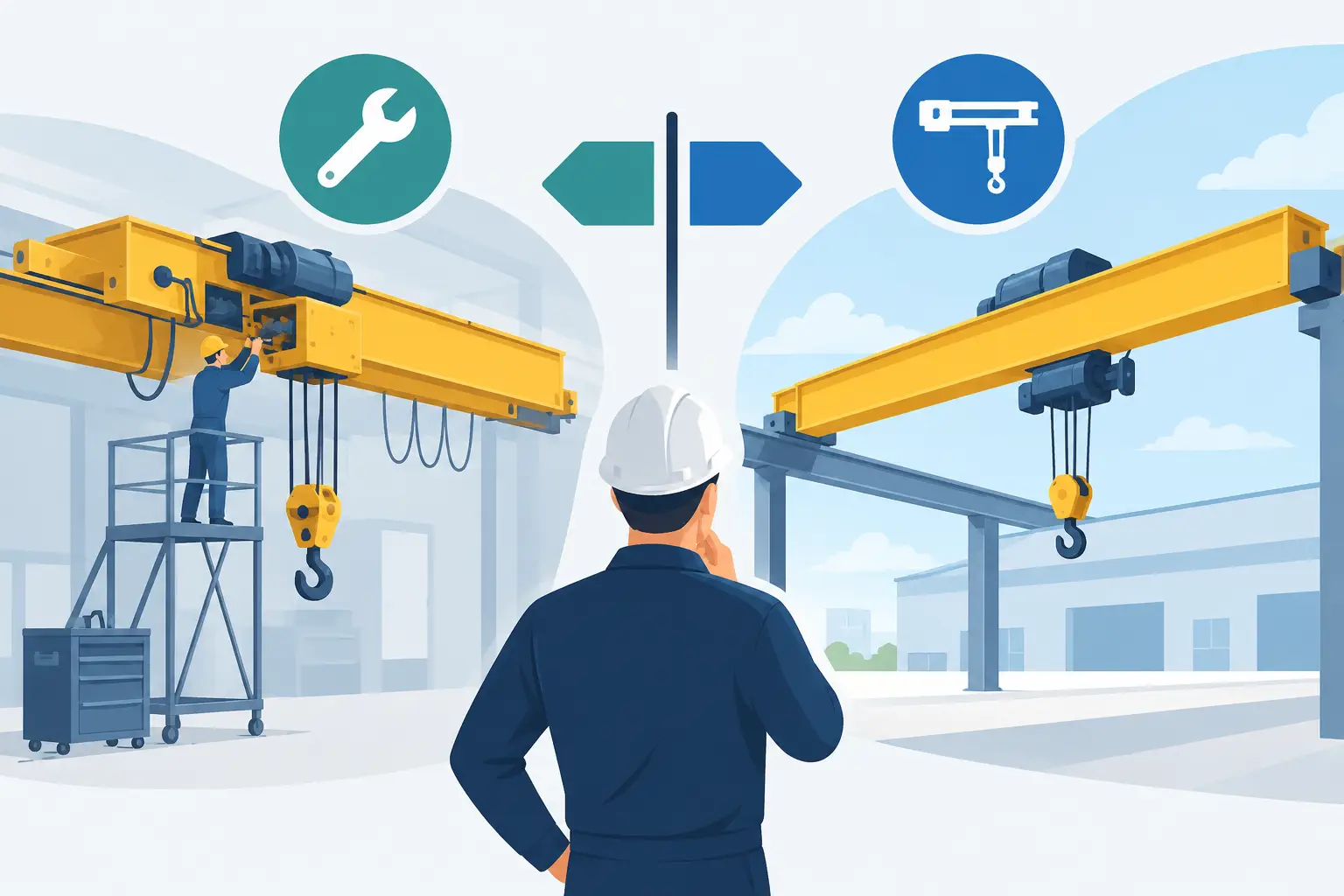
Repair, strengthen or replace?
There is no single answer. A localised rail fixing issue may be repaired quickly once the underlying alignment has been corrected. A beam with limited corrosion in a non-critical area may be suitable for engineered strengthening. However, extensive section loss, repeated fatigue cracking, severe impact deformation or an undersized runway may make replacement the safer and more economical route.
Cost should be judged over the life of the installation, not only against the immediate repair quotation. A low-cost patch can create recurring call-outs, premature wheel and rail wear, production interruptions and uncertainty at every thorough examination. Replacement or redesign may cost more initially, but it can restore capacity, improve travel performance and provide confidence for future operational demand.
Compliance after runway beam repair
LOLER applies to lifting equipment and requires thorough examination at the appropriate intervals, while PUWER requires work equipment to be suitable, maintained and used safely. The runway structure is central to whether an overhead crane can operate safely, even where the exact examination scope is agreed separately for a particular site.
After repair, keep a clear record of the defect, the assessment, repair method, materials used, inspection results and any revised operating limits. If the work changes the crane's capacity, configuration or intended use, the implications for the lifting equipment and its documentation must be reviewed before it is returned to duty.
For audit purposes, records need to be accessible, legible and linked to the correct asset. This gives a facilities manager more than a certificate to file. It demonstrates that the defect was identified, risk assessed, rectified and verified through a controlled process. Cloud-managed records can make this evidence available quickly when an auditor, insurer or internal safety team asks for it.
Reducing the chance of repeat defects
Planned maintenance is the most practical defence against runway deterioration. Routine crane service visits should include attention to wheel condition, rail clips, buffers, end stops, unusual travel behaviour and signs of building or runway movement. Operators should also know what abnormal crane travel feels and sounds like, and have a simple route for reporting it before a minor issue becomes a structural repair.
Operational habits matter as well. Avoid side-pulling loads, travelling with swinging loads, impact loading and using the crane beyond its intended duty. If production has changed, for example, heavier fabrications, longer shifts, faster cycle times or a new lifting attachment, review whether the crane and runway remain suitable. The original design assumptions may no longer match the work being done.
CraneCert supports runway-related fault investigation alongside crane maintenance, repair and compliance management across Yorkshire, the Midlands and the North of England. Local engineering response helps contain downtime, but the objective is always the same: return the equipment to service only when the supporting structure, crane travel and records can stand up to scrutiny.
If a runway beam shows damage or your crane has begun travelling differently, treat it as a structural warning rather than an inconvenience. Early assessment gives you more repair options, better control of downtime and a far stronger basis for keeping people safe and production moving.