How to Prepare for a LOLER Examination at Your Site
Learn how to prepare for a LOLER examination, protect people, avoid delays and keep lifting equipment compliant, certified and ready for safe production.
CraneCert · 9 November 2026
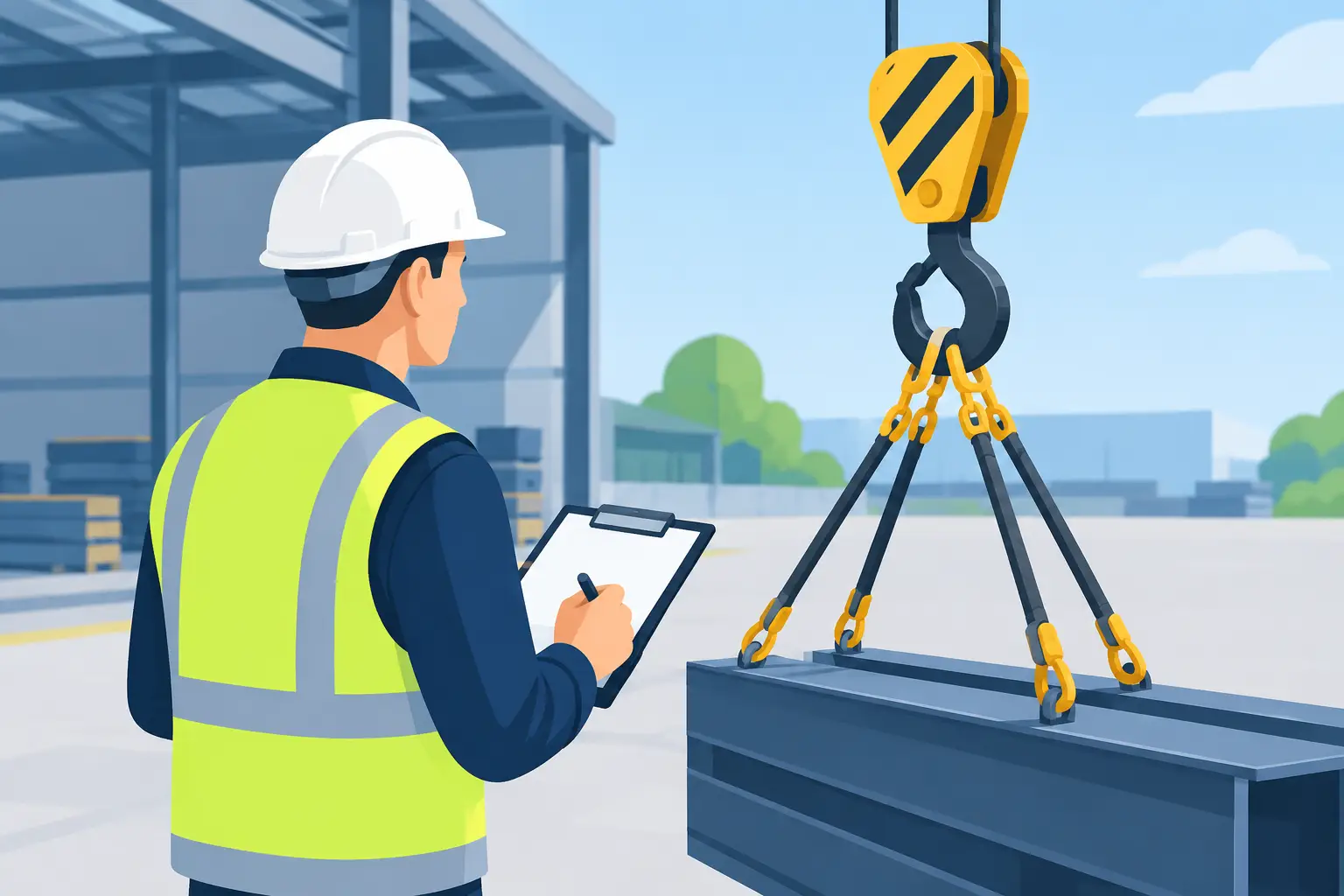
A crane can appear to be working normally right up to the point an examiner identifies a worn rope, ineffective brake or damaged hook. When you prepare for a LOLER examination properly, you are not simply making an inspection easier. You are reducing lifting risk, protecting your people and avoiding the avoidable downtime that follows an unexpected defect report.
For facilities, engineering and production managers, the aim is straightforward: give the competent person safe access to every item in scope, provide clear evidence of previous action, and make sure any defects can be dealt with before they affect the shift plan. Good preparation also means you receive a report that stands up to scrutiny when an auditor, insurer or customer asks for proof of control.
What preparation changes on examination day
A LOLER thorough examination is not a routine service visit. It is a detailed statutory examination of lifting equipment and lifting accessories, undertaken by a competent person to identify defects that may make continued use unsafe. The examiner needs enough time, access and information to make a proper judgement.
Poor preparation creates pressure in the wrong place. An engineer may be unable to reach a crane runway safely, the correct lifting accessories may be in use on the shop floor, or the previous report may be missing when a recurring defect needs checking. The result can be delays, limited examination scope or equipment being taken out of service at the least convenient moment.
The examination interval depends on the equipment and how it is used. Equipment used to lift people, and lifting accessories, normally require examination every six months. Other lifting equipment is commonly examined every 12 months, unless a written scheme of examination specifies different intervals. Your own asset register and examination reports should make the due dates clear, rather than relying on a calendar reminder alone.
Prepare for a LOLER examination with accurate records
Start with the paperwork before the examiner arrives. Records are not an administrative extra. They establish what equipment exists, when it was last examined, what defects were found and whether corrective work was completed.
Have the current and previous thorough examination reports available for each crane, hoist, jib crane, lifting beam, sling, shackle and other accessory in scope. The examiner should also be able to see evidence that reportable defects have been rectified. If a previous report identified a recommendation, restriction or observation, do not assume it has disappeared because the equipment has continued to operate.
Your records should make four things easy to verify:
- a clear equipment identification number that matches the item on site;
- the safe working load, configuration and any operating restrictions;
- the last examination date, next due date and any written scheme in force;
- service, repair and modification history, including replaced components.
For overhead cranes, confirm that the identification number is visible from floor level where practical and matches the certificate. Assets are often renamed locally, moved between bays or recorded under a building reference that no longer reflects the equipment. These small gaps slow down examination and make audit evidence weaker.
Cloud-managed certification is particularly useful where several sites, bays or lifting accessories are involved. It gives responsible managers immediate access to current documents and makes overdue items easier to spot. However, digital records only help if the asset list is kept current after new equipment, upgrades or disposals.
Check what is actually in scope
Walk the site before the appointment rather than relying solely on the register. Include rarely used lifting equipment, loose accessories stored in cabinets, lifting beams held in yards and attachments kept with mobile plant. A seldom-used chain sling can still create a compliance issue if it is available for use but has no current examination status.
Also check whether a crane has been altered since its last examination. A new hoist, radio control, pendant arrangement, runway extension, lifting attachment or change in duty can affect the equipment's safe operation. Provide the relevant technical details and certificates to the examiner. Modifications should be assessed, not treated as a simple maintenance change.
Plan access, isolation and production cover
The thorough examination needs a controlled working area. Agree the date, expected duration and access requirements with production early enough to avoid a last-minute clash with a critical lift, delivery or maintenance shutdown.
For an overhead crane, this may mean clearing the travel path, removing parked vehicles and moving materials that obstruct access to the runway, end carriages or hoist. If access equipment is required, make sure it is available, inspected and suitable for the task. Do not expect an examiner to work around unsafe access arrangements or climb on equipment without a planned method.
Nominate a site contact who understands the crane and has authority to arrange isolation. They should be available at the start of the visit, able to provide access to electrical isolators and controls, and able to confirm normal operating behaviour. A competent operator can often help demonstrate motions and controls, but no one should operate the crane unless the examiner directs it and the area is safe.
The practical details matter. Make sure lighting is adequate, walkways are clear and the examination area can be segregated from pedestrians and production traffic. In an industrial yard, weather, ground conditions and access to the lifting equipment may also affect what can be examined safely that day.
Do not tidy away evidence of a fault
There is a difference between sensible pre-examination housekeeping and concealing a problem. Remove loose materials, clean excessive contamination where it prevents inspection and report known operating issues. Do not paint over cracks, reset an overload after repeated tripping or remove a damaged accessory from the examination area without recording what happened.
If a crane has intermittent faults, tell the examiner. Brake drift, unusual noise, limit switch problems, erratic travel or pendant-control damage may not be visible during a short functional test. Honest information allows the examination to focus on the risk and helps determine whether repair is needed before continued use.
Carry out a practical condition check beforehand
A pre-examination check is not a substitute for a thorough examination. It is a way to identify obvious issues early, so you can arrange repair work and avoid a surprise stoppage on the day.
Ask trained operators or maintenance personnel to report visible damage and abnormal operation in the days before the visit. Focus on the points most likely to affect safe lifting:
- hooks, safety catches, chains, wire ropes and lifting accessories;
- hoist brakes, upper and lower limits, controls and emergency stops;
- crane travel, runway condition, end stops and signs of collision damage;
- pendant cables, radio controls, electrical enclosures and isolators;
- labels showing safe working load, equipment identity and warning information.
Look for change, not just catastrophic damage. A hook beginning to open, a rope with broken wires, a worn wheel flange or a damaged pendant cable can indicate an escalating problem. Taking action before the statutory examination gives you more control over timing, repair cost and production planning.
Where a defect is identified, use the right response for the risk. Some issues may allow controlled use until a planned repair. Others require immediate withdrawal from service. Your maintenance provider or competent person can advise, but the site must not continue using equipment that is unsafe simply because a production target is under pressure.
Make testing arrangements clear
The examiner may need to see functional movements and, depending on the equipment, may require suitable test weights or a safe method of assessing operation. Do not assume a load test is required at every thorough examination. The requirement depends on the equipment, its history, the written scheme and the competent person's assessment.
If test loads are likely to be needed, agree the arrangement in advance. Confirm the available weight, where it will be positioned, the lifting route, exclusion zone and who will manage the lift. Improvised testing creates risk and can waste an otherwise well-planned appointment.
For cranes with variable safe working loads, multiple hoists or special lifting attachments, ensure the examiner understands the configuration normally used. A certificate is only meaningful when it relates to the equipment as operated, not a simplified version that overlooks a second hoist, a below-the-hook attachment or a restricted working area.
Respond properly when the report is issued
Read the report on the day it is received and distribute it to the people who control equipment use. A clean report should still be filed against the right asset and reviewed for observations. A report identifying defects needs prompt action, with responsibilities and timescales recorded.
Where the examiner states that a defect involves existing or imminent danger, the equipment must not return to use until the issue has been resolved. The competent person may be required to report the matter to the relevant enforcing authority. That is not a reason to delay reporting faults. It is a reason to maintain equipment before deterioration reaches that point.
For defects that do not require immediate withdrawal, plan repairs around operational demand but do not allow recommendations to drift. Repeated observations across several reports often point to a maintenance gap, unsuitable duty cycle or ageing asset that needs a more permanent solution. CraneCert can combine examination findings with planned maintenance and repair support, helping sites address the cause rather than repeatedly manage the symptom.
A well-prepared LOLER examination should leave you with more than a certificate. It should give you a clear view of the condition of your lifting equipment, the work needed to keep it safe and the evidence to keep production moving with confidence.