LOLER Inspections That Keep Production Moving
LOLER inspections protect people, prevent avoidable downtime and provide the audit-ready evidence your lifting operation needs to keep working safely.
CraneCert · 10 October 2026
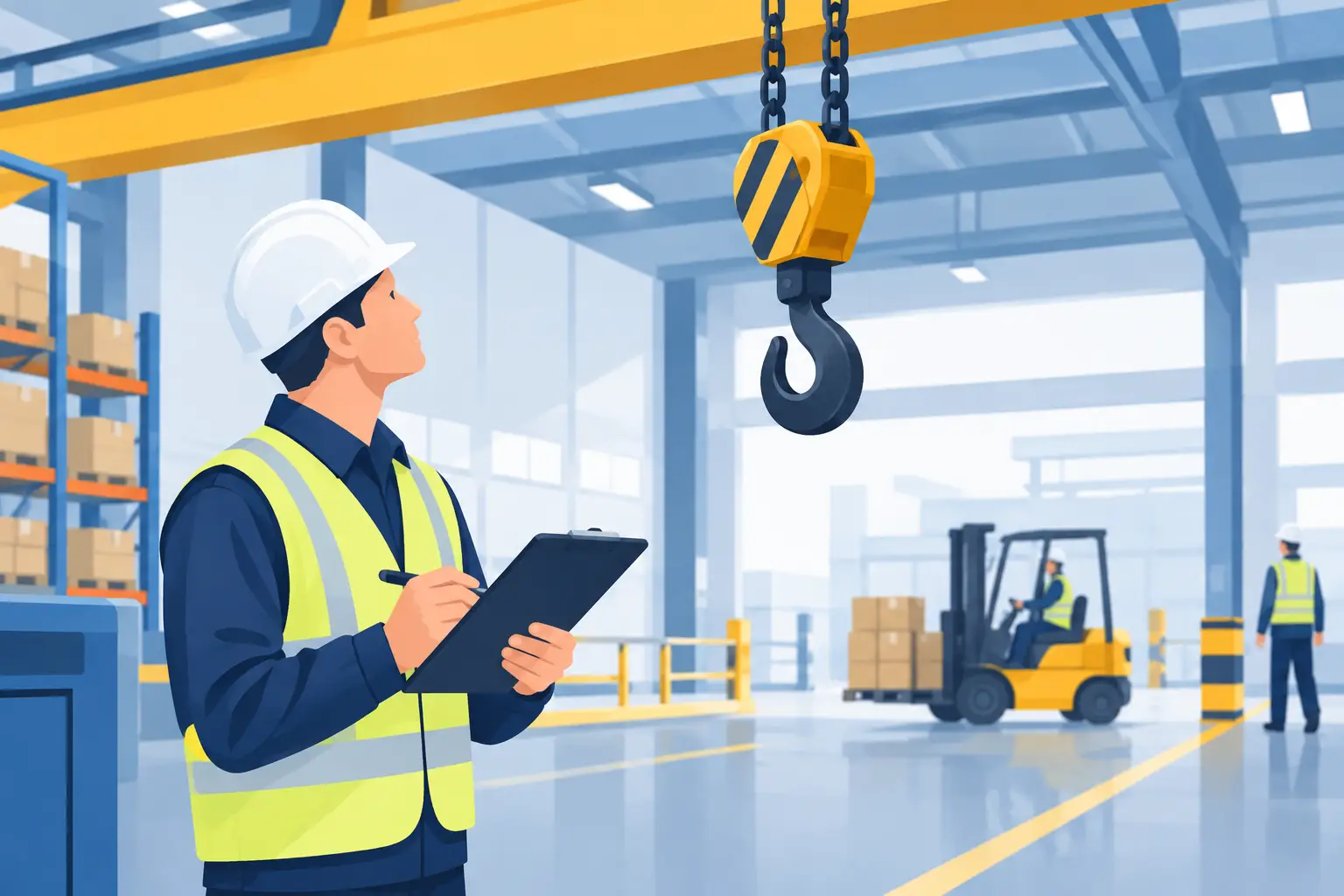
A crane can appear to be working normally right up to the point when a worn hook, damaged wire rope or failing brake turns a routine lift into a serious incident. LOLER inspections are designed to identify those risks before people, product and production are put in harm’s way. For businesses that rely on overhead cranes, hoists and lifting accessories every day, they are not paperwork to file away. They are a legal control that helps keep lifting operations safe and keeps production moving.
What LOLER inspections are designed to do
LOLER is the Lifting Operations and Lifting Equipment Regulations 1998. The regulations apply to lifting equipment used at work, including overhead travelling cranes, gantry cranes, jib cranes, electric chain hoists, wire-rope hoists, lifting beams, slings, shackles and other accessories used to lift loads.
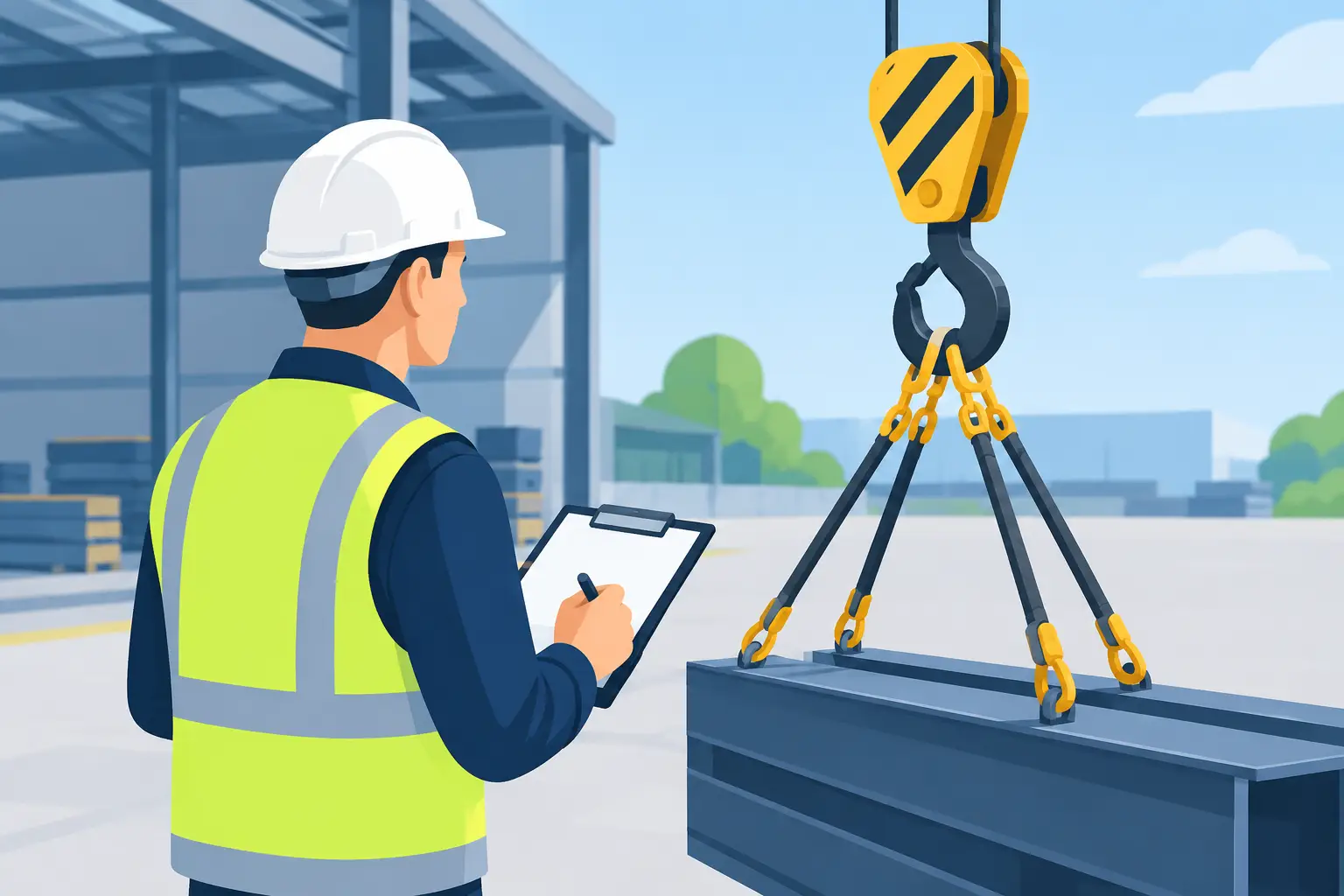
A LOLER thorough examination is a detailed inspection by a competent person. Its purpose is to establish whether equipment remains safe to use, identify defects or deterioration, and determine whether remedial action is needed. It is not a quick visual check and it is not the same as planned maintenance.
That distinction matters on a busy site. Maintenance keeps equipment reliable by addressing lubrication, adjustment, wear and breakdown risks. A thorough examination provides an independent, formal assessment of safety-critical condition. A crane can be serviced regularly and still require a LOLER examination at the prescribed interval. Equally, a valid LOLER report does not remove the need for routine operator checks and planned servicing.
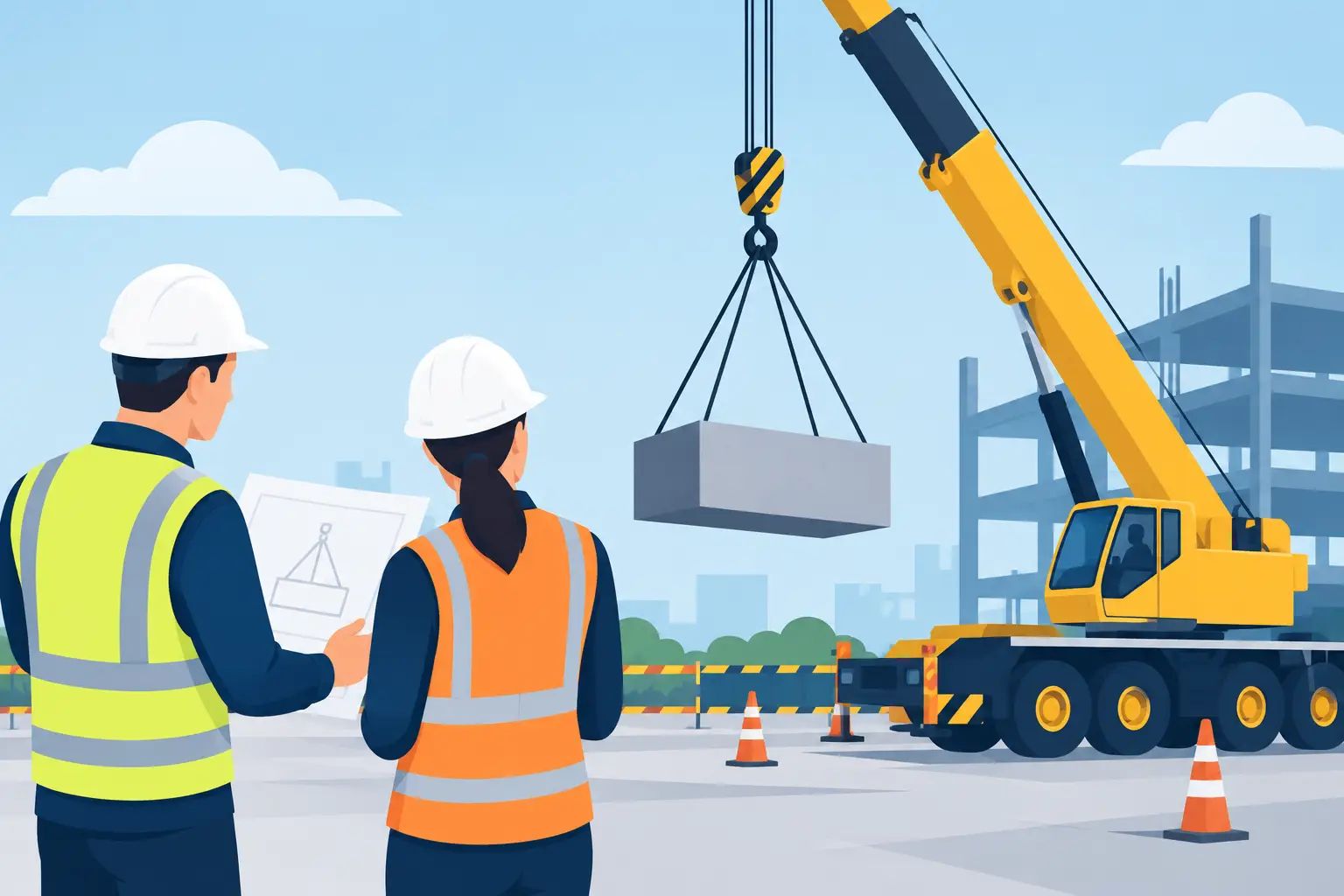
For an engineering or facilities manager, the practical objective is clear: every item of lifting equipment should be safe, identifiable, within its examination period and supported by records that can be produced immediately during an audit or investigation.
How often should lifting equipment be examined?
The examination interval depends on the equipment and how it is used. Equipment used to lift people generally requires thorough examination every six months. Lifting accessories, such as slings, shackles, lifting chains and spreader beams, also normally require examination every six months.
Most lifting equipment used only for goods, including many overhead cranes and hoists, requires thorough examination at least every 12 months. However, this is not a blanket rule to apply without thought. Equipment may need more frequent examination where it operates in harsh conditions, handles corrosive materials, works at high duty cycles, is exposed to impact or heat, or has a history of defects.
A written examination scheme may set different intervals where it is prepared by a competent person and is appropriate to the equipment and operating environment. This can be useful for complex sites, but it must be actively managed. A scheme is not a route to reducing inspection without evidence. It should reflect real risk, operating duty and the condition of the equipment.
LOLER examinations are also required following exceptional circumstances that could affect safety. Examples include overloads, collisions, significant repairs, structural alterations, long periods out of use or suspected damage. If a crane has received a heavy impact from a lorry, suffered a dropped load or had a major hoist repair, waiting for the next planned date may leave an unacceptable gap in control.
The date on the certificate is not the only trigger
Production pressure can make it tempting to treat the certificate expiry date as the only issue. It is not. Operators should be encouraged to report unusual noises, poor brake performance, irregular travel, visible rope damage, limit-switch faults and changes in crane behaviour as soon as they are seen.
Daily or pre-use checks are the first line of defence. They do not replace a thorough examination, but they often identify a developing problem early enough to prevent a breakdown or dangerous lift.
What a thorough examination covers
The exact scope depends on the equipment. A competent examiner will assess the crane or hoist against its design, condition, usage and safety-critical components. On an overhead crane, this may include the runway interface, bridge structure, end carriages, wheels, buffers, electrical supply arrangement, controls, brakes, limit switches, hoist gearbox, hook block, safety latch and wire rope or chain.
The examiner will also review markings and safe working load information. If capacity labels are missing, illegible or inconsistent with the equipment configuration, operators cannot make safe lifting decisions. The same applies where a crane has been altered, fitted with a new hoist or used with lifting attachments that change the practical lifting arrangement.
Lifting accessories deserve equal attention. They are often moved between bays, stored poorly or exposed to damage that is not obvious at a distance. A sling with a damaged tag, cut webbing or distorted fitting should not remain in circulation simply because the crane itself has a current certificate.
The examination may identify defects that require monitoring, defects that need rectification before the next examination, or defects that present an immediate danger. Where there is an immediate risk, the equipment or relevant part of it must be taken out of service. That can feel disruptive, but continuing to lift with unsafe equipment creates a far greater operational and legal exposure.
The report is your evidence of control
A thorough examination should result in a written report containing clear equipment identification, the examination date, the next due date, findings, defects and any restrictions or recommendations. The report must be retained as required by the regulations and be readily available to those responsible for the lifting operation.
For multi-crane sites, paper certificates stored in a drawer create avoidable risk. Documents go missing, serial numbers are transcribed incorrectly and expired items are harder to spot across multiple departments. Cloud-managed certification gives maintenance and operations teams a live view of what is due, what has failed and what work remains outstanding.
That visibility has a direct commercial benefit. It allows inspections and remedial work to be planned around production requirements rather than discovered at the last minute when an auditor asks for evidence or a crane is needed for a critical job.
CraneCert supports this approach with audit-ready certification and next-day LOLER documentation, helping sites across Yorkshire, the Midlands and the North of England maintain a clear compliance trail without chasing paperwork.
Common gaps that cause trouble at audit time
The most frequent compliance failures are rarely complicated. Equipment has been added to site but never entered into the inspection register. A lifting beam is used occasionally and has been overlooked. Slings have no individual identification. A crane has been modified, but the documentation still describes its previous configuration. Or a defect recorded on an earlier report has not been formally closed out.
Another common issue is confusing PUWER and LOLER. PUWER covers the safe provision and use of work equipment more broadly, while LOLER focuses specifically on lifting equipment and lifting operations. A crane may need attention under both sets of regulations. For example, a thorough examination may confirm the lifting equipment is safe in principle, while a PUWER inspection highlights issues with guarding, controls, operator instructions or general maintenance arrangements.
Neither regime should be managed in isolation. The strongest approach combines thorough examination, planned preventative maintenance, operator checks, defect reporting and clear records. That is what turns compliance from a calendar task into a controlled lifting system.
Planning inspections without creating avoidable downtime
A well-planned examination does not have to stop an entire facility. The right approach depends on crane coverage, production layout, access requirements and whether the equipment can be isolated safely. Some examinations can be scheduled during planned shutdowns, shift changes or lower-demand periods. Others require a more carefully controlled outage, particularly where a single crane supports a bottleneck process.
Start with an accurate asset register. Record the make, model, serial number, safe working load, location, examination due date and any special operating conditions for every crane, hoist and accessory. From there, build an annual programme that accounts for statutory dates, servicing needs and known production peaks.
Do not wait until the final week before expiry. Leaving inspections late reduces choice of dates and can force disruptive decisions if defects are found. A forward plan gives time to source parts, arrange access equipment and schedule repairs without taking a critical lifting point offline unexpectedly.
Where an ageing crane is generating repeated defects, the right answer may not be another short-term repair. A condition review can establish whether targeted upgrades, a hoist replacement or a new crane system offers better value over the next several years. The decision should weigh capital cost against downtime exposure, repair frequency, spare-parts availability and the cost of lost output.
A safer lift starts before the hook moves
LOLER compliance is not achieved by obtaining a certificate once a year. It is built through competent examination, responsive defect rectification, disciplined daily checks and maintenance that reflects how hard the equipment actually works. When those controls are in place, the benefit is more than legal certainty: operators have confidence in the equipment, managers have evidence at audit time and production is less exposed to avoidable stoppages.
The best time to review your lifting register is before a certificate expires or a defect forces the issue. A clear plan now gives your team more control when the next lift cannot wait.