Lifting Equipment Compliance That Stands Up
Lifting equipment compliance for safer sites: manage LOLER, PUWER, inspections, records, and maintenance to protect people and keep production moving.
CraneCert · 17 November 2026
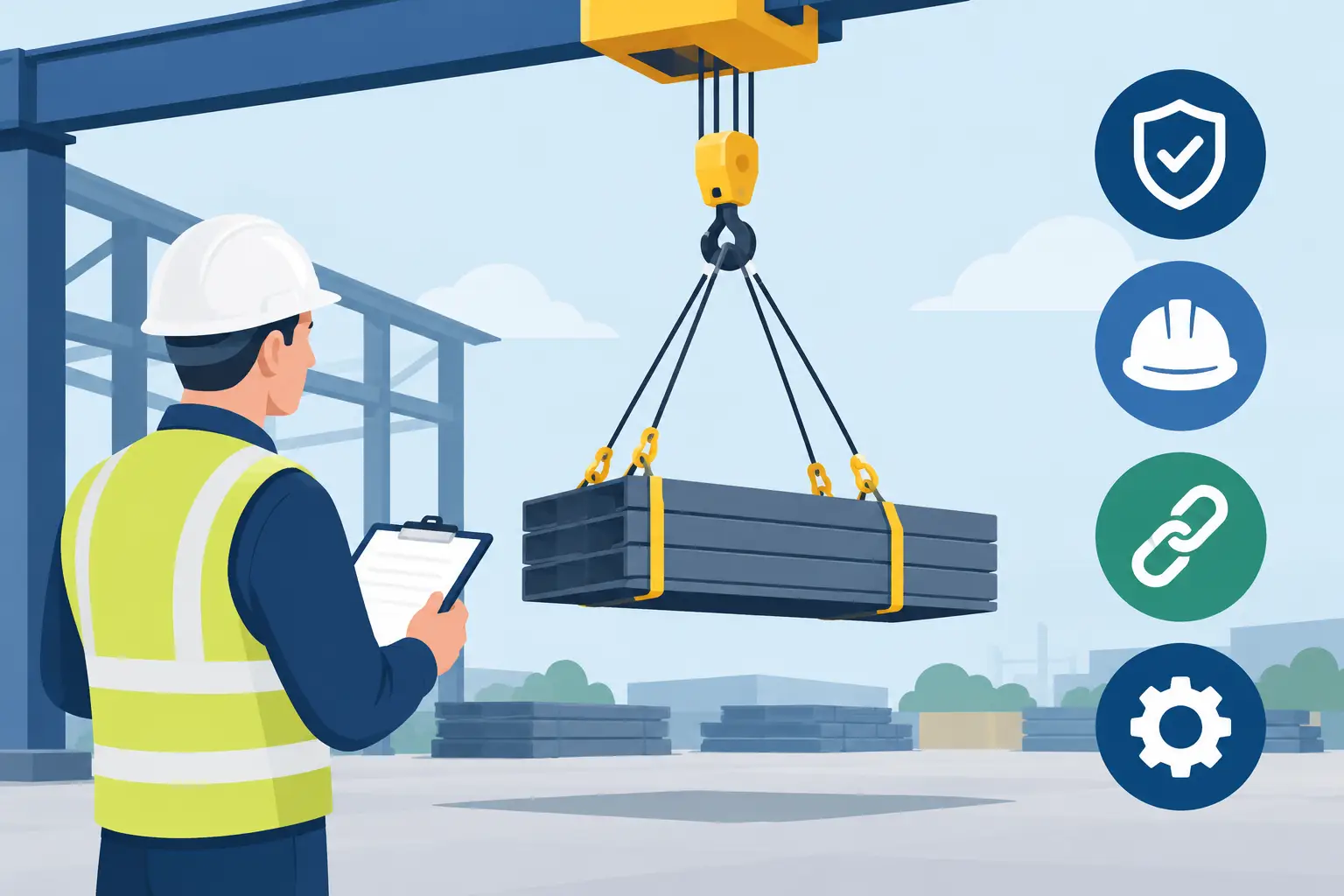
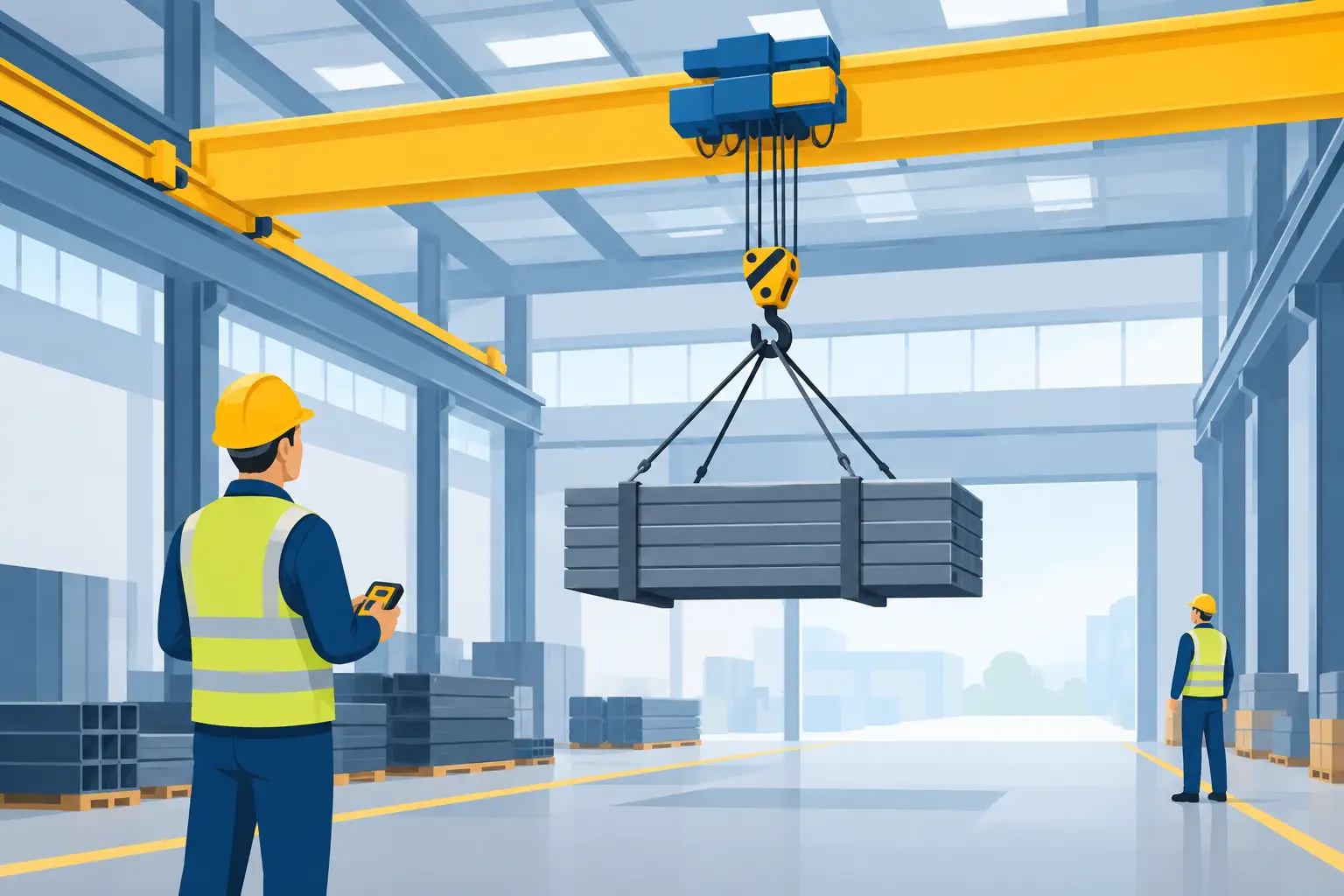
A crane can appear to be working perfectly right up until the moment it is needed for a critical lift. That is why lifting equipment compliance cannot be treated as a folder of certificates or a task to deal with when an inspection date is close. For factories, workshops, warehouses and yards, it is the operating discipline that protects people, prevents avoidable stoppages and gives management evidence that lifting operations are controlled.
The practical challenge is that compliance sits across the equipment’s whole life. It involves the condition of the crane or hoist, the accessories used below the hook, the way work is planned, the competence of users and the quality of the records available when an auditor, customer or insurer asks to see them.
What lifting equipment compliance covers
Two regulations are central to most workplace lifting operations. LOLER, the Lifting Operations and Lifting Equipment Regulations 1998, deals with whether lifting equipment is suitable, safe to use and thoroughly examined at the required intervals. PUWER, the Provision and Use of Work Equipment Regulations 1998, covers the broader safe use, maintenance, inspection, guarding and training requirements for work equipment.
They overlap, but they are not interchangeable. A valid LOLER thorough examination does not prove that an overhead crane has been maintained adequately between examinations. Equally, a planned maintenance visit is not a substitute for a statutory thorough examination. A business needs both, alongside effective daily operating checks and properly managed lifting operations.
For an overhead crane, compliance can include the runway and supporting structure where relevant, electrical supply and controls, brakes, limit switches, hoist rope or chain, hook and safety latch, pendant or radio controls, load markings and warning devices. It also extends to lifting accessories such as slings, shackles, lifting beams, eyebolts and magnetic lifters. The accessory may be small, but a missing identification mark or damaged sling can stop a lift just as effectively as a crane fault.
Start with a clear equipment register
The quickest way for compliance to fail is to lose sight of what equipment is on site. This often happens after an acquisition, a building move, a new production line or years of piecemeal equipment purchases. If an item is not on the register, it is unlikely to be on an inspection schedule.
Create one controlled register covering every lifting asset. Each entry should identify the equipment, its unique serial number or asset reference, safe working load, location, responsible person, examination due date and maintenance requirement. Record the make and model where known, but do not allow an unfamiliar or older manufacturer to become a reason for inaction. Competent engineers can assess and maintain equipment from a wide range of established crane and hoist manufacturers.
The register should also make ownership clear. Hired equipment, contractor-owned lifting accessories and customer-supplied lifting beams can create uncertainty on busy sites. Before work starts, establish who is responsible for inspection evidence and whether the equipment is appropriate for the planned lift.
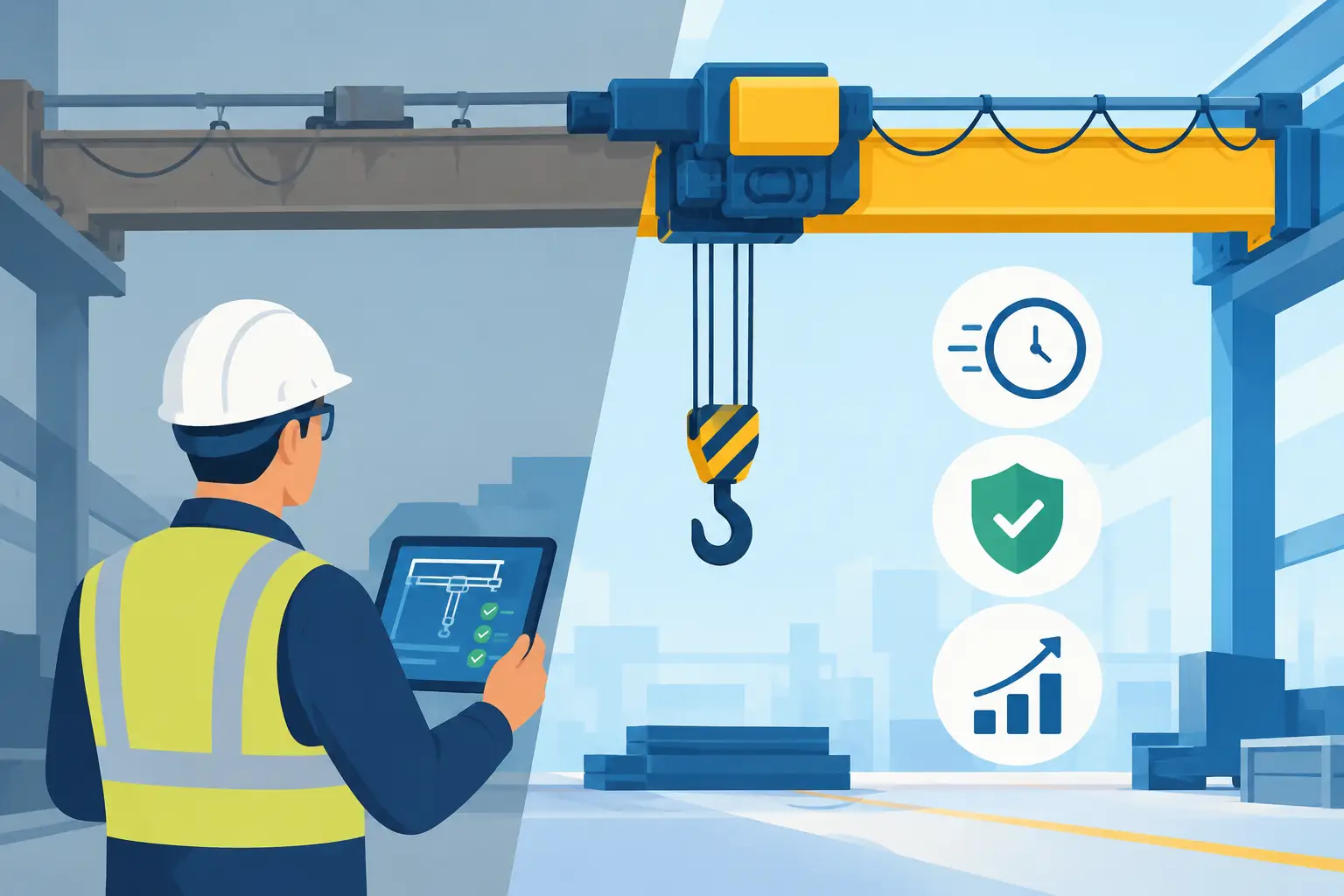
Cloud-managed records are particularly useful where a business runs several sites or has multiple departments using lifting equipment. The benefit is not simply less paperwork. It is being able to retrieve the current report, defect history and due dates immediately rather than searching through a cabinet while production waits.
Set the right LOLER examination intervals
LOLER requires thorough examination by a competent person at defined intervals, or in accordance with a written scheme of examination where appropriate. In many cases, lifting equipment used to lift people requires examination at least every six months. Other lifting equipment is generally examined at least every 12 months, while lifting accessories are commonly examined every six months.
Those intervals are a starting point, not a maintenance strategy. High duty cycles, abrasive environments, outdoor use, corrosive conditions, shock loading and repeated near-capacity lifts can justify closer attention. A fabrication bay using a crane across two shifts faces very different wear patterns from a lightly used maintenance hoist.
A thorough examination may also be needed after exceptional circumstances. This could include a significant overload, impact damage, a suspected brake failure, major repair, modification, prolonged period out of use or exposure to fire. The right response depends on the event and the equipment, but returning it to service on assumption is not an acceptable control.
When a report identifies a defect that creates an immediate danger, the equipment must not continue in use. The report may require the competent person to notify the relevant enforcing authority, but the immediate operational priority is simpler: isolate the equipment, make the area safe and arrange corrective work. A signed report does not make a dangerous defect acceptable.
Keep maintenance separate from examination
A planned maintenance programme is where many faults are found before they become a statutory failure or a breakdown. It should be based on the crane’s duty cycle, environment, manufacturer guidance, age and fault history, not only on the date of the next LOLER examination.
During servicing, engineers may inspect and adjust brakes, test limit switches, assess rope condition and reeving, check lubrication, examine electrical components, review travel motion, inspect end carriages and look for structural deterioration. The precise scope depends on the crane configuration and its use. A double-girder production crane, a jib crane supporting a workstation and a yard gantry do not carry the same risks or need the same service interval.
There is a commercial case for this discipline. A worn contactor, poor brake adjustment or damaged festoon system may be inexpensive to address during a planned visit. Left unchecked, it can stop a line, delay dispatches or create a hazardous recovery job. Downtime is money, particularly when the lifting equipment serves a bottleneck process.
Control lifting operations, not just equipment
Even a well-maintained crane can be used unsafely. LOLER requires lifting operations to be properly planned, appropriately supervised and carried out safely. For routine, low-complexity lifts, this may be supported by clear procedures, trained operators and suitable accessories. Higher-risk work needs more formal planning by a competent person.
The lift plan should reflect the real conditions: load weight, centre of gravity, pick-up points, travel route, obstructions, personnel exclusion zones, communications, ground conditions for mobile equipment and the consequences of a dropped load. Where the load is unusual, poorly documented or close to equipment capacity, stop and verify rather than relying on estimates.
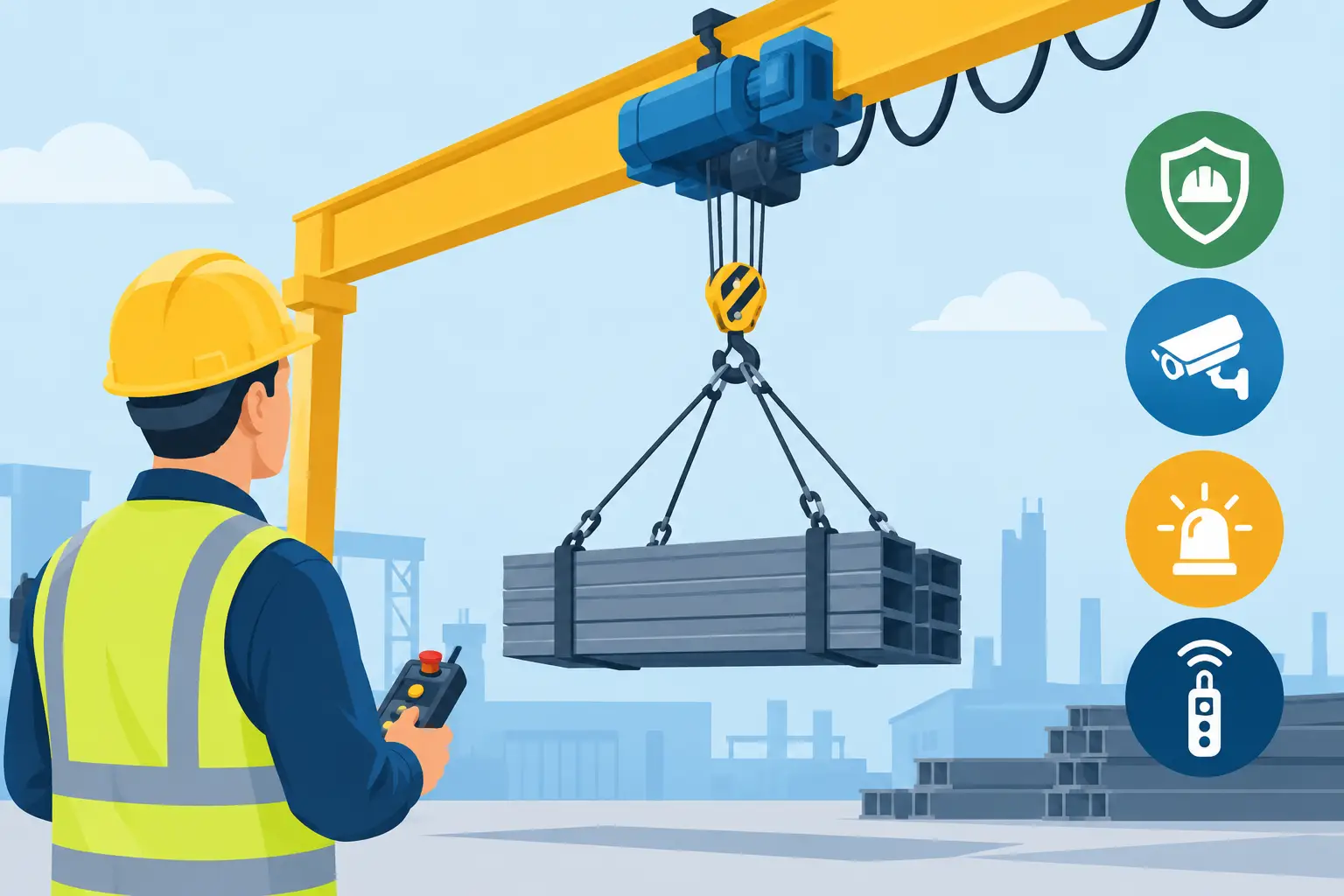
Operators also need a simple route to report problems. Unexpected noise, brake drift, erratic travel, damaged pendant controls, a distorted hook or a frayed sling are not minor observations to carry into the next shift. They are reasons to remove equipment from use or escalate for assessment. Clear tagging and isolation arrangements prevent a defective item returning to service by mistake.
Make audit evidence easy to produce
Audit readiness is the result of good control, not an annual paperwork exercise. A facilities or engineering manager should be able to show a current equipment register, thorough examination reports, maintenance records, defect repairs and evidence that overdue actions are being managed.
The most useful records normally include:
- current LOLER thorough examination reports and any written scheme of examination
- maintenance, repair and breakdown history for each crane or hoist
- inspection records for lifting accessories and pre-use check arrangements
- operator training, authorisation and lifting-operation procedures
- defect reports, isolation records and evidence of remedial action.
Check that documents identify the exact asset. A generic report for “workshop crane” creates problems where a site has several similar units. Dates, serial numbers, safe working loads and locations need to match the equipment on the floor.
Treat ageing assets as a planned decision
Older lifting equipment does not automatically need replacing. Many cranes remain safe and productive for decades when maintained properly. The decision depends on structural condition, reliability, spare-parts availability, duty demands, control-system condition and the cost of repeated failures.
However, an ageing crane can become a compliance and continuity risk when defects recur, records are incomplete or obsolete components extend repair times. Upgrades to controls, drives, radio systems, hoists or safety devices can often extend useful life. In other cases, a replacement crane designed around current capacity, span, headroom, hook approach and duty cycle is the more defensible investment.
The key is to make the decision before the asset dictates it through a prolonged failure. A competent lifting-equipment partner can combine statutory examination findings, service history and operational requirements into a practical recommendation. CraneCert supports this approach with planned maintenance, LOLER and PUWER inspections, repairs and crane upgrades across the North of England.
Compliance works best when it becomes part of normal production control: equipment is known, checks are current, defects are acted on and records are ready. That gives your team one less uncertainty to carry into the next lift.