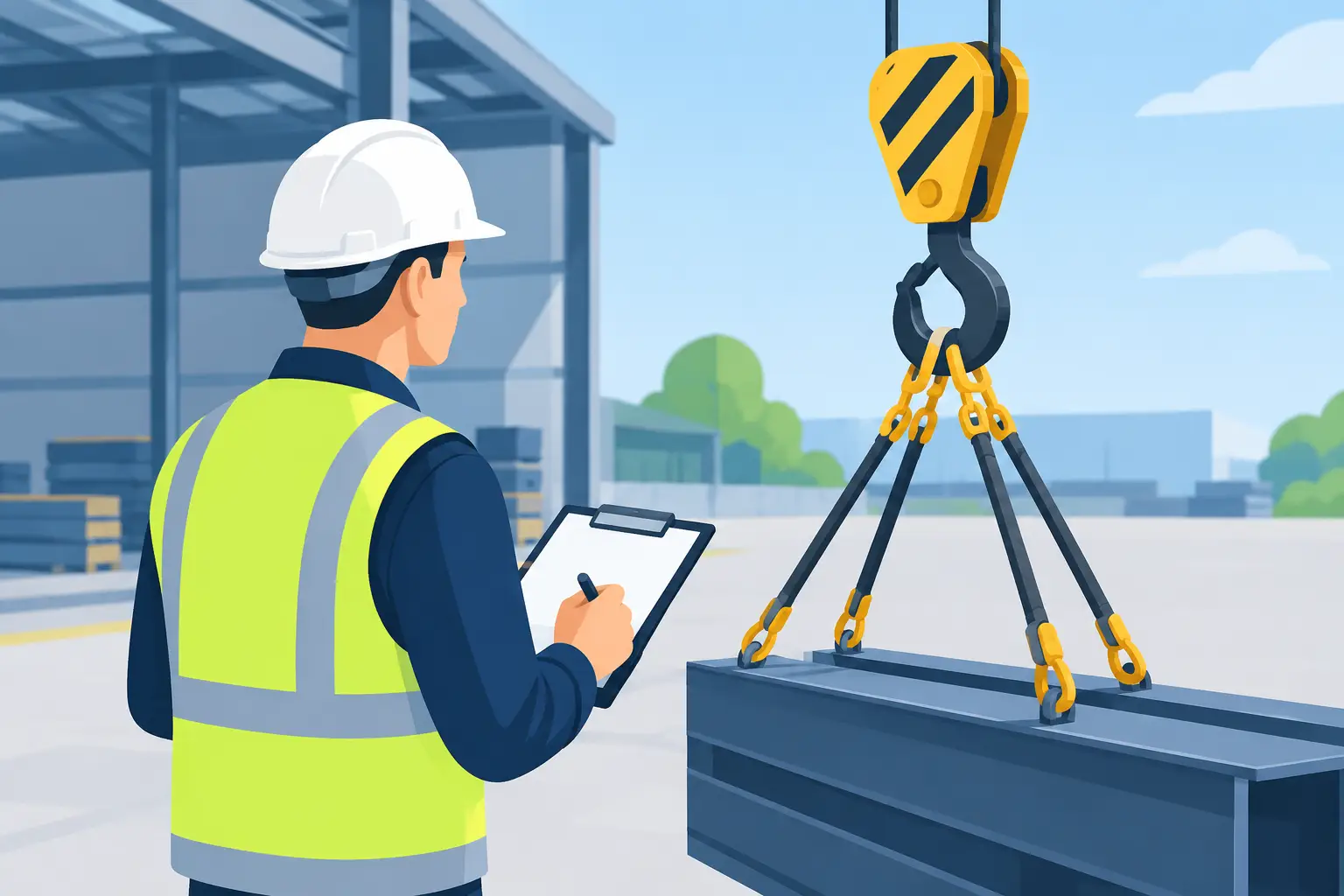
Crane Retrofits That Cut Downtime and Risk
Crane retrofits can improve safety, compliance and uptime. Learn when to upgrade controls, hoists and safety systems rather than replace a crane outright.
CraneCert · 11 November 2026
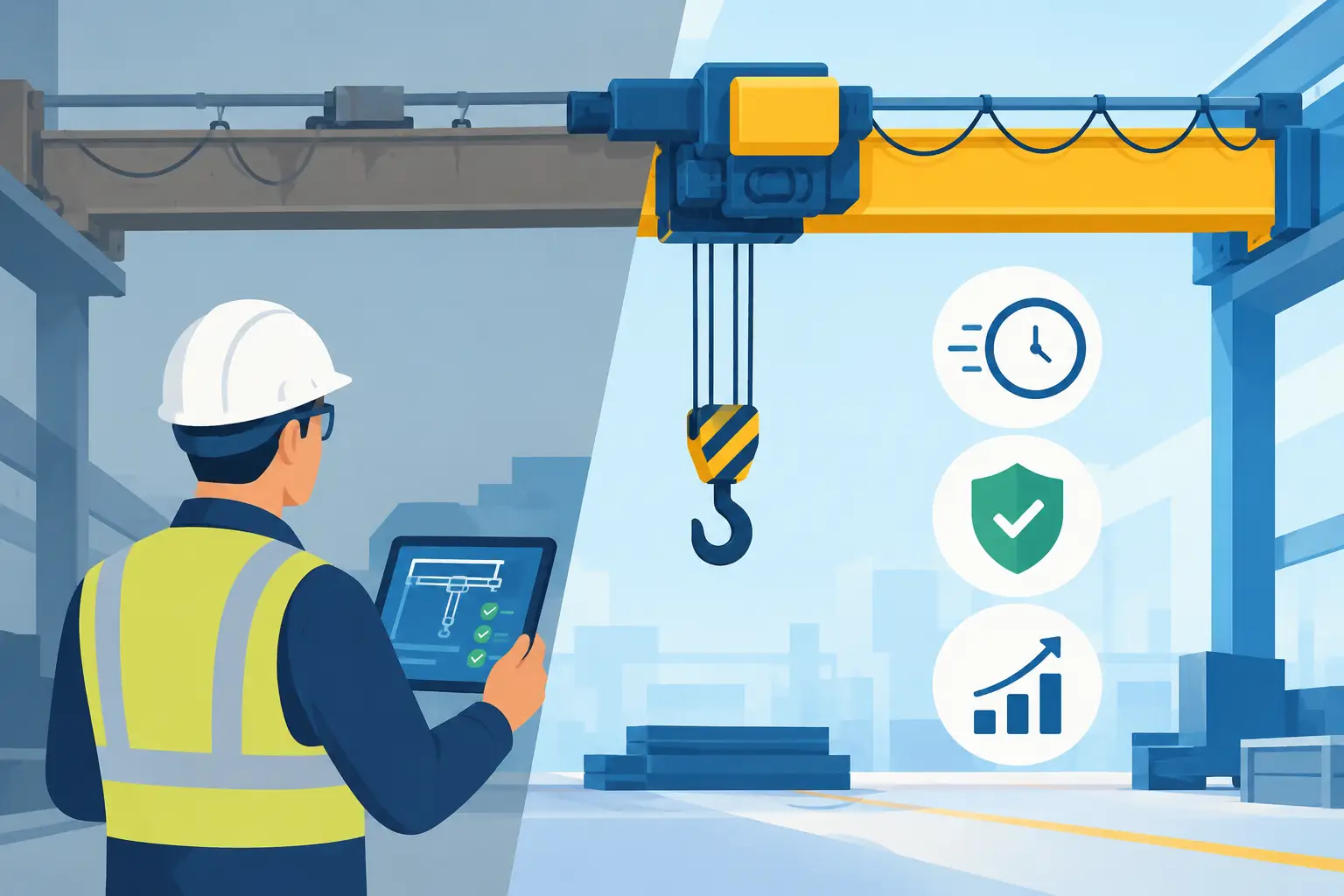
A crane does not need to be at the end of its working life to become a production risk. Ageing controls, unreliable hoists, worn electrical components and outdated safety devices can all cause avoidable stoppages, often just as workload increases. Well-planned crane retrofits can extend the useful life of a sound structure while bringing lifting performance, safety and compliance back under control.
For facilities and engineering managers, the question is rarely whether an older crane can still lift. The real question is whether it can lift safely, predictably and with evidence available for a LOLER examination, PUWER inspection or customer audit. If the answer is uncertain, a retrofit assessment should be considered before the next failure dictates the decision.
What is a crane retrofit?
A crane retrofit is the targeted replacement or upgrade of components on an existing overhead crane, gantry crane, portal crane or jib crane. Rather than removing the complete system, the work focuses on the parts that limit safety, reliability, capacity or operational control.
The scope can be modest, such as fitting a new pendant control or replacing an obsolete inverter. It can also be substantial, including a new hoist, modern electrical panel, radio remote controls, anti-collision protection, variable speed drives and revised safety circuits. The crane runway, bridge and supporting structure may remain in service where their condition and suitability have been properly assessed.
This approach can be commercially sensible where the steelwork is sound, the original crane layout still suits the building, and the required lifting capacity has not materially changed. It is not a shortcut around engineering judgement. The retrofit must be specified for the duty, environment, load handling requirements and existing installation.
When crane retrofits make more sense than replacement
Complete crane replacement is sometimes the right answer, particularly where capacity, span, headroom or duty cycle needs have changed. However, replacement involves more than the price of a new crane. There may be building alterations, runway modifications, production disruption, lifting plans for installation and longer lead times.
A retrofit can be the better route when a crane is structurally serviceable but becoming difficult to maintain. Common warning signs include repeated electrical faults, discontinued parts, inconsistent hoist speeds, drifting travel motions, damaged festoon systems and emergency stops that regularly trigger without an obvious cause. An ageing crane that passes its thorough examination may still be costing the business through lost shifts, call-outs and operator frustration.
It also makes sense to look at upgrade work after a change in operating practice. A workshop that has introduced tighter production tolerances may need smoother variable-speed control. A bay handling long loads may need anti-collision or improved radio control. A facility with frequent personnel movements beneath the crane may need improved warning devices, zoning or limit protection.
The decision depends on the condition of the existing equipment. Before committing, assess the crane structure, runway alignment, wheels, end carriages, hoist duty classification, electrical supply and the availability of compatible components. Retrofitting a heavily worn crane without addressing the underlying causes simply moves the problem elsewhere.
The upgrades that deliver the clearest operational value
Not every upgrade delivers the same return. The right specification starts with how the crane is used on a normal shift, not with a catalogue of optional extras.
Hoist replacement and lifting performance
The hoist is often the most critical part of an upgrade project. A modern wire-rope or chain hoist can improve reliability, braking performance, overload protection and access to spare parts. It may also provide better hook approach or lifting height, although these dimensions need checking carefully against the existing crane geometry.
Capacity must never be assumed. If a business intends to lift heavier loads, the whole system needs review: the hoist, crane bridge, end carriages, runway, support structure and foundations where applicable. A new higher-capacity hoist on an unsuitable crane is not an upgrade. It is a serious safety risk.
Controls, drives and electrics
Obsolete contactor panels and tired cabling are a regular cause of intermittent faults. Modern control panels can improve fault finding, provide clearer isolation arrangements and make future maintenance more straightforward. Variable speed drives can reduce load swing, ease mechanical stress and allow more accurate positioning, particularly in fabrication, machining and assembly areas.
Radio remote controls can give operators a better view of the load, provided the operating position and exclusion zone are managed properly. Pendant controls remain appropriate in many applications. The best choice depends on visibility, load type, operator movement and local site rules.
Safety devices and protection systems
Safety upgrades should reflect the hazards identified in the lifting operation. This might include overload limiting devices, upper and lower hoist limit switches, travel limits, audible alarms, warning lights, anti-collision systems or crane zoning. In multi-crane bays, collision prevention can protect both equipment and people, but it must be configured around actual working practices rather than treated as a fit-and-forget device.
A retrofit is also an opportunity to review emergency-stop arrangements, isolation points and signage. These details matter when an operator has seconds to respond or a maintenance engineer needs to make equipment safe before starting work.
Power supply and current collection
Festoon cable systems, conductor bars and collector assemblies are easy to overlook until they fail. Damaged carriers, worn collectors and poor support spacing can produce nuisance trips, lost control signals and exposed electrical hazards. Upgrading the power supply system can remove a recurring cause of breakdowns, especially on cranes that travel long distances or work in dusty, high-use environments.
Compliance must be designed into the work
Crane upgrades affect equipment that is subject to legal duties. The exact requirements depend on the modification and how the crane is used, but LOLER and PUWER must be central to the planning process.
LOLER requires lifting equipment to be strong and stable enough for its intended use, marked with its safe working load and thoroughly examined at the required intervals by a competent person. PUWER requires work equipment to be suitable, maintained, inspected where necessary and used by suitably trained people. A retrofit that changes capacity, controls or safety functions should be supported by appropriate documentation, testing and certification.
This is where poor-quality retrofit work creates an audit problem. If drawings, declarations, test records, inspection reports and altered safe working load information are incomplete, the site may struggle to demonstrate control. The work may look finished, but the compliance trail is not.
A properly managed project should establish the existing crane specification before work begins, define the change, complete required inspections and commissioning checks, and update records after handover. For sites managing several assets, cloud-held certification makes it far easier to retrieve evidence when an auditor or insurer asks for it.
Plan the retrofit around production, not around the engineer's diary
The strongest technical proposal can still fail commercially if it stops a critical production bay at the wrong time. Retrofit work should be planned around the operational reality of the site: shift patterns, shutdown windows, access restrictions, overlapping contractor activity and any temporary lifting arrangements needed while the crane is unavailable.
Start with a survey. This should capture the crane make and model where known, safe working load, span, lift height, runway arrangement, duty cycle, supply details, current defects and the loads being handled. Photos and existing documentation help, but an engineer needs to verify the installation on site.
Next, agree the intended outcome. Is the priority fewer breakdowns, better positioning, increased safety, a capacity change or access to readily available spares? A project with a clear operational objective is easier to specify and measure.
Installation planning should then cover isolations, work at height, exclusion zones, lifting arrangements for components, testing and handover. Where production cannot stop, phased work or planned out-of-hours installation may be justified. It costs more than a straightforward shutdown job, but the cost may be lower than losing a full day of output.
Avoid the false economy of component-only decisions
Replacing the failed part with the cheapest available equivalent can appear sensible when the crane is down. It can also leave an ageing system with mixed, unsupported components and no clear reliability plan. The same applies to fitting a modern hoist without checking wheel wear, brake condition, runway condition or the crane's actual duty.
A balanced retrofit plan considers the asset as a whole. Some components may have years of reliable service left; others may be close to failure. Combining urgent repair with planned upgrades can reduce repeat access costs and avoid another disruptive shutdown a few months later.
CraneCert can assess existing equipment across a wide range of manufacturers and provide a clear recommendation based on condition, compliance and production need. The objective is not to replace equipment unnecessarily. It is to make sure the crane you rely on is safe to use, supportable and fit for the work ahead.
If a crane is increasingly dictating your maintenance schedule, do not wait for a breakdown or failed examination to force the issue. A focused survey now can identify whether a retrofit will protect the next production run, and give your team the documentation to prove the lifting operation is under control.