Emergency Overhead Crane Repair When Downtime Hits
Emergency overhead crane repair that protects people, restores production and keeps your lifting operation compliant when a breakdown stops work cold.
CraneCert · 11 October 2026
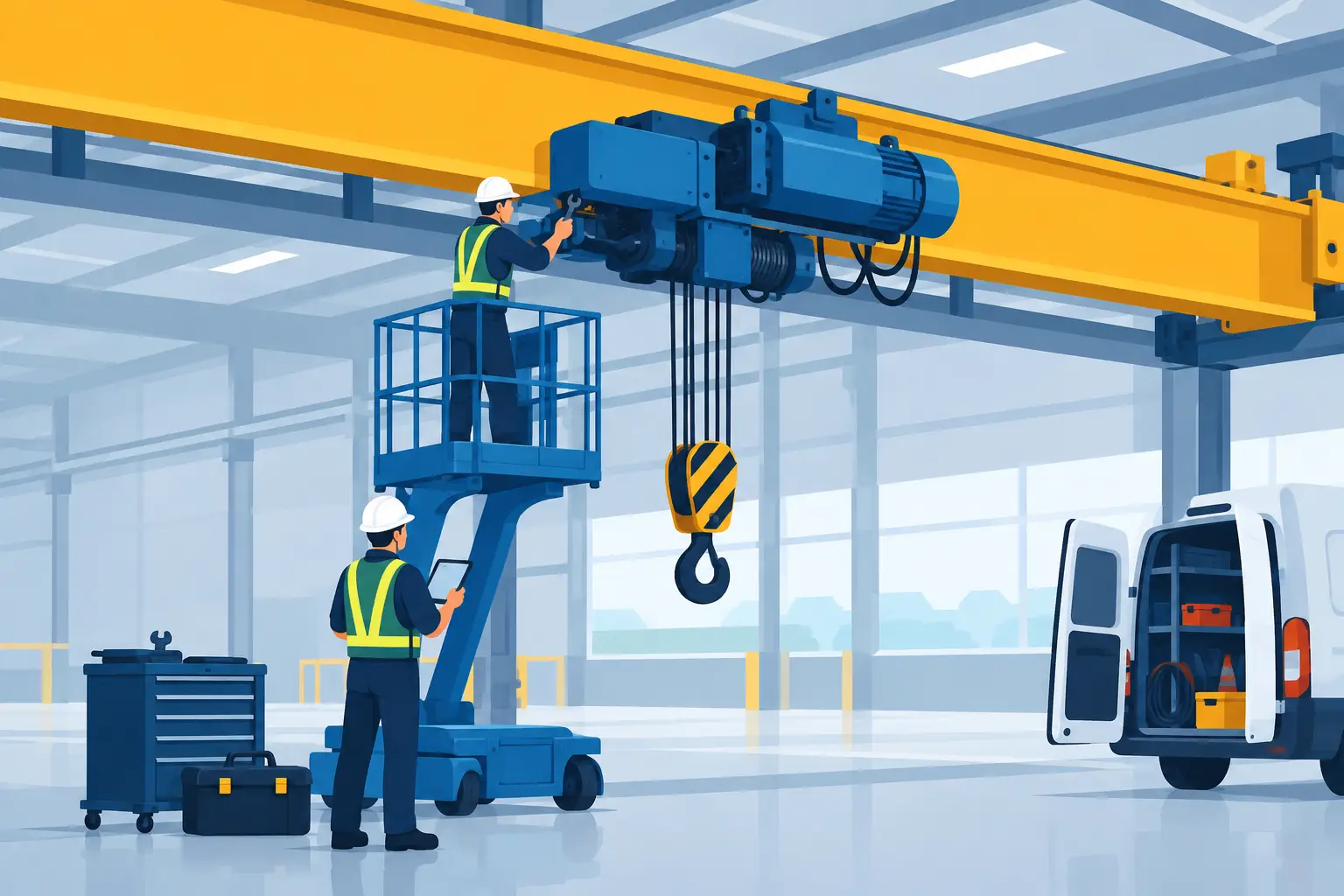
A crane failure rarely happens at a convenient time. A hoist that will not lift, a travelling motion that cuts out or an emergency stop that will not reset can stop a production bay immediately. Emergency overhead crane repair is about making the area safe first, identifying the real fault quickly and returning equipment to service only when it is safe, compliant and fit for the work ahead.
For facilities and engineering teams, the pressure is obvious. Downtime delays dispatches, leaves materials stranded and can force people to find unsafe workarounds. The right response protects your people and limits lost production without treating a safety-critical failure as a quick fix.
What to do when an overhead crane breaks down
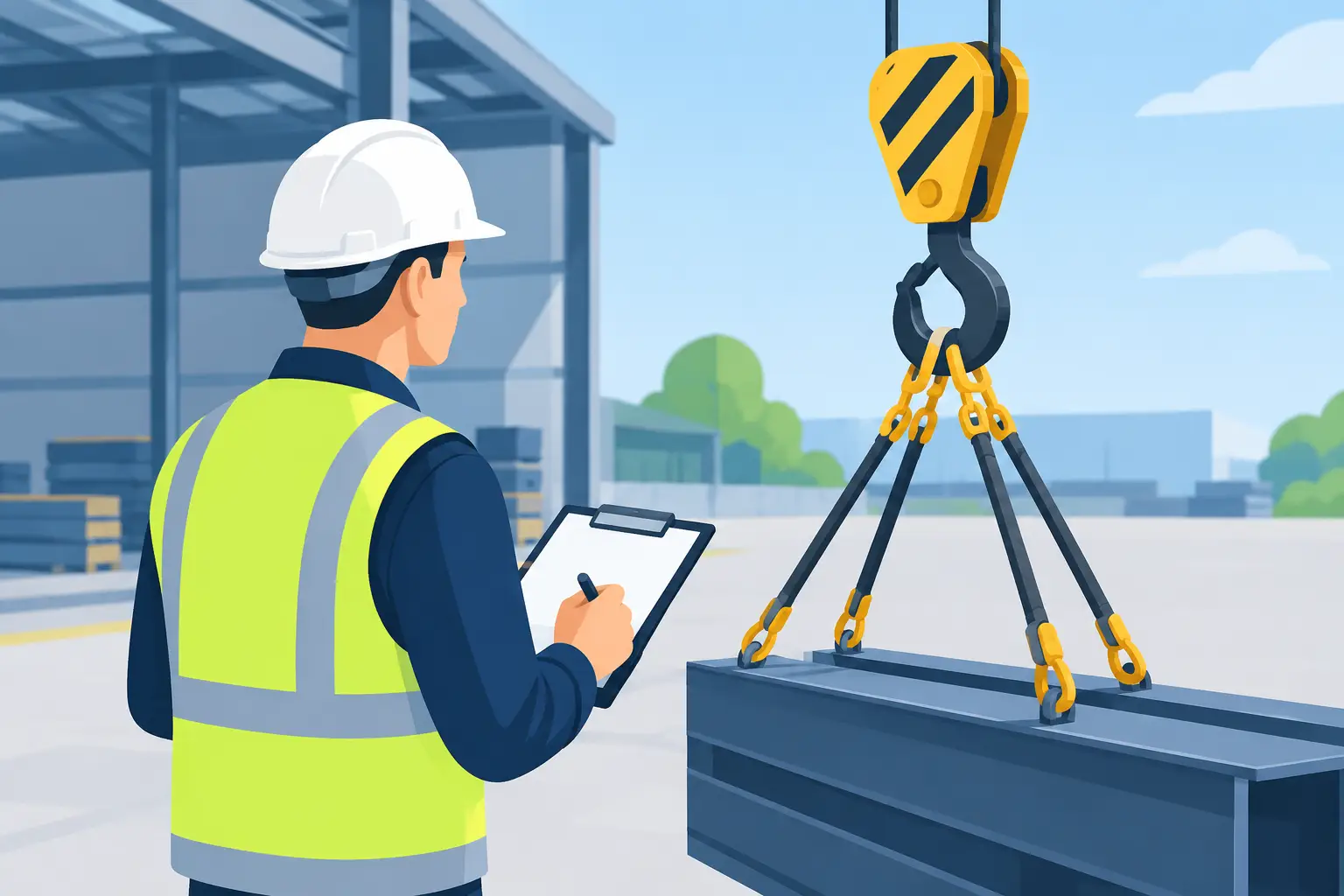
The first decision is operational, not technical: stop using the crane. Isolate the equipment where this can be done safely, prevent unauthorised use and keep people clear of any suspended load or affected travel path. Do not ask operators to reset a recurring fault, bypass a limit switch or continue lifting at reduced capacity. These actions can turn a repairable breakdown into a serious incident.
Record what happened while the details are fresh. Note the crane and hoist identification, the activity underway, any load on the hook, fault codes, unusual noises, visible damage and whether the fault is intermittent. If the crane is serving a critical process, identify what is now safely held, what can be moved by another approved method and which production area is affected.
A competent engineer can diagnose faster with this information, but it also creates a useful record for your maintenance history and any later investigation. If there has been a dangerous occurrence, damage to lifting equipment or a suspected safety-device failure, treat the situation with the level of control it requires before considering a return to work.
Emergency overhead crane repair starts with safe diagnosis
Not every stoppage needs the same response. A straightforward pendant fault, worn contactor or damaged cable may be resolved quickly once the cause is confirmed. A brake problem, hook damage, failed overload protection, rope defect or structural concern demands a more cautious assessment. The key distinction is whether the fault affects the crane's ability to hold, control or limit a load safely.
A proper emergency call-out should establish the condition of the whole affected function, not simply make the warning disappear. For example, a hoist that trips on overload may have an electrical fault, but it could also indicate brake drag, a mechanical obstruction, an incorrectly set protection device or an application that exceeds the hoist's duty rating. Resetting it without finding the cause merely delays the next stoppage.
The same applies to travel faults. Misalignment, worn wheels, damaged conductors, poor festoon systems and end-stop issues can present as an intermittent electrical problem. On a busy crane runway, continuing to operate before the underlying cause is corrected can damage conductors, collectors and the crane itself.
Faults that need immediate attention
Emergency support is particularly important where the failure involves a suspended load, loss of braking performance, abnormal hook or rope condition, damaged electrics, unexpected crane movement, a collision, derailment risk or a failed safety limit. These faults can affect people working below or alongside the crane as well as the operator.
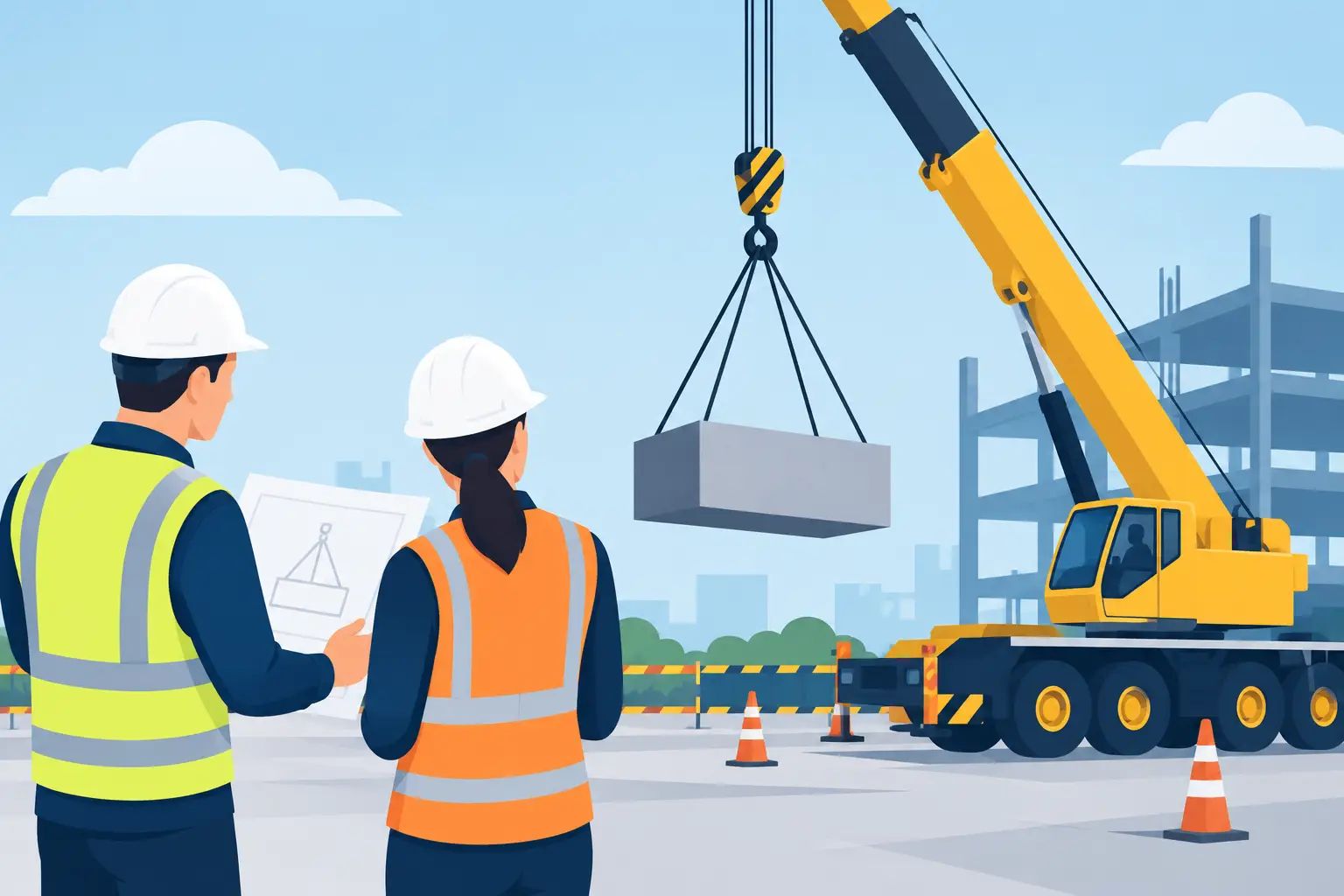
Where a load cannot be lowered safely, the area should remain controlled until a competent lifting plan is in place. The solution may involve another suitable crane, temporary support or a carefully planned recovery. It depends on the load, access, available headroom, crane configuration and the condition of the failed equipment. Improvisation is not a lifting plan.
The repair is only part of getting back to work
Production teams understandably want a clear answer: when can we lift again? A dependable answer follows inspection, repair, functional testing and confirmation that the crane is safe for its intended use. The required work may be modest, or it may reveal a wider issue that cannot responsibly be signed off during an initial call-out.
After a repair, the engineer should test the affected motions and safety functions appropriate to the work carried out. This can include hoist raise and lower, brake operation, travel motions, limit switches, emergency stop function, pendant or radio controls and visual checks of the rope, hook and electrical supply. If parts have failed through wear, the condition of related components should also be considered.
There is a commercial trade-off here. A lowest-cost repair may restart a crane today but leave ageing components and repeat failures in place. A more considered repair can take longer or require planned downtime, yet reduce disruption across the next production cycle. The sensible choice depends on the crane's duty, the cost of lost output, the availability of standby lifting and the age and condition of the asset.
Compliance does not pause during a breakdown
An emergency repair does not remove your duties under LOLER or PUWER. Lifting equipment must remain suitable, maintained and safe to use, while thorough examinations must be completed at the required intervals or in accordance with a written scheme of examination. A repair is not automatically a LOLER thorough examination, and a thorough examination is not a substitute for routine maintenance.
Where a defect could affect safe use, the equipment must not return to service until it has been properly addressed. Depending on the nature of the defect and the repair completed, further examination or documentation may be needed before use. This is especially relevant after significant damage, replacement of critical components, overload events or concerns about the integrity of the crane, hoist or runway.
Good records matter when an auditor, insurer, customer or internal safety team asks what happened. Keep the engineer's report, parts used, test results, defect findings and any recommendations with your lifting-equipment records. Cloud-managed certification makes this easier: the evidence is available when it is needed rather than being held in a folder on site or lost between departments.
Preventing the next emergency call-out
Most crane breakdowns have warning signs. Slow or inconsistent hoisting, noisy travel, repeated tripping, worn pendant cables, damaged festoons, drifting hooks and operators reporting that a crane “does not feel right” should be investigated before they become a full stoppage. Operators are often the first people to spot a change, so their observations should feed into the maintenance process.
Planned servicing should match the actual use of the crane, not simply the date on a calendar. A lightly used jib crane and a double-girder production crane handling loads all shift have very different maintenance needs. Capacity, duty cycle, environment, contamination, temperature, control type, age and access all affect the right inspection and servicing interval.
A practical planned maintenance programme will normally review mechanical wear, electrical condition, safety devices, rope or chain condition, hook wear, brakes, wheels, runway interface and controls. It should also identify components approaching end of life, allowing parts and labour to be planned around production rather than demanded by an emergency.
For older equipment, recurring faults may point to a broader decision. An upgrade to controls, radio systems, variable-speed drives, hoists or safety devices can improve reliability and usability. In other cases, the crane's capacity, headroom, hook approach or duty rating may no longer suit the work. Repeated repair is not always the most economical option when the asset has outgrown the operation.
Choosing an emergency repair partner
When a crane is down, you need more than an available electrician. The engineer must understand lifting equipment, the failure modes of the specific crane and hoist, and the compliance consequences of the repair. Support across established makes such as Demag, Street, Abus, Kone, Stahl and Morris is valuable because industrial sites often operate mixed fleets built up over many years.
Local coverage also changes the outcome. A responsive engineer familiar with industrial environments across Yorkshire, the Midlands and the North of England can get to site quickly, assess the problem and provide a clear recommendation. CraneCert combines 24/7 breakdown response with planned maintenance, LOLER thorough examinations, PUWER inspections, upgrades and new crane capability, so a one-off fault can be addressed in the context of the whole lifting operation.
The most useful repair report does not just state that the crane is working. It explains the fault found, the work completed, any restrictions, parts likely to need attention next and whether further examination, servicing or asset planning is recommended. That gives maintenance and operations teams a basis for an informed decision rather than another unexpected stoppage.
A breakdown is disruptive, but it can also expose the action needed to make your lifting operation safer and more predictable. Keep the crane isolated, get competent help early and use the findings to prevent the next loss of production before it starts.