Electric Chain Versus Wire Hoists Compared
Compare electric chain versus wire hoists by capacity, duty, headroom, speed and maintenance to specify safer lifting equipment for daily operations.
CraneCert · 27 November 2026
A hoist that is technically capable but poorly matched to the job can become a daily production constraint. It may be too slow for the handling cycle, leave insufficient hook height, wear prematurely under frequent use or create avoidable maintenance exposure. The decision between electric chain versus wire hoists should therefore start with the lift itself: what is being moved, how often, how far, where and under what consequences if the equipment stops.
For workshops and production facilities across the North of England, there is no universal winner. Electric chain hoists are compact, economical and highly effective for many lower-capacity lifting duties. Wire rope hoists are generally the stronger choice where capacity, lift height, duty cycle, speed or precise load handling demand a more substantial arrangement. The right specification protects people, supports compliance and keeps material moving without creating unnecessary capital or maintenance cost.
Electric chain versus wire hoists: the practical difference
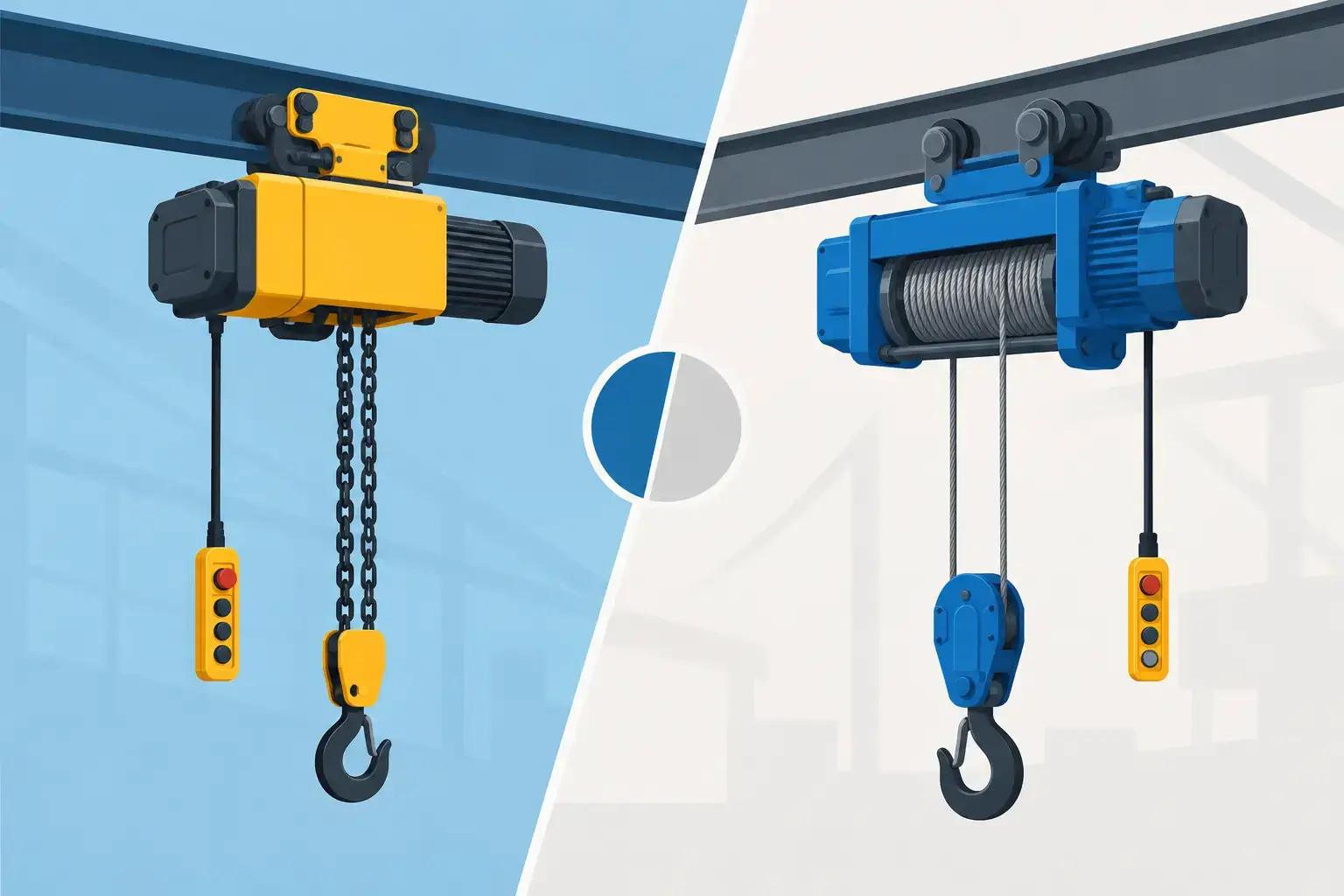
An electric chain hoist lifts using a hardened load chain that passes over a lifting wheel. The chain is normally collected in a chain bag beneath the hoist. This design is compact and commonly fitted to jib cranes, monorail systems and smaller overhead travelling cranes.
A wire rope hoist lifts using steel wire rope wound onto a grooved drum. The drum, rope arrangement and trolley are typically larger than a chain hoist, but that additional engineering supports higher capacities, longer lifts and more demanding operating patterns. On an overhead crane, the wire rope hoist is usually designed as an integrated travelling unit with defined rope geometry, hook approach and lifting speed.
Neither type should be selected on rated capacity alone. A 2-tonne hoist that performs a few lifts each week has a very different requirement from a 2-tonne hoist repeatedly feeding a press line throughout every shift.
Where electric chain hoists make commercial sense
Electric chain hoists are often an efficient answer where loads are moderate, lifting is intermittent and available headroom is limited. Their compact body can provide useful hook height in low-roof workshops, particularly on jib cranes and monorails where every millimetre matters.
They are also well suited to maintenance bays, fabrication cells, stores, plant rooms and assembly areas. If an operator needs to lift motors, tooling, fixtures or fabricated components occasionally and position them carefully, a chain hoist can be a dependable, cost-conscious choice. Installation can be relatively straightforward where the supporting steelwork and runway design are suitable.
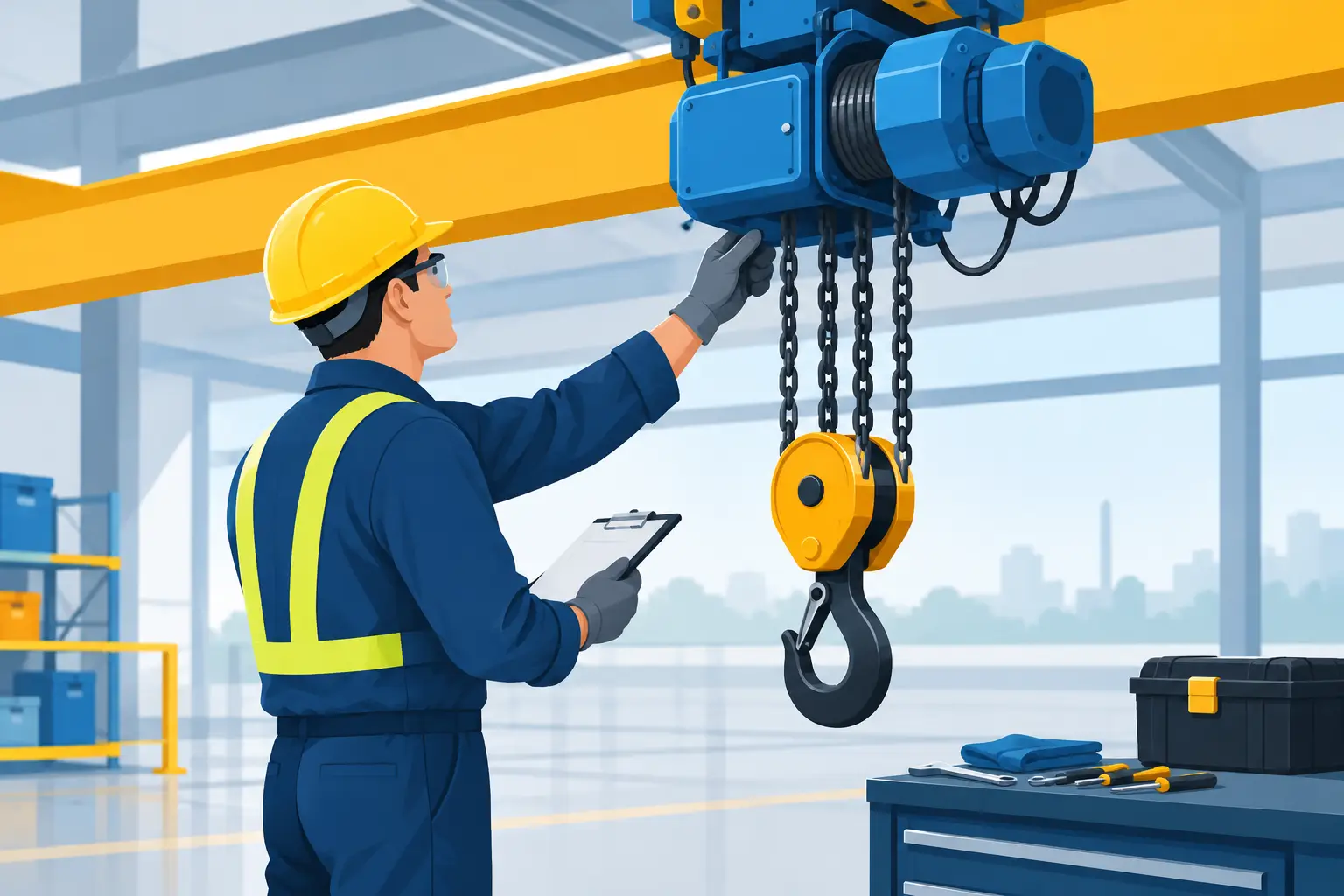
The visible chain is also easy for competent personnel to check during pre-use inspections. Operators can identify obvious damage, twisting, corrosion, poor lubrication or an overloaded chain bag before work begins. That does not replace a planned maintenance regime or a LOLER thorough examination, but it can help faults be reported earlier.
There are limits. As capacity increases, chain hoists become larger and heavier, and the benefits of the compact design begin to reduce. Long lifting heights can also mean a substantial length of chain must be managed safely in the chain bag. If it is poorly positioned, undersized, damaged or allowed to foul nearby equipment, it can affect safe operation.
When a wire rope hoist is the better fit
Wire rope hoists are normally specified for higher-capacity overhead crane applications and more intensive material handling. They are a common choice in manufacturing bays, steelwork and fabrication facilities, engineering plants, warehouses and industrial yards where the crane is integral to output.
The rope drum arrangement makes wire rope hoists particularly suitable for longer lifts. Rather than storing a long chain in a bag, the rope is wound in a controlled pattern on the drum. This can improve practicality where hook travel is significant, although the design still needs to account for the available hoist height and safe clearances at the upper and lower hook positions.
Duty cycle is another major factor. A wire rope hoist can be configured for frequent starts, higher running speeds and repetitive handling, subject to the selected duty classification and controls. For operations lifting materials many times per hour, the improved lifting speeds and heavier-duty construction may return value through shorter cycle times and reduced strain on the equipment.
A wire rope hoist also offers greater scope for specifying the crane around the process. Capacity, rope reeving, lifting speed, trolley speed, crane travel speed, radio control, pendant control, variable-speed drives and anti-sway features can all be considered as part of the overall handling system. That matters when loads must be presented accurately to machinery, production lines or workstations.
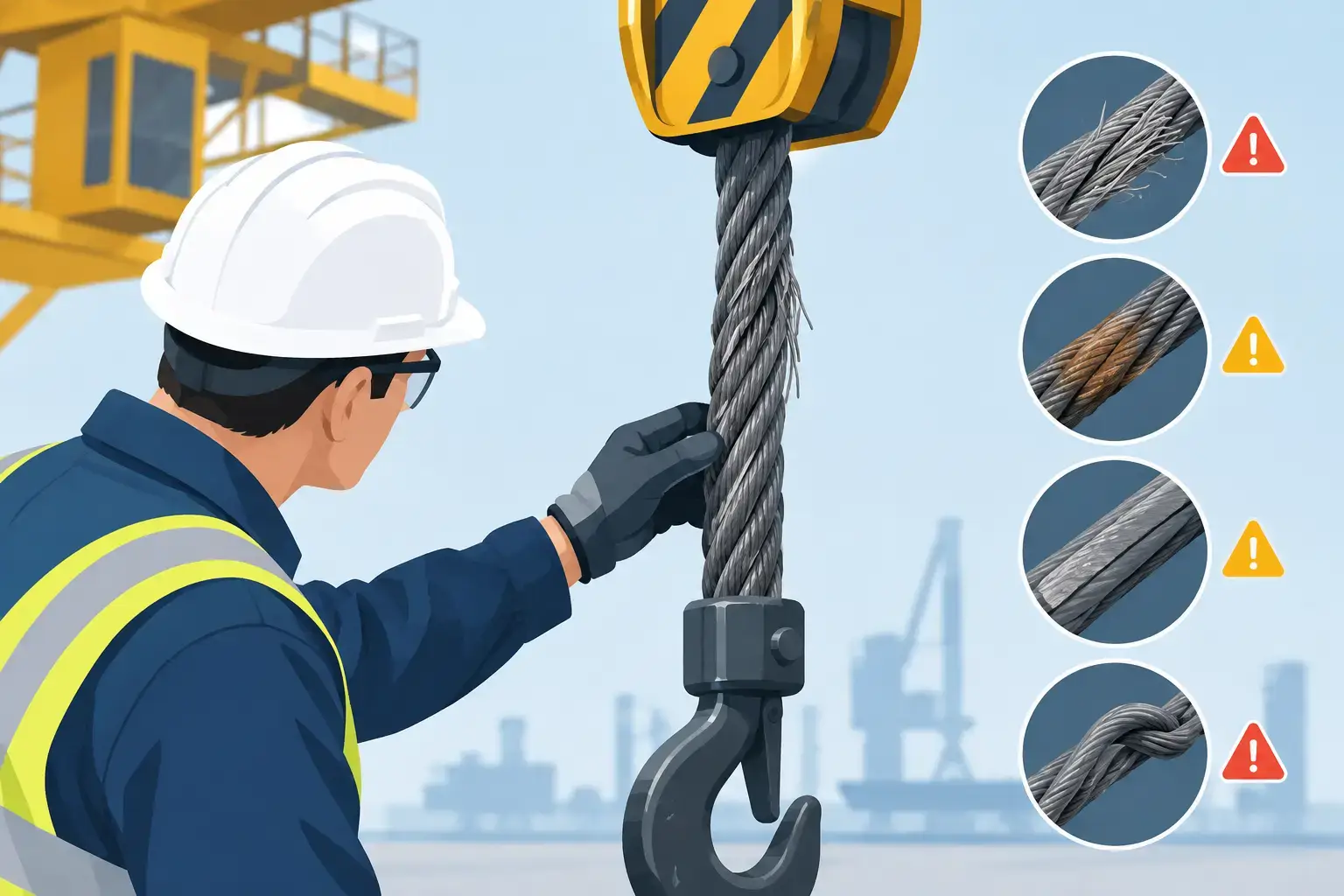
The trade-off is cost, size and service requirement. Wire rope hoists are more complex systems. Rope condition, drum grooves, sheaves, limit switches, brakes, gearboxes and electrical controls all require competent inspection and planned maintenance. A poorly maintained wire rope may show broken wires, abrasion, corrosion, crushing or distortion. These are not defects to ignore until the next service visit.
Capacity is only the first question
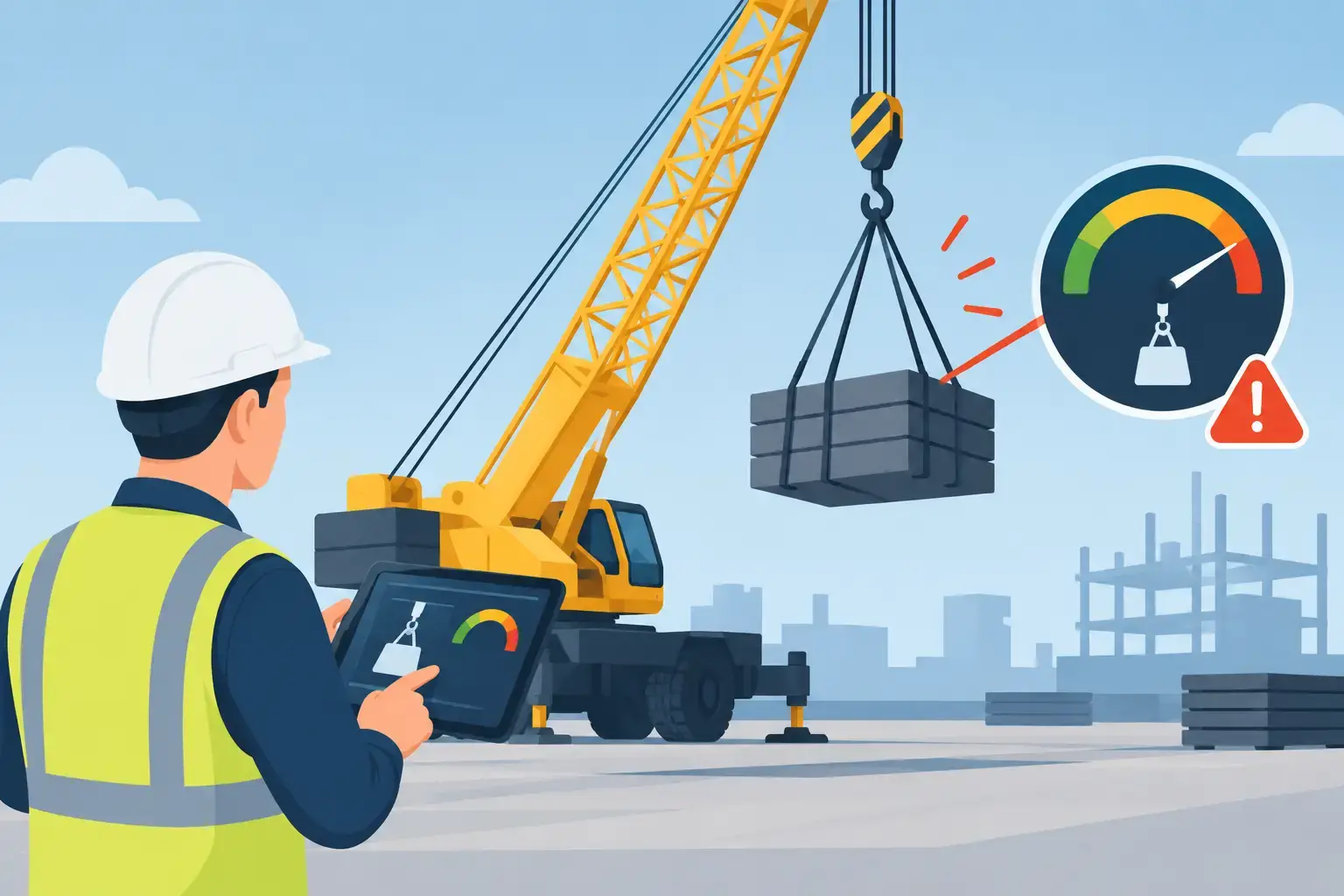
The safe working load must cover the heaviest load being lifted, including below-the-hook lifting gear where applicable. But selecting exactly to the maximum expected load can be a false economy if the duty is high or if the process is likely to change. A facility adding heavier tooling, larger fabricated assemblies or new machinery may outgrow a marginal hoist quickly.
Conversely, overspecifying capacity without checking the supporting structure can create a different problem. The runway beams, brackets, columns, jib foundation or existing crane bridge must be verified for the proposed loads. Increasing hoist capacity may require upgrades to steelwork, electrics, end carriages, buffers and controls, not simply a new hoist.
The practical question is not just, “What does the load weigh?” It is, “What must this entire lifting system safely do over its working life?”
Headroom, hook approach and lift height affect output
A hoist can have the right capacity yet still fail the job because the hook cannot reach where it is needed. Headroom is the vertical space lost between the crane beam and the hook at its highest position. Hook approach is the closest distance the hook can reach to the end of the runway or building structure.
These dimensions have direct operational consequences. Limited hook height can prevent a load being lifted clear of a machine or lorry bed. Poor hook approach can leave an inaccessible strip at the end of a production bay. On a replacement project, measurements of the building, crane runway, obstructions, existing equipment and intended load path should be taken before a hoist type is chosen.
Chain hoists can be advantageous where compact dimensions are the priority. Wire rope hoists, however, can be configured with different trolley and reeving arrangements to meet demanding coverage requirements. The correct answer depends on the crane layout, not a simple comparison sheet.
Maintenance, LOLER and PUWER cannot be an afterthought
Both hoist types are lifting equipment and need to be kept in a safe condition. Under LOLER, lifting equipment used to lift loads requires periodic thorough examination at the appropriate interval, typically every 12 months unless a written scheme of examination specifies otherwise. PUWER also requires equipment to be suitable, maintained and used by adequately trained people.
A thorough examination is not the same as routine maintenance. The examination identifies safety-related defects and confirms whether the equipment remains safe to use. Maintenance addresses wear, adjustment, lubrication, brake performance, electrical condition and developing faults before they result in downtime or an unsafe lift.
For chain hoists, servicing should include attention to chain condition and lubrication, lifting wheel wear, chain bag security, brake operation, upper and lower limits, contactors and pendant controls. For wire rope hoists, planned work should cover rope and drum condition, sheaves, rope guides, brakes, gearbox oil where applicable, limit devices, electrical panels and travelling motions.
Digital certification and clear defect reporting are commercially valuable here. When an auditor, insurer or customer asks for evidence, the business should be able to produce current examination records, maintenance history and close-out information without searching through paper files. CraneCert supports this approach with cloud-managed certification and planned service schedules built around the actual equipment and operating environment.
Specify for the real job, not the purchase price
An electric chain hoist is often the right tool for compact, lower-capacity and intermittent lifting. A wire rope hoist is often the better investment for heavier, longer, faster or more frequent work. There is overlap between the two, which is why a site survey and duty assessment are more useful than a rule of thumb.
Before committing, review the load, lift height, available headroom, required hook coverage, number of lifts per shift, operating speeds, control method, environment and future production plans. Include the condition and capacity of the supporting crane structure as part of that review.
The best hoist is the one that gives operators safe control, gives maintenance teams a manageable asset and gives the business enough capacity to keep production moving when the work is at its busiest.