Crane SWL Marking Requirements for UK Workplaces
Understand crane SWL marking requirements, where capacity labels must sit, and how clear markings support LOLER compliance, safe lifts and audit readiness.
CraneCert · 21 October 2026
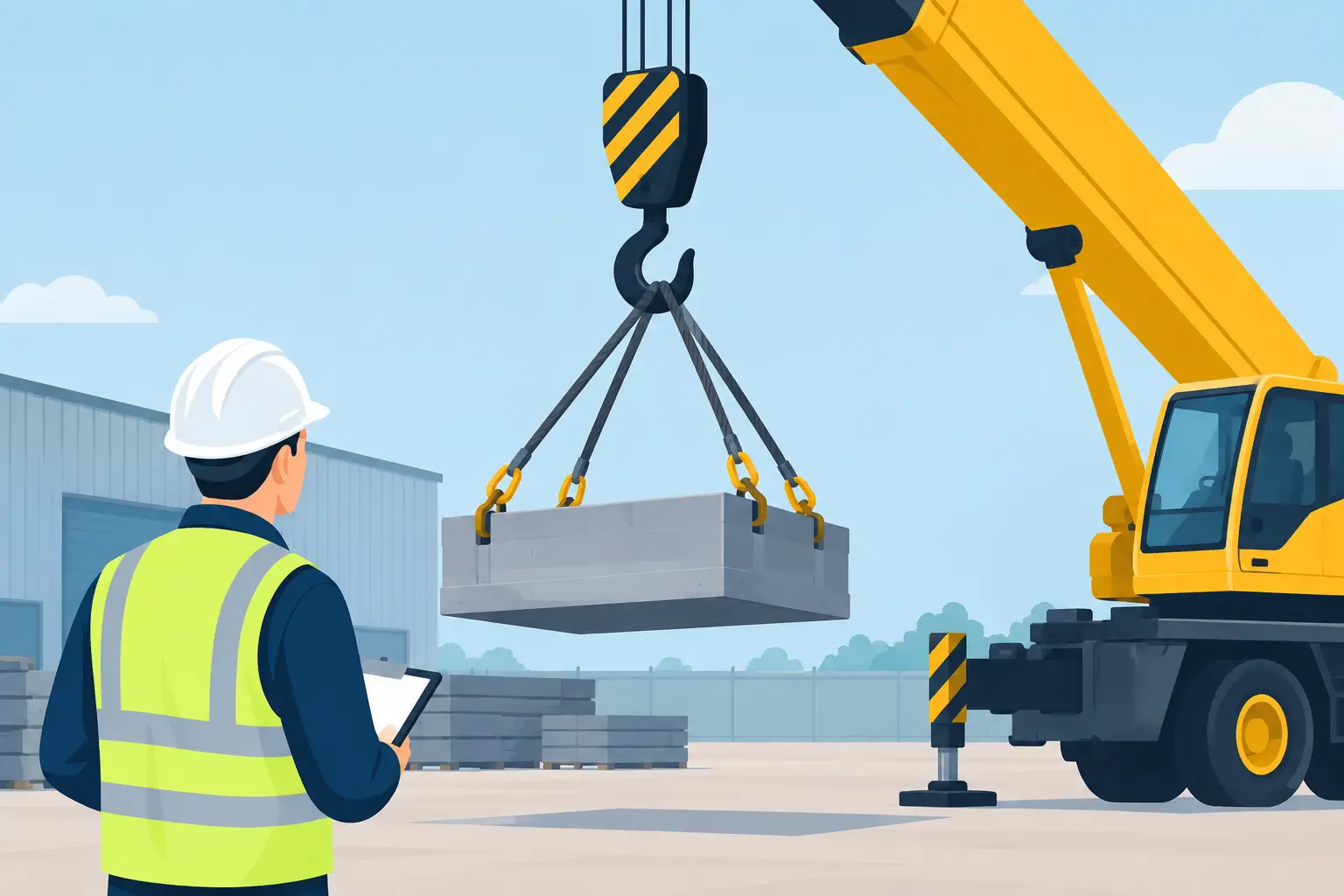
A crane can be mechanically sound, thoroughly examined and correctly operated, yet still present a serious compliance risk if its lifting capacity is unclear. Crane SWL marking requirements exist for a simple reason: the person planning or carrying out a lift must be able to see what the equipment can safely lift before the load leaves the ground.
For facilities and engineering managers, poor or missing markings are not a minor labelling issue. They can contribute to overloads, failed LOLER examinations, delayed production and difficult questions after an incident. Clear, durable and current markings help operators make the right decision at the point of use, and help your business demonstrate control during an audit.
What crane SWL marking requirements mean
SWL means Safe Working Load. It is the maximum load that equipment may safely lift under the conditions for which it is designed and configured. The term Working Load Limit, or WLL, is also common, particularly for lifting accessories. Whatever terminology is used on site, the critical requirement is that the permitted lifting capacity is clear, accurate and relevant to the equipment being used.
Under LOLER, lifting equipment must be clearly marked to indicate its safe working load. Where the safe working load varies with the equipment’s configuration, the relevant rating information must also be available to the person using it. For equipment intended to lift people, the marking must state the number of people it can lift and the safe working load.
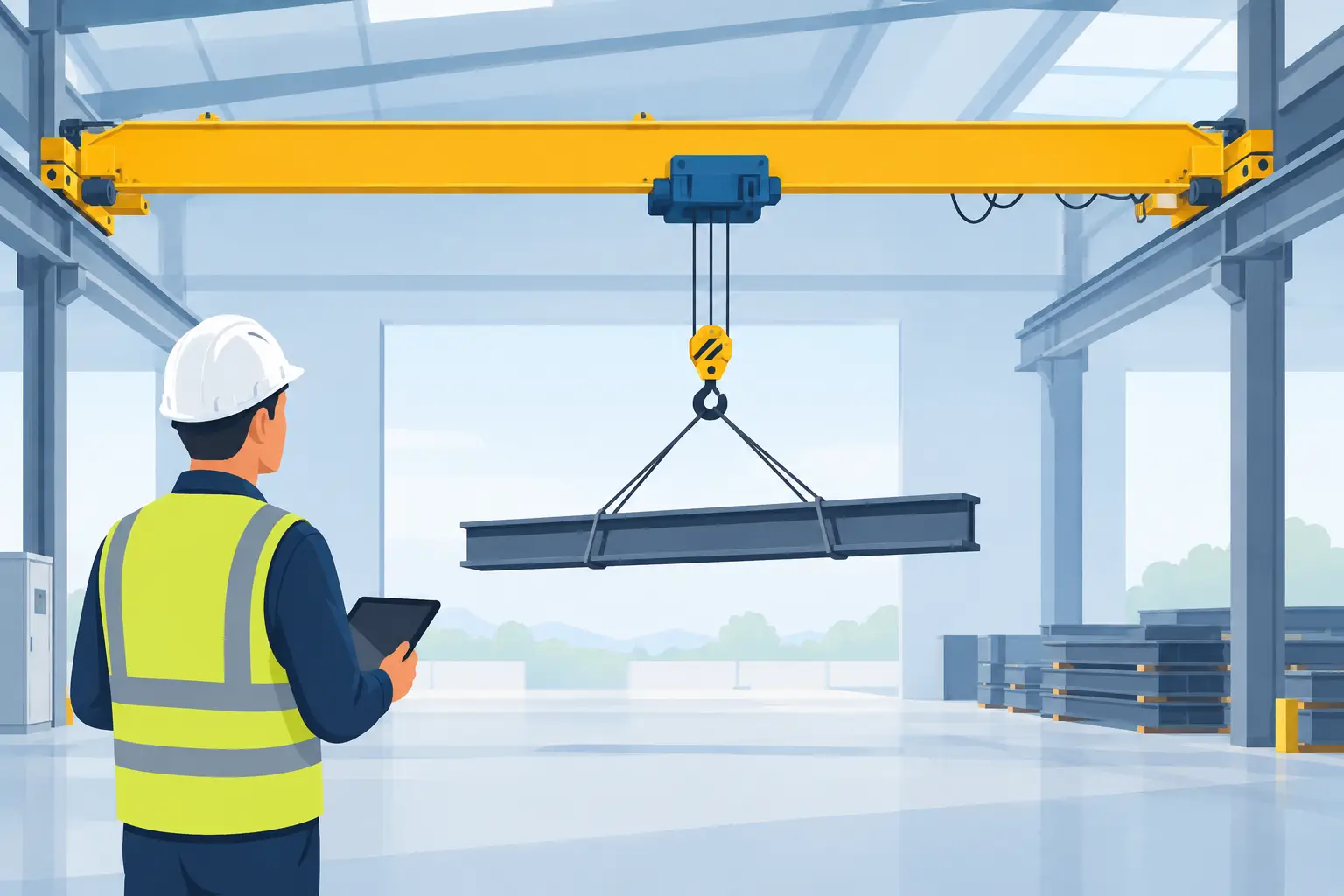
On an overhead travelling crane, the rated capacity is commonly displayed on the bridge or girder, near the hoist, or in another clearly visible position. The marking needs to be legible from the operator’s normal working position and remain visible in the environment where the crane operates. A faded decal above a busy production bay, obscured by dirt or only readable from an elevated access platform is unlikely to serve its safety purpose.
Where SWL markings are needed
The crane itself is only one part of the lifting arrangement. The lifting operation is limited by the lowest-rated component in the load path. A 10-tonne overhead crane cannot safely lift a 10-tonne load if the chain sling, lifting beam, shackle or lifting point is rated below that figure.
In practice, marking requirements apply across the equipment used for the lift, including the crane or hoist, lifting accessories and any purpose-designed lifting attachment. Typical items that need clear capacity identification include:
- Overhead crane bridges, gantry cranes, jib cranes and hoists
- Hooks, hook blocks and lifting beams
- Chain slings, wire-rope slings and webbing slings
- Shackles, eyebolts, lifting points and clamps
- Fork attachments, grabs, magnets and vacuum lifters
The form of marking varies. A crane may carry a painted or plated SWL figure. A chain sling may have an identification tag showing its WLL, leg length and relevant sling configuration. A lifting beam may require markings for its own weight, SWL and, where applicable, the permitted load position.
The key test is practical: can the operator identify the safe capacity and apply it correctly before lifting? If the answer is no, the marking arrangement needs attention.
Variable capacities need more than one number
A single SWL marking is suitable only where the crane has one fixed capacity. Many systems do not. Capacity can change with the arrangement of the equipment, and that is where incorrect assumptions become dangerous.
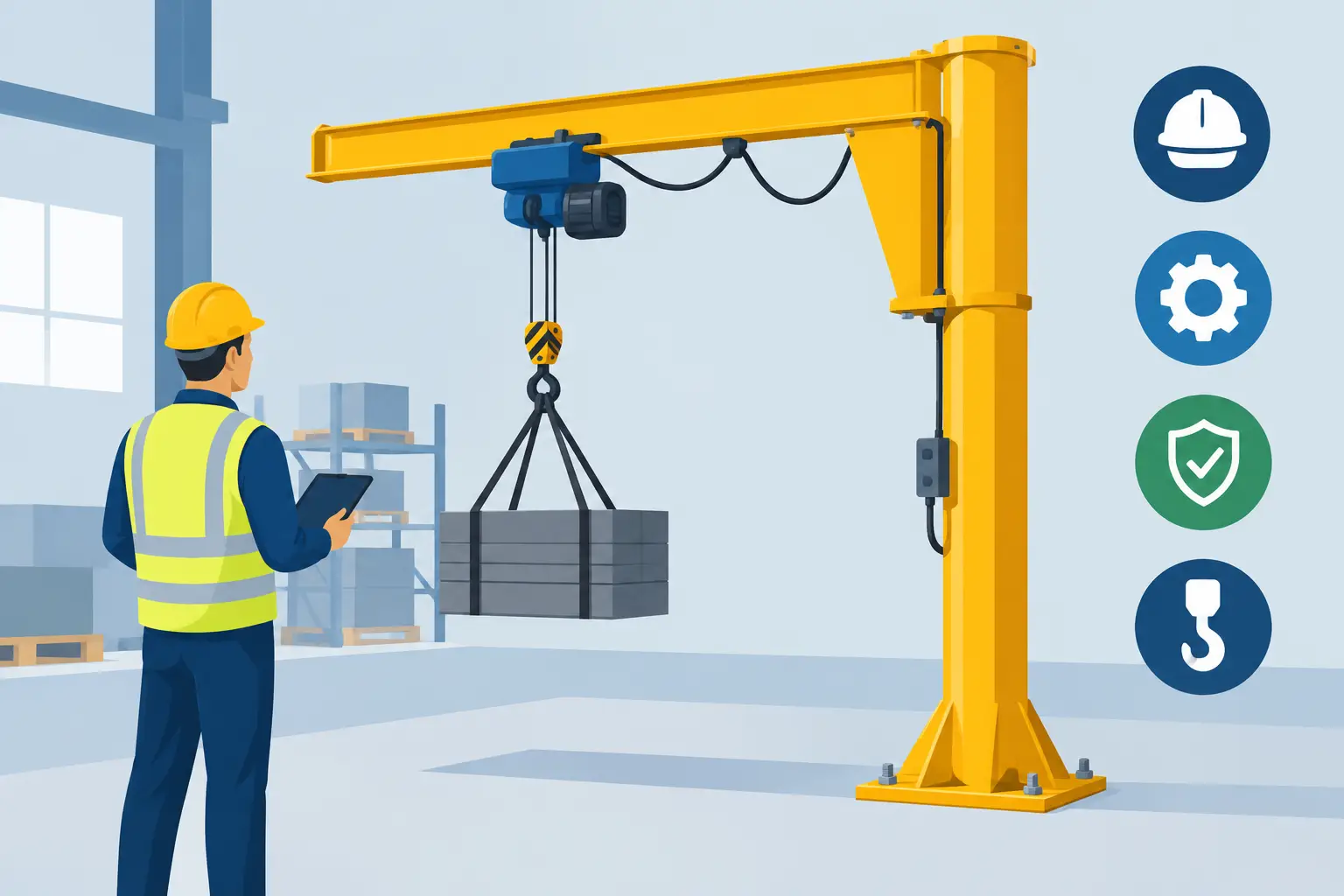
For example, a multi-hoist crane may have a different safe capacity when both hooks are used together than when one hook is used alone. A jib crane’s capacity may reduce at a longer outreach. A lifting beam may have different ratings depending on lifting-point positions. Slings also lose capacity when used at an angle, even though their tag may show a higher straight-lift rating.
Where capacity varies, the information must be presented in a format that operators can use. This could be a clearly displayed load chart, a configuration-specific label, a marked scale or a control system that indicates the allowable load. It must reflect the equipment as installed, not a generic manufacturer’s document stored in a maintenance file.
This is particularly relevant after modifications. If a hoist is replaced, a lifting attachment is added, a crane is upgraded or a system is reconfigured, existing SWL markings may no longer be correct. The new arrangement should not return to service until its safe capacity has been verified and marked accordingly.
Markings must be legible, durable and current
A capacity figure is only useful if it can be read and trusted. Industrial environments are hard on labels and painted markings. Heat, oil, cleaning chemicals, welding fume, abrasion and outdoor exposure can all make important information disappear over time.
Markings should be securely fixed or applied, resistant to the operating environment and positioned where routine use will not obscure them. Colour contrast matters. So does scale. A small capacity plate on a high-level crane may technically exist but still fail to communicate the rating to a pendant or radio-control operator below.
There is no single best marking method for every workplace. Painted lettering can work well on a clean, accessible crane girder. Engraved or stamped identification plates may suit lifting beams and accessories subject to heavy wear. Durable industrial labels can be appropriate where they are protected and inspected as part of the maintenance routine. The right choice depends on location, duty cycle and exposure.
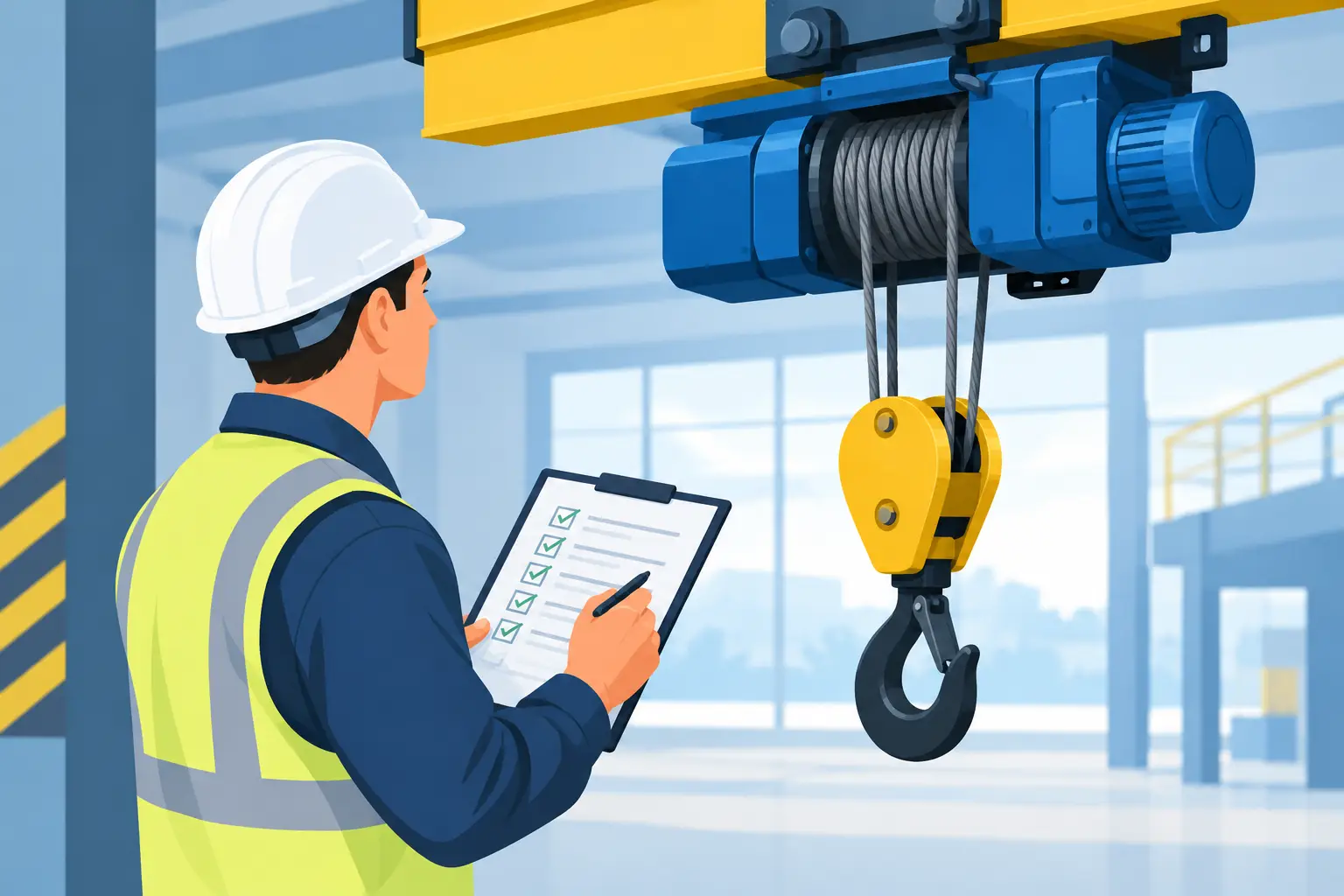
What does not work is treating the marking as permanent once applied. Include capacity labels and plates in routine pre-use checks, planned maintenance inspections and thorough examination preparation. If a marking is damaged, missing or doubtful, remove the uncertainty before the equipment is used for lifting.
SWL markings are not a substitute for lift planning
Clear marking tells an operator the maximum permitted load. It does not confirm that every proposed lift is safe. The actual load must be known or reliably established, including the weight of lifting accessories, lifting beams and other attachments where relevant.
The lift also needs to account for the load’s centre of gravity, the sling arrangement, side loading, travel route, obstructions and the condition of the equipment. A load within the crane’s SWL may still be unsafe if it is poorly balanced, snagged, dragged or lifted with unsuitable accessories.
For routine, straightforward lifts, competent operators should have clear local procedures and suitable equipment information. For complex, unusual or higher-risk lifts, a more detailed lift plan may be necessary. The right level of planning depends on the risk, not simply on the weight shown on the crane.
Common marking failures found on industrial sites
The most frequent problem is a missing or illegible SWL displayed on a crane that has otherwise been maintained. It is easy to overlook until a LOLER thorough examination or customer audit brings it into focus.
Other common failures include an old capacity marking left in place after a hoist change, sling tags that have become unreadable, lifting beams without load-position information, and accessories stored together without clear individual identification. There is also the risk of unofficial site markings. Handwritten figures, damaged stickers and assumptions based on a crane’s original specification are not a reliable basis for a lift.
A further issue is inconsistency between the physical marking and the supporting records. The crane’s identification, rated capacity, examination report and asset register should agree. If they do not, stop and investigate. A cloud-managed compliance record is useful here because it allows site teams to retrieve the current certificate and equipment details without searching through paper files.
A practical approach to compliance
Start by walking the lifting route, not just reviewing documents in the office. Check every crane, hoist and accessory in service. Can the capacity marking be read from where it needs to be read? Does it match the equipment configuration? Is there any uncertainty around modified equipment or attachments?
Then compare the physical equipment with LOLER thorough examination reports, maintenance records and the lifting-equipment register. Any discrepancy should be resolved by a competent person before the item is used. If markings need replacing, ensure the replacement is based on verified technical information rather than assumption.
For busy sites, this work is most effective when built into scheduled servicing and examination planning. It avoids the cost of discovering missing markings during an audit, after a near miss or when production is waiting for a critical lift.
A clearly marked crane gives operators an immediate safety boundary. Keep that boundary visible, accurate and matched to the equipment in front of them, because when a load is suspended, uncertainty is not an acceptable operating condition.