Crane Service Contracts That Keep You Lifting
Crane service contracts combine planned maintenance, LOLER support and repairs to reduce downtime, control costs and keep lifting operations compliant.
CraneCert · 24 October 2026

A crane failure rarely arrives at a convenient time. It stops material flow, leaves production waiting and can quickly expose gaps in safety records. Well-managed crane service contracts give facilities and engineering teams a planned route to safer lifting, faster fault recovery and clear evidence that essential equipment is being controlled.
The right agreement is not simply an inspection booking repeated every year. It should reflect the cranes you operate, the work they perform, their condition and the consequence of them being unavailable. For a busy fabrication bay, one failed hoist can stop an entire process. For a warehouse crane used occasionally, the priority may be proving statutory compliance without paying for unnecessary attendance.
What a crane service contract should cover
A useful contract brings routine servicing, safety management and breakdown support into one accountable plan. The exact scope varies, but the starting point should be an accurate asset register covering every overhead crane, hoist, runway, pendant and associated lifting equipment within the agreed scope.
Planned maintenance is the operational foundation. Engineers inspect, lubricate, adjust and test the components that experience wear in normal use, including brakes, ropes or chains, limit switches, electrical controls, wheels, bearings and travel drives. This work identifies developing defects before they become a failed lift, an emergency call-out or an unsafe condition.
LOLER thorough examinations are separate from maintenance. A crane can be serviced regularly and still require a thorough examination by a competent person at the legally appropriate interval. In many cases, lifting equipment used for lifting people requires examination every six months, while other lifting equipment is examined every 12 months, unless a written scheme of examination sets a different interval. Your contract should state clearly who is arranging each examination, what assets are included and how reports are issued.
PUWER also matters. It requires work equipment to be suitable, maintained and used by people who have received appropriate information, instruction and training. A service provider can support your compliance, but the dutyholder remains responsible for ensuring cranes are safe to use and defects are acted on.
A complete agreement may also include 24/7 breakdown response, priority access to engineers, agreed labour rates, replacement parts management and condition reporting. It should make clear what is included in the fixed price and what is chargeable following an inspection or repair visit.
Why planned crane servicing protects production
Downtime is money, but the cost is rarely limited to the repair itself. A failed crane can leave a production line short of materials, delay dispatches, disrupt shift planning and force unsafe manual handling workarounds. The longer a fault remains unresolved, the more difficult it becomes to recover the lost output.
Planned servicing gives engineers the chance to spot warning signs when a controlled shutdown can be arranged. Brake wear, a deteriorating festoon cable, erratic pendant controls or abnormal gearbox noise may not stop a crane immediately. Left alone, they can become the fault that takes the crane out of service halfway through a critical job.
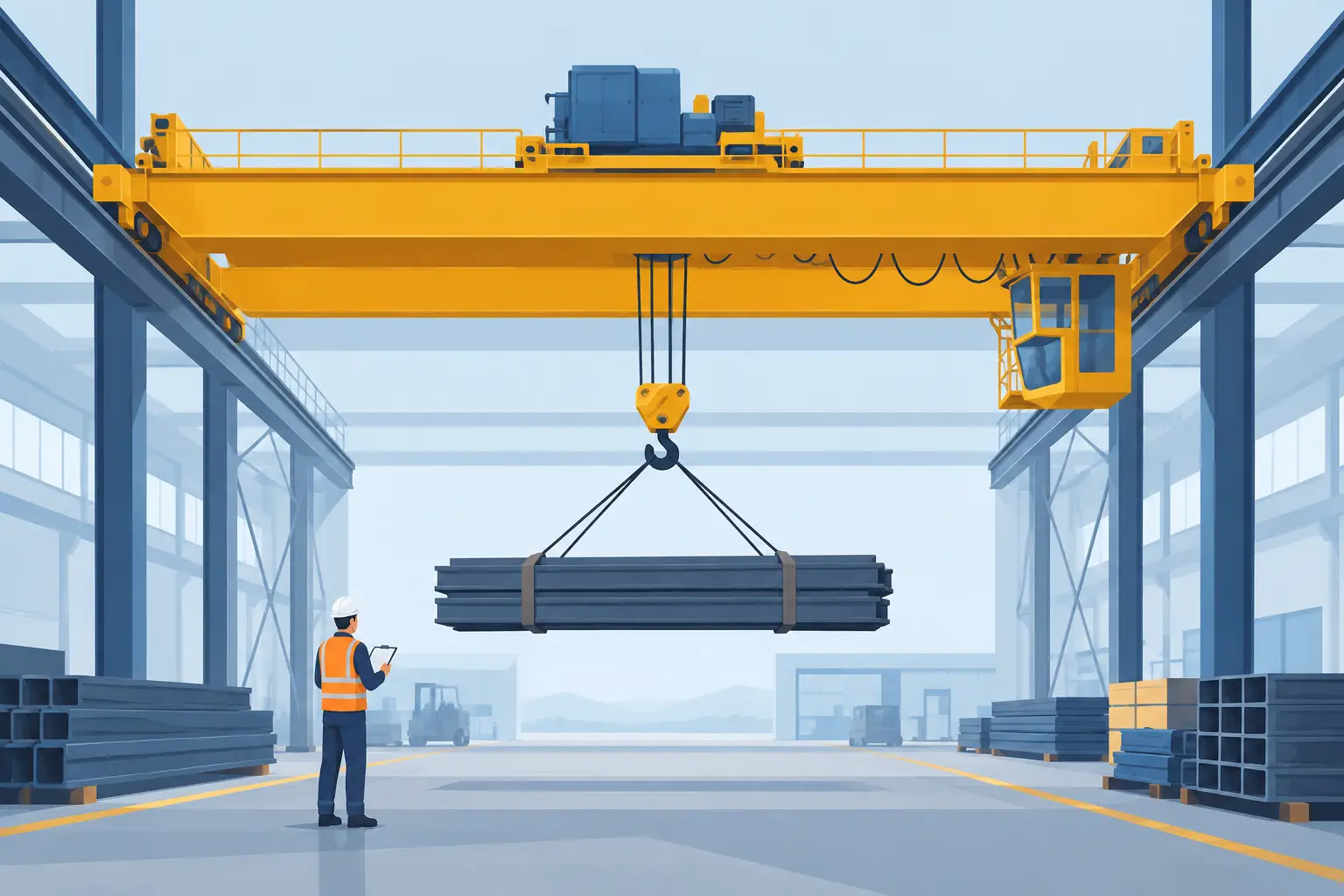
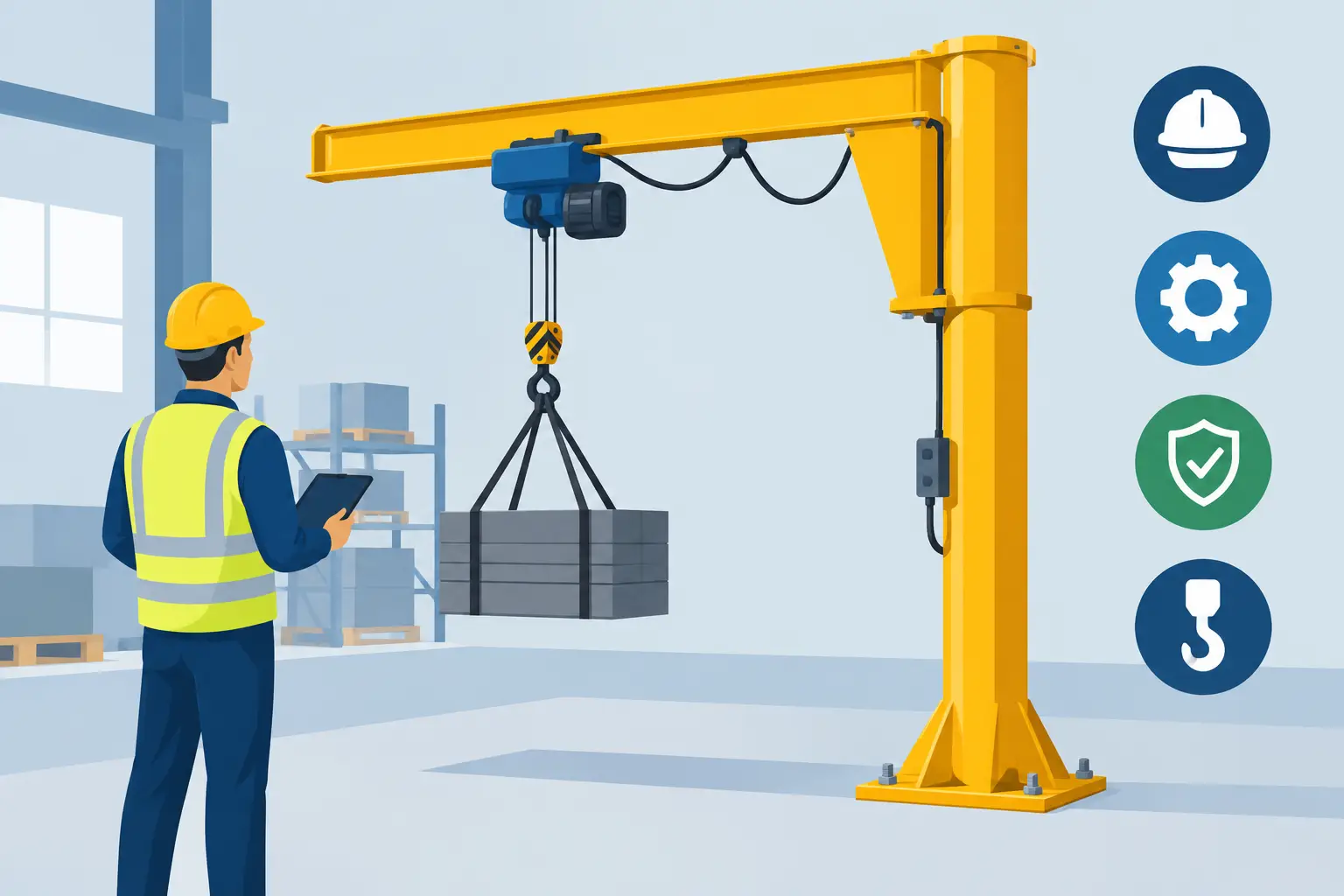
This does not mean every crane requires the same visit frequency. Service intervals should reflect duty cycle, environment, age, load profile and manufacturer guidance. A double-girder crane making repeated lifts in a harsh manufacturing environment needs a different plan from a low-use jib crane in a clean maintenance workshop. A competent provider will recommend a proportionate schedule, then revise it if usage or equipment condition changes.
Separate compliance from repair, but manage both together
One common failure is treating a LOLER certificate as proof that a crane is fully maintained. A thorough examination is a statutory assessment at a point in time. It may identify defects, but it is not a substitute for planned servicing or daily operator checks.
Likewise, reactive repairs alone do not create compliance. Calling an engineer only after a hoist fails may restore operation, but it provides little control over recurring faults, certificate dates or emerging safety issues.
The strongest crane service contracts connect these activities without confusing their purpose. They provide a maintenance schedule, manage examination due dates, record defects and repairs, and retain documentation in a format that can be retrieved during an audit. Cloud-managed certification is particularly valuable where several sites, assets or responsible managers are involved. When an auditor asks for a current report, the business should not be searching through paper files or waiting for someone to forward an attachment.
The contract details that affect cost and response
Price matters, but a low annual figure can become expensive if it excludes the support you need when equipment fails. Read the service schedule carefully and compare like with like.
Consider the agreed response arrangements. Is there a defined response target for a safety-critical breakdown? Does the supplier provide round-the-clock emergency support, including nights and weekends? Is local engineer coverage available across your operating area, or will every call depend on a long-distance visit?
Check how repairs are authorised. A practical arrangement should allow the engineer to make the equipment safe immediately, explain the defect clearly and provide a quotation or agreed route for further work. For critical assets, it may be worth agreeing a spending authority for minor repairs so simple decisions do not hold up a return to service.
Parts availability also deserves attention. Controls, wire ropes, brake components and hoist parts are not always interchangeable, particularly on older installations. Your provider should be able to support equipment from recognised manufacturers such as Demag, Street, Abus, Kone, Stahl and Morris, while being honest where an obsolete component needs an alternative solution or an upgrade.
Build the service plan around the actual crane
A site survey should come before a contract proposal. The engineer needs to understand capacity, span, headroom, duty cycle, lifting height, control type, operating environment and access requirements. These details influence both the maintenance work needed and the practical time required to carry it out safely.
For example, a crane operating above production machinery may require planned access during a shutdown. A unit working outdoors may need more attention to corrosion, electrics and runway condition. An ageing hoist with repeated electrical faults may still be repairable, but a condition report could show that refurbishment or replacement offers better long-term value.
The contract should also account for operator pre-use checks. Operators are often first to notice unusual noise, brake delay, damaged controls or poor rope condition. Give them a simple reporting route and make sure defects are recorded, assessed and closed out. The service agreement works best when site teams and engineers share accurate information rather than treating maintenance as an isolated external task.
Questions to ask before appointing a provider
Before signing, ask how the provider will manage your compliance dates, issue examination reports and record remedial actions. Confirm whether documentation will be available digitally, how quickly certificates are supplied and whether the service team can support audits with a complete asset history.
Ask who will attend a breakdown, what the out-of-hours process is and whether the provider has engineers who understand your type of crane. Request clarity on exclusions, travel charges, parts mark-up and the procedure for work outside the planned schedule. A dependable contract should remove uncertainty, not move it into the small print.
It is also sensible to ask for recommendations based on risk, rather than a one-size-fits-all package. There are times when increased service frequency is justified. There are also times when a lower-use asset needs a simpler arrangement. The correct decision is the one that maintains safe, compliant operation without creating avoidable cost.
When repair becomes an upgrade decision
Service contracts create a valuable record of an asset's history. Repeated brake faults, obsolete controls, frequent inverter failures or rising repair spend can show that the issue is no longer a single repair. It is an asset strategy decision.
An upgrade may improve reliability, operator control and availability without replacing the whole crane. In other cases, a new hoist or complete overhead crane system may be the more commercially sound option, particularly where capacity, duty cycle or layout has changed. A provider with in-house capability across servicing, examinations, repairs and new crane projects can advise from the evidence, rather than treating every problem as an emergency call-out.
CraneCert structures service support around planned maintenance, statutory examination management, audit-ready records and rapid regional response. The aim is straightforward: keep equipment safe, keep documentation current and keep production moving.
Before your next planned shutdown, review the cranes your operation cannot afford to lose. A clear service scope, current asset list and agreed response plan will give your team far more control when the next defect is found.