7 Ways to Deliver Crane Downtime Reduction
Crane downtime reduction starts with planned maintenance, fast fault diagnosis and compliant records that keep lifting equipment safe and production moving.
CraneCert · 28 October 2026
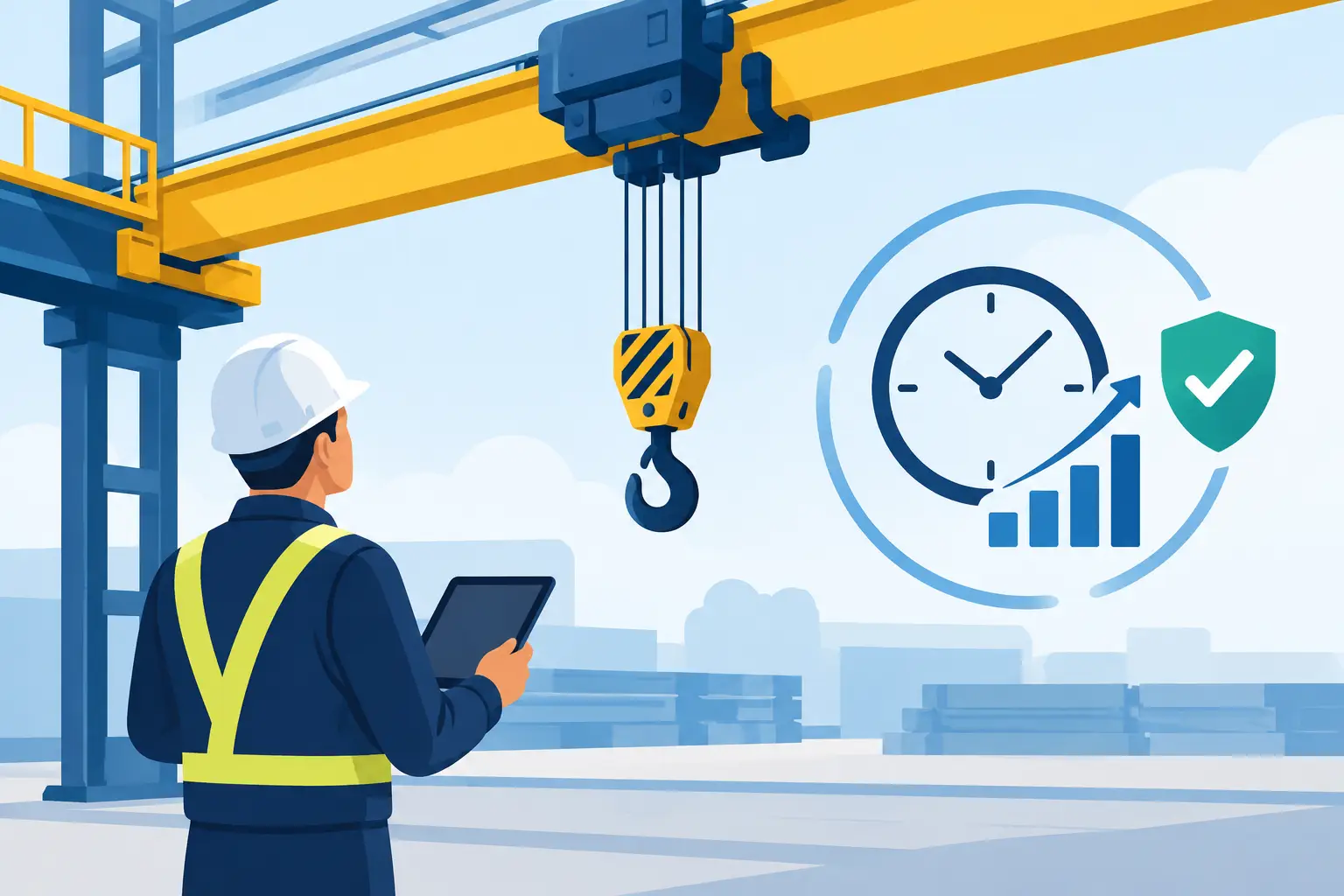
A stopped overhead crane can halt a production bay, leave goods stranded at a machine and force people into unsafe workarounds. Effective crane downtime reduction is therefore not simply about repairing faults faster. It is about controlling the condition, compliance status and operating demands of the equipment before a lift becomes unavailable.
For facilities and engineering teams, the objective is clear: keep lifting equipment safe, legally compliant and ready for the work it is expected to do. That requires a maintenance plan built around the actual crane, not a generic visit schedule.
1. Start with the real cost of a stopped crane
The repair invoice is rarely the biggest cost of a breakdown. The larger figure is often lost output, delayed despatches, idle labour, disrupted subcontractors and the pressure placed on other handling equipment. In a fabrication shop or manufacturing bay, one failed hoist can affect every operation downstream.
Calculate what one hour without the crane means for each critical area. Include labour, lost production, rehandling and delivery risk. This gives maintenance decisions the commercial weight they deserve and helps identify which cranes need the closest attention.
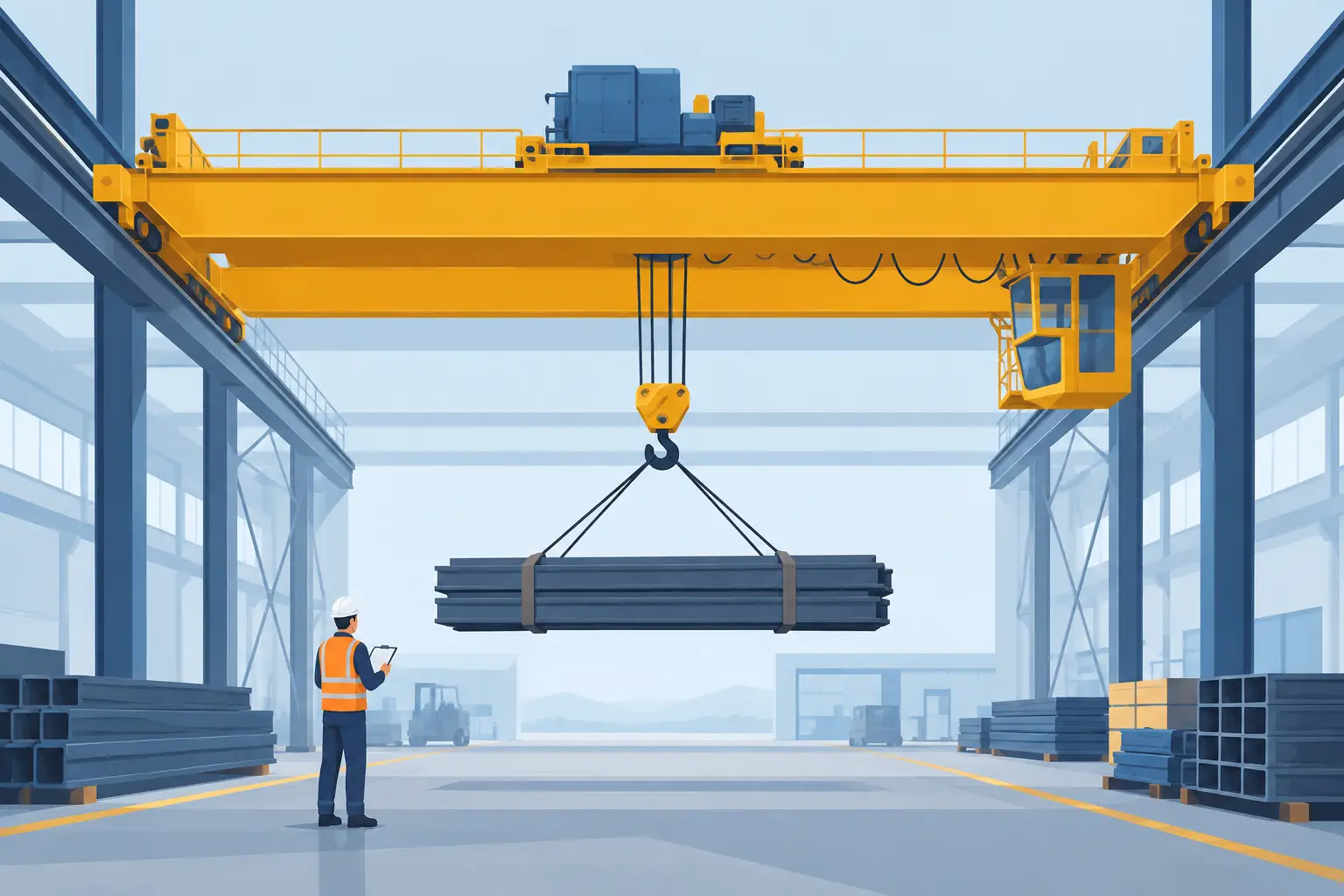
Not every crane needs the same response level. A lightly used jib crane in a stores area has different consequences from a double-girder overhead crane serving a continuous production line. Maintenance frequency, stocked spares and emergency arrangements should reflect that difference.
2. Build planned maintenance around duty, condition and environment
A calendar-only service plan can miss the point. Two identical cranes may wear at very different rates if one works two shifts handling loads close to capacity while the other completes occasional light lifts. Duty cycle, load spectrum, starts per hour and operator behaviour all influence component life.
The working environment matters too. Dust, heat, moisture, corrosive atmospheres and outdoor exposure can accelerate deterioration in brakes, wire ropes, electrical panels, festoon systems and limit switches. A crane operating above welding or shot-blasting activity needs more focused inspection than one in a clean assembly area.
A planned maintenance visit should assess the areas most likely to create unplanned stoppages: hoist brakes, rope condition, hook blocks, gears, bearings, travel wheels, conductor systems, pendant controls, radio controls and safety devices. Findings should be recorded clearly, with priorities agreed before a minor defect becomes a failure.
This is where a service provider should challenge the existing interval where necessary. More visits are not automatically better. The right plan balances inspection frequency with crane usage, risk and the practical cost of planned access. A short, scheduled interruption is usually far less damaging than an emergency stoppage during a production run.
3. Treat warning signs as maintenance work, not background noise
Cranes usually give warning before they fail. Operators are often the first to notice a change, but only if they know what to report and believe it will be acted on.
Common early indicators include:
- unusual noise, vibration or jerky travel
- brake delay, load drift or inconsistent hoist response
- repeated tripping, blown fuses or intermittent controls
- rope damage, poor spooling or a hook that will not rotate freely
- travel problems caused by worn wheels, rails or power supply faults
A simple defect-reporting route is vital. Operators should be able to isolate a concern where required, report it promptly and receive feedback on the action taken. Repeated faults should never be closed as isolated incidents without checking the root cause. A recurring limit-switch issue, for example, may point to adjustment, mechanical wear, wiring damage or misuse.
4. Separate statutory examination from maintenance
LOLER thorough examinations and PUWER inspections are essential parts of lifting-equipment control, but they do not replace servicing. A thorough examination identifies whether lifting equipment remains safe for use and records defects that could affect safety. Preventive maintenance is the practical work that preserves reliability between examinations.
Confusing the two can lead to a false sense of security. A crane may have a current LOLER report yet still be approaching a brake, bearing or control-system failure that affects production. Equally, a well-maintained crane must still receive its statutory thorough examination at the required intervals.
The strongest approach connects both activities. Examination findings, maintenance history, repair records and certification should sit together so the responsible person can see the full condition of each asset. Cloud-managed records make it easier to check due dates, retrieve certificates during an audit and prove that reported defects were managed properly.
5. Reduce mean time to repair before the fault occurs
When a crane does stop, the quality of the response depends heavily on information available before the engineer arrives. Keep an accessible asset record for every crane: manufacturer, model, serial number, safe working load, control type, installation details, service history and known modifications. Clear photographs of the hoist, electrics and affected area can also speed up diagnosis.
Access planning matters. Can an engineer reach the crane safely? Is a mobile elevated work platform required? Will the production area need to be isolated? Are there site inductions, permits or restricted working hours to account for? These details can turn a same-day repair into a multi-day delay if they are discovered too late.
For critical cranes, consider holding agreed consumables or high-failure parts on site. The correct choice depends on the equipment and its age. Stocking every possible item ties up cash and can leave obsolete parts on the shelf. However, keeping suitable brake components, contactors, pendants, rope or radio-control spares for a production-critical asset may significantly shorten recovery time.
Local engineer coverage is also a practical advantage. For sites across Yorkshire, the Midlands and the North of England, a 24/7 breakdown arrangement should define escalation routes, response expectations and the information needed to mobilise safely. Fast attendance is valuable, but accurate fault diagnosis and access to the right parts are what return the crane to service.
6. Use upgrades to remove repeat failure points
Ageing cranes do not always need replacing. Targeted upgrades can improve reliability, safety and availability where a known weakness is causing disruption. Examples include modernising controls, replacing obsolete drives, upgrading radio systems, renewing conductor arrangements or fitting condition-monitoring features.
The decision should be evidence-led. If repair costs are rising, parts are difficult to obtain or failures are becoming more frequent, compare the projected cost of continued repair with the cost and disruption of an upgrade. Consider the crane’s remaining structure, duty requirement, available headroom and whether production needs have changed.
A control upgrade may be the sensible answer for a mechanically sound crane with obsolete electrics. If the structure, hoist and runway are all nearing the end of their working life, a replacement project may offer better value and less operational risk. CraneCert can assess both routes, including whether a phased installation can keep part of the operation lifting while work is completed.
7. Measure crane downtime reduction properly
Without a baseline, it is difficult to know whether maintenance changes are working. Record unplanned downtime by crane, fault type, shift and duration. Track repeat failures, response time, time to repair, overdue defects and the proportion of planned versus reactive work.
Look for patterns rather than individual events. A concentration of electrical faults after washdown, recurring rope wear on one hoist or brake issues following a change in workload each points to a different corrective action. The aim is not to create paperwork for its own sake. It is to direct budget towards the faults that threaten safety and output.
Review this information with the service partner at agreed intervals. A useful review should identify actions, owners and target dates, not merely restate what has already failed. It should also make clear when the safest decision is to remove equipment from service until a defect is corrected.
The most reliable crane is not the one that has never been reported. It is the one with known risks acted on early, current certification available when requested and a maintenance plan that reflects the demands of the site. Keep that standard in place, and lifting remains a controlled part of production rather than the next source of disruption.