24/7 emergency breakdown line · ISO 9001 · LOLER · PUWER
Overhead cranes
An off-the-shelf crane rarely fits a real industrial environment. Here is how the main overhead crane types differ and where each one earns its keep.
Design a bespoke crane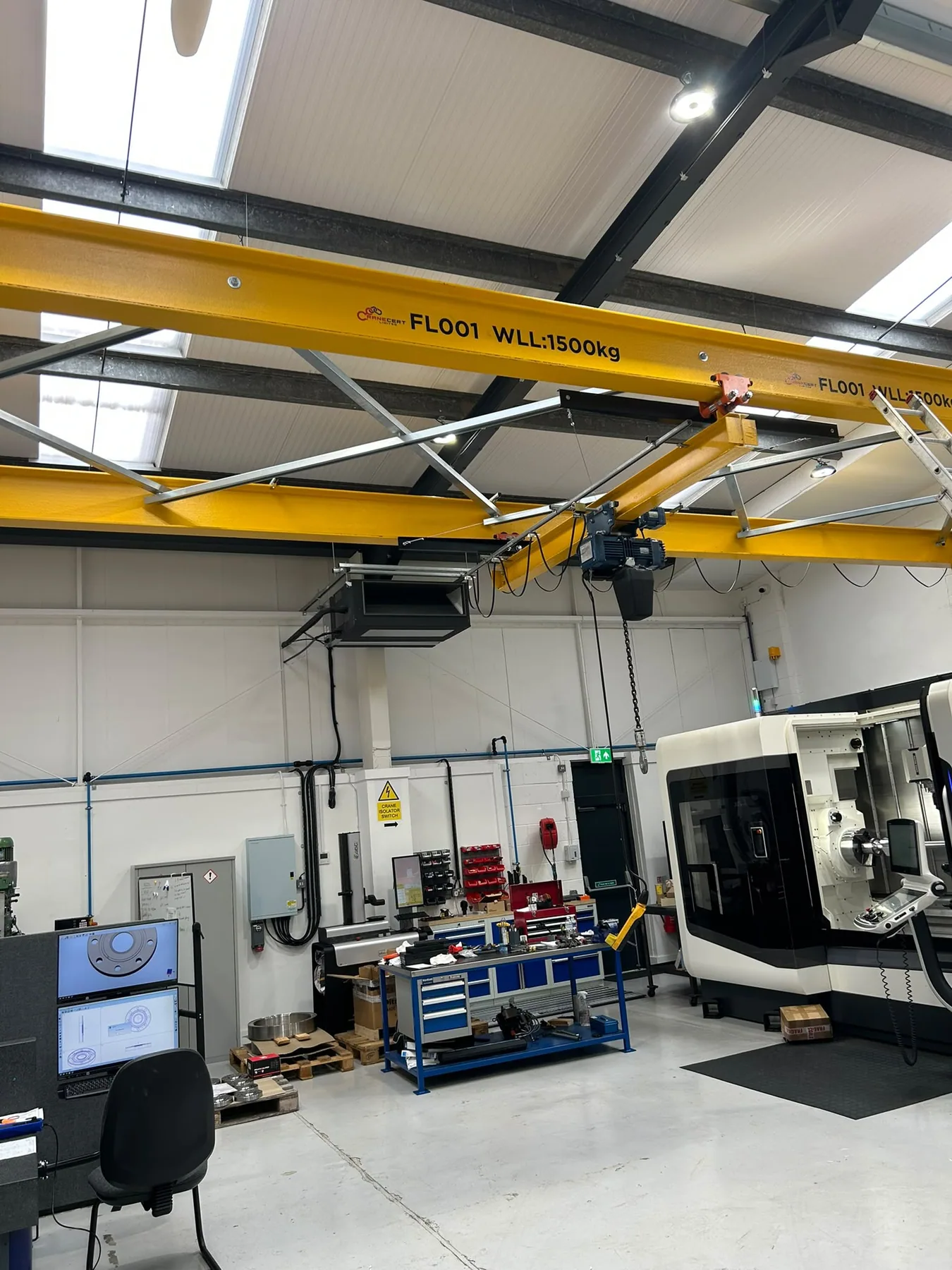
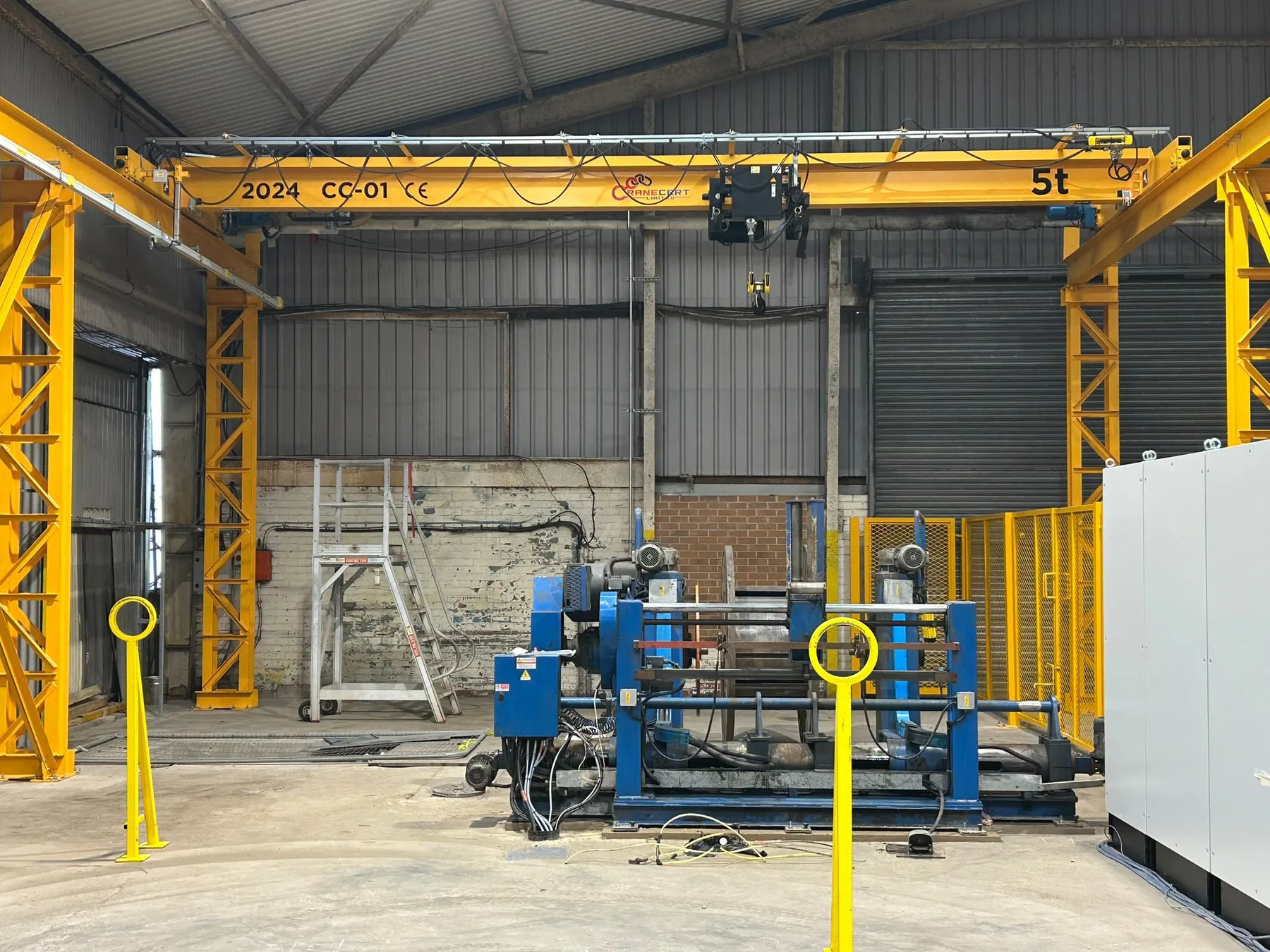
A single bridge beam with the hoist on a trolley beneath. Cost-effective and space-efficient for light-to-medium industrial duty.
Two bridge beams for higher capacities, greater spans and maximum hook height, suited to heavy-duty and frequent lifting.
Ground-supported legs on rails, ideal where the building structure cannot support a conventional runway.
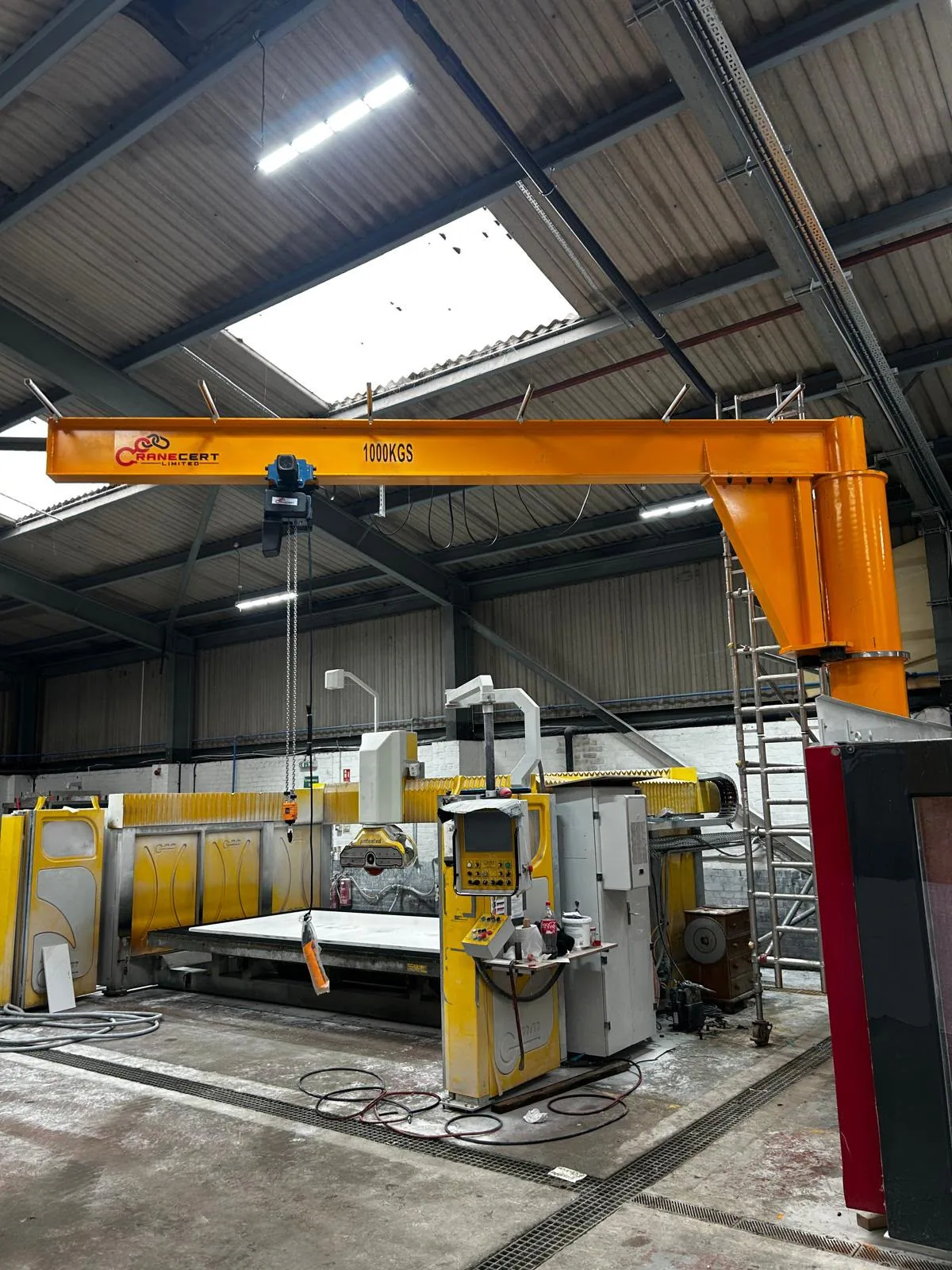
A rotating arm for localised, repetitive lifting at a workstation or machine, often complementing a bay crane.
Light, modular track systems for ergonomic, free-path handling that can be reconfigured as your process changes.
The rails and structure your crane travels on, correctly specified, surveyed and installed for safe long-travel operation.
A complete turnkey project
An overhead crane is a long-term capital asset. Capacity alone is not enough: the crane must suit the building, load geometry, hook coverage, duty, controls, access and production plan.
CraneCert coordinates the project from the first survey through engineering, manufacture, installation, commissioning and ongoing statutory inspection.
Measure the bay, structure, lift path, access and operational constraints.
Define crane arrangement, span, duty, hoist, controls, runway and power.
Coordinate fabrication, delivery, access equipment, electrical work and shutdowns.
Test, hand over documentation and plan future servicing and LOLER examinations.
Tell us the loads, spans and lifting frequency. We will specify the right crane, manufacture it in-house and install it with our own engineers.
Free crane planning pack
Get the practical worksheet our engineers use to start a crane conversation: capacity, span, hook height, duty, access, controls and compliance handover.
Talk to a CraneCert engineer now about planned servicing, LOLER examinations or a 24/7 emergency callout.